
Lentil ascochyta blight
Ascochyta lentis
Description
Symptoms
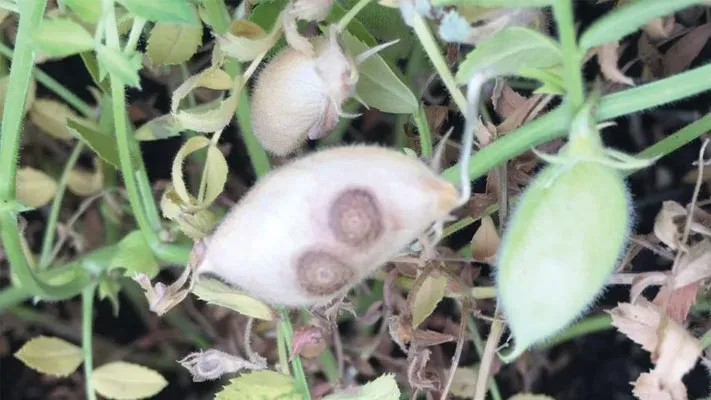
Initial symptoms are characterized by small, pale gray to white spots that appear on leaves, stems, and pods. These spots are often surrounded by a distinct dark brown or purple margin.
As the spots expand, tiny black specks appear in the center of the lesion. These are pycnidia, often arranged in circular patterns, which are diagnostic of Ascochyta blight.
Lesions on stems may become elongated or necrotic, leading to girdling, lodging, and stem breakage. Infected leaflets frequently wither, turn yellow, and drop prematurely, reducing the plant's photosynthetic capacity.
Pods infected by the fungus display irregular dark lesions. The infection often penetrates the pod wall to reach the developing seeds, causing shriveling and discoloration.
Severe infections can lead to the total blighting of foliage, giving the field a scorched appearance and drastically reducing the crop quality and overall yield potential.
Pathogen
The causal agent of this disease is the fungus Ascochyta lentis, which is classified within the Coelomycetes. It is a specialized pathogen that primarily targets lentils, leading to systemic infection.
The fungus overwinters in crop residues and can also be seed-borne. Seed transmission is the most critical factor for the initial introduction of the disease into new fields, as the mycelium can persist within the seed coat.
The fungal lifecycle involves the development of pycnidia, which are small, flask-shaped fruit bodies that contain conidia. These spores are spread by splashing rain, wind-driven moisture, and farm equipment.
Upon germination, the fungus penetrates the plant tissues, colonizing the epidermis and parenchyma. It secretes enzymes and toxins that cause rapid cell death and the formation of characteristic necrotic lesions.
As the infection progresses, new pycnidia are produced within the lesions, providing a secondary source of inoculum that can cause repeated cycles of infection throughout the growing season.
Conditions for development
Ascochyta blight thrives in cool and wet weather conditions. The optimal temperature for fungal growth and sporulation is between +15°C and +20°C.
High humidity and frequent rainfall are essential for the dispersal of conidia. Prolonged leaf wetness periods allow the spores to germinate and infect the plant tissue effectively.
Dense crop canopies restrict airflow, maintaining high moisture levels around the lower plant parts. This microclimate is highly favorable for the rapid spread of the pathogen.
Continuous cropping of lentils in the same field leads to a buildup of inoculum in the soil and crop debris, significantly increasing the pressure of the disease.
Excessive nitrogen fertilization can lead to lush, succulent growth that is more susceptible to fungal penetration, especially when combined with high-humidity conditions.
Why it matters
The economic impact of Ascochyta blight can be severe, with yield losses often reaching 50% under conducive environmental conditions. The loss of leaf area directly limits the plant's ability to fill seeds.
Infected seeds have lower germination rates and lower seedling vigor, which results in poor stand establishment in the following season if untreated seeds are used.
The market value of the lentil crop is significantly reduced due to discolored and shriveled seeds, which are often rejected by buyers for human consumption.
The disease weakens the overall structure of the plant, making it more susceptible to environmental stress and opportunistic secondary pathogens.
In some cases, the disease can cause total crop failure, forcing growers to manage fields that have no commercial value, resulting in substantial financial losses.
Protection
The most important control measure is the use of high-quality, disease-free, and fungicide-treated seeds. Seed treatments are crucial for preventing early-season infection.
Crop rotation is a fundamental practice. A minimum of a three to four-year break between lentil crops is recommended to allow for the degradation of infected crop debris.
Burying crop residues through deep tillage helps to accelerate the decomposition of the pathogen in the soil, effectively reducing the initial inoculum levels.
Foliar fungicide applications are recommended when weather conditions favor disease spread, particularly during the flowering and pod-filling stages to protect the developing grain.
Selecting and planting resistant lentil varieties is the most effective long-term management strategy, significantly reducing the reliance on chemical inputs and ensuring sustainable production.
Discussion
No discussions yet — be the first.