
Artichoke vein banding virus
Artichoke vein banding virus
Description
Symptoms
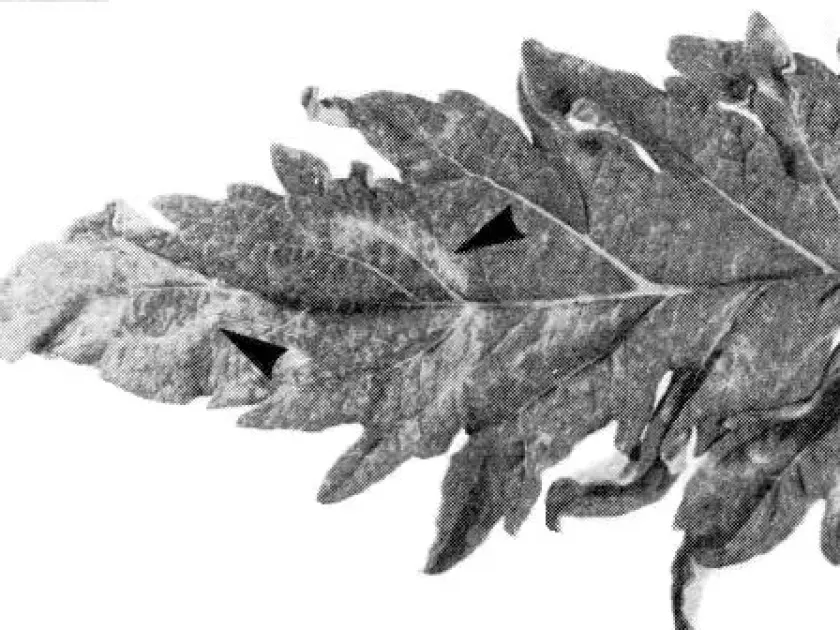
The characteristic symptom of the disease is the appearance of chlorotic patterns that align precisely with the veins of the plant's leaves.
In the early stages, the infection manifests as light yellow or lime-colored streaks that eventually spread and merge, forming a distinct mosaic-like banding.
As the disease progresses, infected artichoke leaves often show signs of distortion, becoming wrinkled and significantly reduced in size compared to healthy foliage.
The plant exhibits stunted growth, with a noticeable reduction in the overall vigor of the bush and a decrease in the development of vegetative biomass.
Severe infections affect the flower stalks, which may develop abnormally, resulting in malformed or non-marketable heads that lack commercial value.
Pathogen
The causative agent is the Artichoke vein banding virus (AVV), which is classified within the Potyvirus genus of the Potyviridae family.
The viral particles are flexuous, thread-like structures that are common to members of this particular taxonomic group.
AVV primarily infects plants within the Asteraceae family, including the globe artichoke, as well as various wild and ornamental weed species.
The virus acts as a systemic pathogen, spreading throughout the plant's vascular tissue and establishing a persistent infection in its host.
In natural conditions, the pathogen is transmitted by insect vectors, primarily various aphid species, in a non-persistent, stylet-borne manner.
Conditions for development
The spread of the virus is heavily dependent on the population dynamics of aphid vectors, which typically thrive during warm and humid weather conditions.
Agricultural practices play a crucial role in disease dissemination, specifically the use of infected vegetative parts or rootstock during propagation.
The virus can persist in perennial rootstocks throughout the winter, providing a consistent source of inoculum for emerging shoots in the spring.
Environmental stress and the proximity of weeds that serve as alternative hosts facilitate the movement of the virus into commercial fields.
Temperature significantly impacts symptom expression, with the optimal range of 20–25 degrees Celsius favoring viral replication within the plant tissue.
Why it matters
The virus significantly reduces the photosynthetic efficiency of the leaves due to systemic chlorosis, leading to lower energy production and stunted development.
The economic impact is largely driven by yield loss, as the quality and size of the harvested artichoke heads are severely degraded.
Infected plants display a weakened immune system, making them more susceptible to secondary fungal and bacterial infestations in the field.
The presence of the virus in mother plants prevents the production of healthy offsets, leading to the gradual decline and degradation of the entire plantation.
Additional costs arise from the need for intensified phytosanitary monitoring, chemical vector control, and premature replanting of infected fields.
Protection
The primary strategy for controlling AVV is the strict use of virus-free, certified propagation material obtained through tissue culture techniques.
Growers should conduct frequent field inspections to identify and immediately rogue (remove) any plants showing symptoms of vein banding.
Management of aphid populations using targeted insecticides is essential during the high-activity periods of vector insects to minimize viral transmission.
Maintaining a weed-free environment surrounding the artichoke plots helps to reduce alternative reservoirs for both the virus and its insect vectors.
- Strict spatial isolation between new fields and old, infected plantations.
- Sanitization of all cutting tools and machinery between different field blocks.
- Continuous monitoring for emerging viral symptoms throughout the growing season.
Discussion
No discussions yet — be the first.