
Arcyria
Arcyriaceae
Description
Symptoms
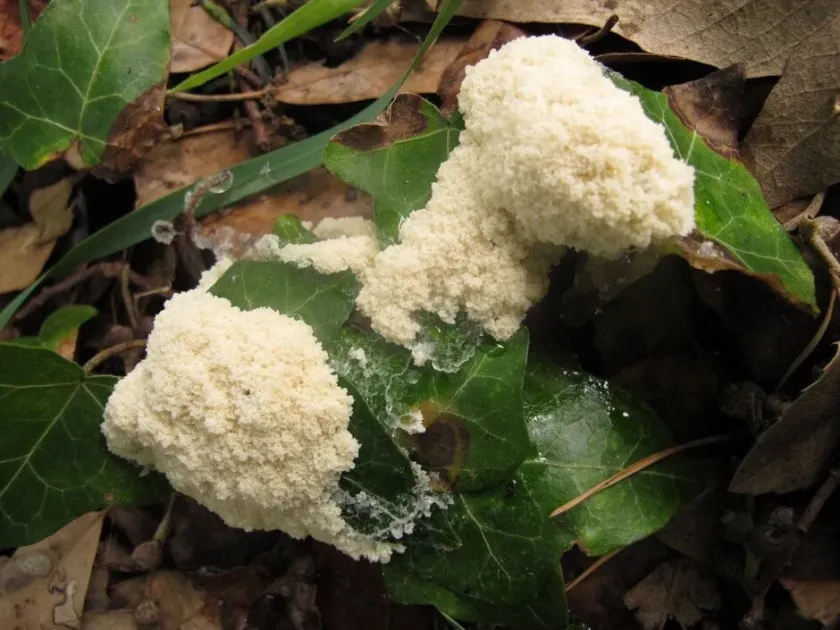
The primary sign of Arcyria presence is the development of distinct sporangia, which often appear as small, cylindrical, or club-shaped structures grouped together.
These fruiting bodies are frequently brightly colored, ranging from vivid pink to yellow or brown, making them easily visible on stems, leaves, or tree bark.
As the sporangia mature, they open to release a significant quantity of dry, powdery spores that can coat the surface of the plant substrate.
The mobile plasmodium stage, which precedes the fruiting bodies, has a jelly-like or mucous consistency, allowing it to slowly navigate across plant surfaces.
While beginners might confuse them with powdery mildew or rust, closer inspection reveals complex, geometric internal structures typical of slime molds rather than filamentous fungal growth.
Pathogen
Arcyria (genus Arcyria of the family Arcyriaceae) belongs to the group of myxomycetes, or slime molds. These organisms are not true fungi and are not considered plant pathogens in the strict phytopathological sense.
During their life cycle, Arcyria exist as a mobile plasmodium that feeds on bacteria, fungal spores, and small organic particles found on decaying plant material or moist surfaces.
Biologically, these organisms are saprotrophs, meaning they derive nutrients from non-living organic matter. They do not feed on living plant tissues.
They are classified within the division Mycetozoa. These organisms are known for their ability to move at certain stages and eventually form conspicuous fruiting bodies, known as sporangia.
For agronomists, their presence is primarily an environmental indicator of excessive moisture and poor aeration, conditions which can support the development of more harmful parasitic fungi.
Conditions for development
The development of Arcyria is heavily reliant on high ambient humidity and the presence of abundant decaying organic matter, which serves as a food source for the plasmodium.
They thrive in shaded areas where poor air circulation prevents the rapid evaporation of moisture from the foliage and stems of plants.
Moderate temperatures combined with frequent precipitation or heavy morning dew create the optimal environment for their activity and subsequent reproduction.
Poor garden or field hygiene, such as leaving branch debris, fallen leaves, or thick decaying mulch layers, provides the necessary substrate for colonization.
Poorly drained soils that lead to standing water indirectly promote the presence of slime molds, as they capitalize on the increased micro-organic activity in waterlogged zones.
Why it matters
Arcyria causes little direct harm to living plants because it does not consume living cells. Its impact is generally considered negligible in terms of plant health.
However, the mass development of slime molds on aerial plant parts can interfere with photosynthesis by physically covering the leaf surface with a layer of sporangia.
The main danger is their role as a bio-indicator; their presence suggests a microclimate that is also highly conducive to dangerous plant diseases like grey mold or downy mildew.
Occasionally, the physical presence of sporangia can cause minor irritation to the epidermis of delicate young plants, leading to localized pigment changes or tissue stress.
For ornamental or commercial crops, the presence of these structures significantly degrades the aesthetic and market value of the produce.
Protection
The most effective management strategy is maintaining good phytosanitary standards, including the regular removal of fallen leaves and decaying wood debris.
Improving air circulation through proper spacing and pruning helps to lower local humidity, making the environment less hospitable for slime molds.
Adjusting irrigation practices to ensure the soil is not waterlogged and avoiding evening watering can significantly decrease the likelihood of colonization.
If clusters are found, they can be removed mechanically or washed away with water; in cases of high incidence, a mild prophylactic fungicide spray can be applied to the affected area.
- Improve drainage systems to prevent water pooling.
- Prune dense canopy cover to increase airflow.
- Use proper ventilation techniques in greenhouse environments.
Discussion
No discussions yet — be the first.