
Arcyria
Arcyria
Description
Symptoms
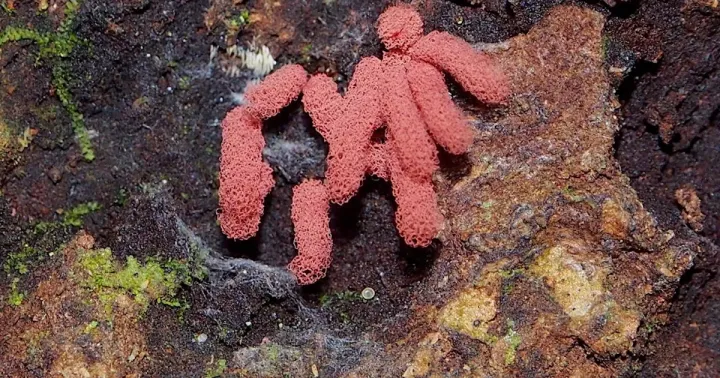
The most distinctive signs of Arcyria are the presence of small, colorful sporangia that often appear in clusters on various surfaces.
These fruiting bodies can be found in shades of vibrant pink, orange, or deep red, becoming more noticeable as they mature and dry out.
As they age, the sporangia expand into a fuzzy or cotton-like mass, which contains the spores and is easily dispersed by wind or physical contact.
Unlike common plant diseases, they sit on top of the plant surface without creating lesions, chlorosis, or necrotic spots.
They are frequently observed on decaying bark, moist wood, or rotting plant debris situated at the base of shrubs or in damp flower beds.
Pathogen
Arcyria is a genus of slime molds belonging to the phylum Myxomycota. It is important to note that these organisms are not plant pathogens and do not cause diseases in plants.
As saprotrophs, they thrive on decaying organic matter rather than living plant tissues. They occupy a biological niche distinct from parasitic fungi or bacteria.
The life cycle of Arcyria involves a mobile stage called a plasmodium, which feeds on bacteria, fungi, and decaying plant material in the environment.
Because they do not extract nutrients from the host plant, they do not interfere with the plant's vascular system, growth patterns, or physiological processes.
While often confused with fungal infections by gardeners, Arcyria is a biological phenomenon of decomposition and does not require conventional anti-fungal treatments.
Conditions for development
High levels of relative humidity and moisture are the primary drivers for the growth and reproduction of these slime molds.
Poor ventilation and sheltered, shaded garden spots create the perfect environment for the life cycle of Arcyria to proceed.
Decaying mulch, piles of leaves, or damp woody debris serve as essential food sources and stable habitats for the plasmodial stage.
Temperatures ranging from 15 to 25 degrees Celsius, combined with stagnant air, are ideal for the rapid emergence of visible fruiting bodies.
Excessive irrigation or areas with poor soil drainage often lead to the local proliferation of these organisms, making them more visible in the landscape.
Why it matters
Arcyria causes no direct harm to healthy plants. It is essentially an indicator species of high moisture and decaying organic matter in the vicinity.
The primary nuisance is purely aesthetic, as the colorful and fuzzy clusters can look unappealing to those who maintain manicured gardens.
In extreme cases of heavy coverage, they might slightly block sunlight from reaching a leaf surface, but this rarely impacts the plant's overall vitality.
For sensitive individuals, the spores released by mature clusters may occasionally trigger mild respiratory or allergic reactions when handled directly.
The presence of Arcyria should be viewed as a reminder to improve garden sanitation rather than a crisis requiring chemical intervention.
Protection
Effective management focuses on environmental control rather than chemical application, as no pesticides are designed to eliminate them.
- Remove rotting organic debris, old wood, and wet leaves from the base of plants.
- Improve air circulation by pruning dense foliage and maintaining distance between plants.
- Adjust irrigation schedules to ensure soil and surfaces have time to dry between waterings.
- Use inorganic mulch materials like gravel where moisture levels are consistently too high.
- Physically wash away clusters with a gentle stream of water if their appearance is undesirable.
Discussion
No discussions yet — be the first.