
Monilinia twig blight
Apricot Moorpark mottle agent
Description
Symptoms
Initial symptoms typically appear immediately after flowering. Blossoms wilt, turn brown, and collapse, often remaining attached to the branch for some time.
Affected shoots show necrotic lesions and rapid wilting. The bark may turn brown, and small grayish-yellow sporulation cushions appear on the surface.
A tell-tale sign is the presence of fungal spore masses on the affected parts, which are easily spread by wind and rain to neighboring healthy plants.
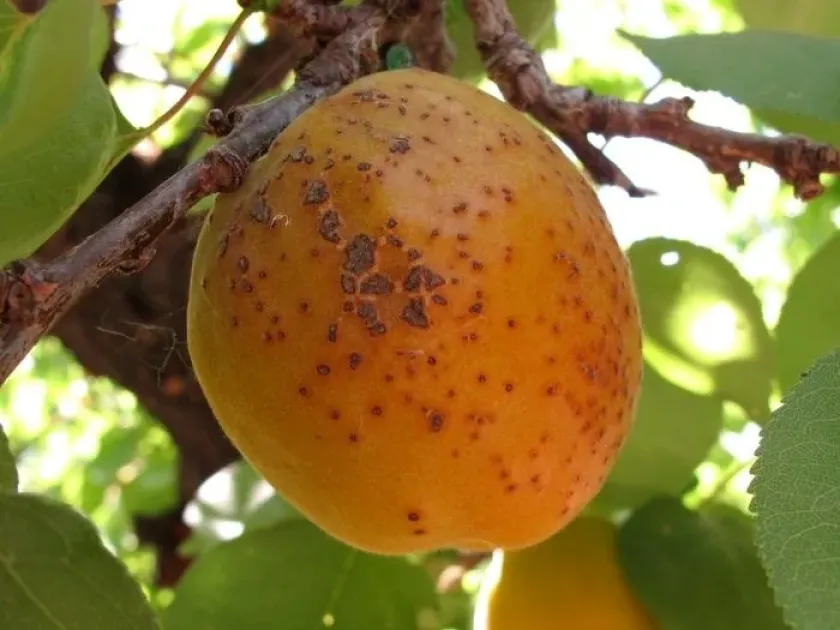
On fruits, the disease starts as brown rot spots that expand rapidly, covering the entire fruit. Concentric circles of fungal growth become visible on the surface.
If left untreated, infected branches die off, and fruits often become shriveled "mummies" that remain on the tree, acting as a source of inoculum for the next season.
Pathogen
The disease is caused by the fungus Monilia cinerea (or Monilia laxa). This pathogen belongs to the Ascomycota group and is responsible for severe infections in stone fruit trees.
The life cycle begins in spring, when airborne conidia or ascospores land on the blossoms of susceptible trees. The fungus enters the plant through the pistils of the flowers.
Once inside, the mycelium secretes toxic substances that cause the death of tissues. This leads to the characteristic "burnt" appearance of branches and blossoms.
The fungus overwinters as mycelium in mummified fruits, dead twigs, and bark crevices. When warm weather arrives, it starts producing new spores to restart the cycle.
High humidity and moisture are the primary drivers for the rapid spread of spores from infected plant parts to healthy blossoms, leaves, and maturing fruits.
Conditions for development
The development of Monilinia blight is heavily dependent on high moisture levels during the blooming period. Prolonged rain or fog creates the perfect conditions for infection.
Temperatures between 15°C and 20°C are optimal for the growth and spread of the fungus. Under such conditions, the disease can devastate an orchard in just a few days.
Mechanical injuries caused by insects or hail create entry points for the pathogen, making the tree significantly more susceptible to the infection.
Dense canopies and poor air circulation maintain a microclimate of high humidity, which fosters the proliferation of spores throughout the tree's structure.
Neglecting orchard sanitation, particularly the presence of mummified fruit left on trees, ensures a high disease pressure that is hard to manage without chemical intervention.
Why it matters
The primary harm is the drastic reduction in yield, as the fungus destroys blossoms and young fruit, leading to massive crop losses in a single season.
Beyond fruit loss, the disease kills scaffold branches and twigs, weakening the tree's structure and reducing its overall productivity and vigor over time.
Stressed and infected trees are more prone to subsequent attacks by secondary pests and diseases, which can eventually lead to the total death of the tree.
The economic cost of managing the disease is significant, requiring multiple applications of fungicides and intensive labor for pruning and orchard sanitation.
Since the pathogen affects almost all stone fruit species, the failure to control it can lead to the widespread abandonment of susceptible fruit crops in affected regions.
Protection
Sanitation is the cornerstone of control. This includes the regular pruning of infected twigs, cutting back to healthy wood, and the removal of all mummified fruits.
Applying copper-based fungicides during the bud-break stage is highly recommended to reduce the overwintering spore population before the bloom starts.
During the flowering period, it is crucial to apply systemic fungicides that can inhibit fungal growth within the host tissues and protect the blossoms.
Proper pruning practices that ensure good air circulation and light penetration are essential to keep the canopy dry and discourage fungal development.
Integrated pest management, particularly controlling insects that damage fruit skins, helps reduce the entry points for the fungus, effectively lowering the risk of infection.
Discussion
No discussions yet — be the first.