
Apple rubbery wood
Apple rubbery wood agent
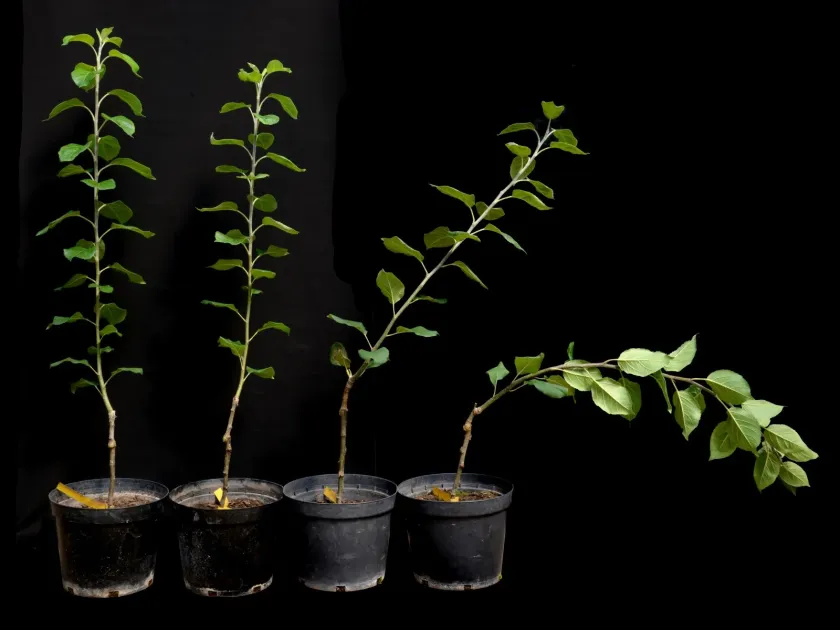
Description
Symptoms
The defining characteristic of the disease is the extreme flexibility of branches. Instead of being rigid, the wood becomes soft and pliable, resembling rubber.
The affected tree canopy often appears weeping, as branches bend under their own weight or the weight of the fruit, failing to support themselves in a natural upright position.
Symptoms are most visible on younger, vigorously growing shoots, which remain soft long after they should have lignified and hardened for the season.
Leaves on infected trees may appear smaller and exhibit chlorosis. The overall growth of the tree is significantly stunted, leading to a reduced canopy size and poor foliage development.
In terms of productivity, trees show a decline in fruit quality and size. The blossoms may be sparse, and the resulting fruits are often poorly colored and misshapen.
Pathogen
The disease is caused by a phytoplasma known as Apple rubbery wood phytoplasma. These obligate parasites infect the phloem tissue of apple trees, disrupting their physiological functions.
Unlike fungi or bacteria, phytoplasmas are specialized microorganisms that reside within the plant's vascular system, making them difficult to detect and control.
The infection is predominantly spread through the use of infected graftwood or rootstocks during propagation. This makes nurseries the primary source of initial disease spread.
Insects, particularly leafhoppers, can act as vectors, transmitting the pathogen from infected trees to healthy ones during their feeding process in the orchard.
The pathogen often survives in a latent state, meaning a tree can harbor the phytoplasma for years without showing visible signs of rubbery wood, while still acting as a carrier.
Conditions for development
Optimal development of the disease occurs during warm growing seasons when high metabolic activity supports the rapid multiplication of phytoplasmas within the phloem.
Orchard environments that support large populations of leafhoppers significantly increase the risk of disease transmission between trees.
Poor orchard management practices, such as pruning with non-sterilized tools, facilitate the mechanical transfer of the pathogen from infected tissues to healthy ones.
Stress conditions, such as improper irrigation or soil nutrient imbalances, can make trees more susceptible to the infection and exacerbate the expression of symptoms.
The disease spread is most aggressive in regions with mild winters, where insect vectors can remain active for longer periods, increasing the transmission window.
Why it matters
The primary damage is the structural failure of the tree. The rubbery branches are unable to sustain the weight of a crop, leading to breakage and long-term deformities.
The reduction in vigor and metabolic efficiency results in significantly lower annual yields, making the infected trees economically unviable for commercial production.
Affected trees lose their resilience to other environmental stressors, including drought and cold, often leading to a premature decline and death of the specimen.
An infected tree serves as a permanent reservoir of the pathogen, increasing the risk of infection for all surrounding trees within the orchard.
The disease imposes a heavy financial burden on growers due to the loss of tree productivity, the costs associated with orchard removal, and the need for new plantings.
Protection
Prevention is the most effective management strategy. Growers must exclusively source certified, pathogen-tested planting material from reputable nurseries.
Strict sanitation during pruning is mandatory. All tools must be disinfected between every single tree to prevent cross-contamination via contaminated sap.
Integrated Pest Management (IPM) programs should be implemented to monitor and control potential insect vectors, such as leafhoppers, throughout the growing season.
If a tree is confirmed to have Apple rubbery wood, it should be promptly removed, including the root system, to eliminate the source of the infection in the orchard.
Regular orchard inspections are essential. If symptoms are identified, samples should be sent for laboratory testing, such as PCR, to confirm the diagnosis and take immediate action.
Discussion
No discussions yet — be the first.