
Apple rosette
Apple rosette agent
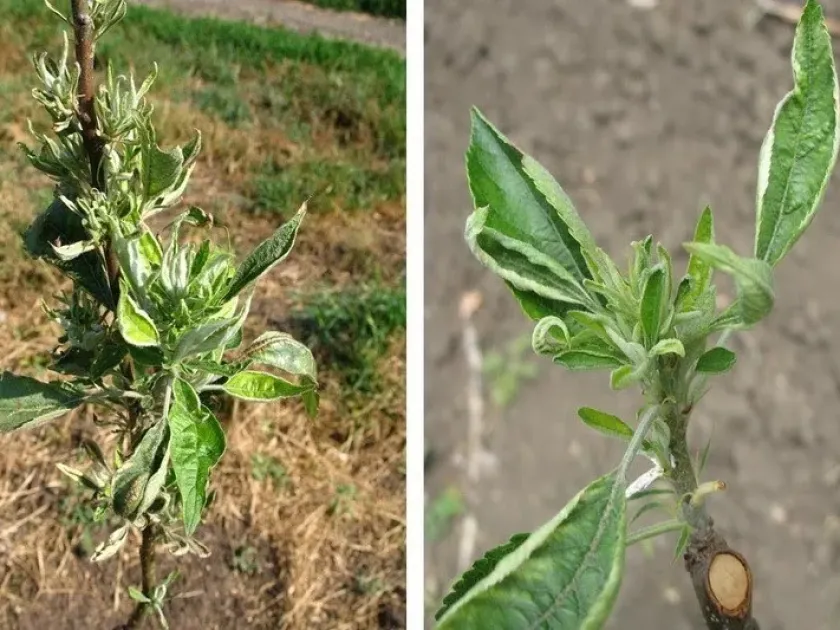
Description
Symptoms
The most distinctive symptom is the severe shortening of internodes at the tips of the twigs, resulting in leaves clustered together in a rosette pattern.
Affected leaves are significantly smaller than normal, frequently narrow or lanceolate in shape, and often exhibit a brittle, leathery texture.
Chlorosis and marginal necrosis are common on the leaves, indicating severe metabolic stress and the inability of the tree to conduct efficient photosynthesis.
Bud development is severely impaired, with flowers appearing small, deformed, or failing to develop entirely, leading to a complete lack of fruit set.
As the disease progresses, the terminal buds die back, resulting in a broom-like appearance of branches and significant canopy thinning.
Pathogen
Apple rosette, frequently referred to as little leaf disease, is a non-infectious physiological disorder that stems from improper plant nutrition.
The primary cause of this condition is a significant deficiency of zinc within the plant tissues, which is essential for the biosynthesis of growth hormones.
Zinc is a vital cofactor for many enzymes, and its absence prevents the proper elongation of shoots and the normal development of leaf cells.
This condition often arises in soils that are highly alkaline, overly rich in phosphorus, or compacted, all of which inhibit the uptake of zinc by the roots.
Although not caused by a bacterium or virus, the condition is categorized as a serious physiological disease that can affect entire orchards simultaneously.
Why it matters
The economic impact of apple rosette is high, primarily due to the complete cessation of fruit production in the affected sections of the tree canopy.
The stunted growth of the trees leads to long-term decline, making the orchard less productive and shortening the lifespan of individual apple trees.
Trees afflicted with this disorder lack the vigor to survive harsh winters, making them highly susceptible to frost damage and secondary pathogen infestations.
Reduced leaf surface area limits the tree's ability to store energy, leading to overall weakness and increased vulnerability to pests such as aphids or mites.
Neglecting the condition leads to progressive branch death, ultimately requiring the removal of severely affected trees from the plantation.
Protection
The most effective intervention is the application of foliar sprays containing zinc sulfate or chelated zinc compounds to correct the nutrient deficiency.
Orchard managers should conduct soil tests to evaluate pH levels and phosphorus content, adjusting fertilization programs to ensure better zinc availability.
Proper pruning of dead or severely affected branches is necessary to promote the development of new, healthy growth during the following growing season.
Maintaining a balanced soil environment through the use of organic matter can improve micronutrient retention and uptake by the root system.
Regular monitoring of young foliage in early spring allows for the early detection and treatment of zinc deficiency before the disorder becomes chronic.
Discussion
No discussions yet — be the first.