
Apple proliferation
Apple chat
Description
Symptoms
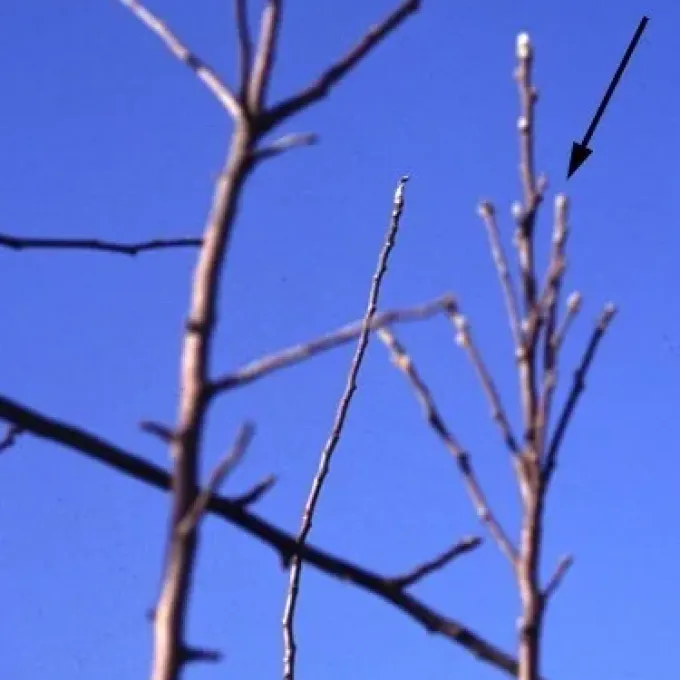
The hallmark symptom of apple proliferation is the formation of "witches' brooms," which consist of clusters of thin, upright shoots growing from dormant buds.
Infected trees often exhibit early bud break in the spring, with leaves appearing smaller, elongated, and having serrated edges compared to healthy ones.
Fruits on affected trees are significantly smaller, have poor flavor, and often show signs of premature ripening or poor color development.
The stems of the fruits become unusually long and thin, which is a specific morphological change associated with the infection by this pathogen.
During the growing season, leaves may show premature yellowing or reddening, indicating a systemic failure in the plant's metabolic and transport processes.
Pathogen
Apple proliferation is caused by the phytoplasma Candidatus Phytoplasma mali, a specialized bacterium that lacks a cell wall and resides in the phloem.
This pathogen disrupts the translocation of nutrients and photosynthates from leaves to the roots, causing the tree to weaken gradually over time.
Because phytoplasmas lack a cell wall, they are highly fragile and cannot survive outside the host plant or the insect vector for an extended period.
The infection is systemic, meaning the pathogen spreads through the tree's vascular system, ensuring that once a tree is infected, it remains infected for its entire life.
Molecular techniques, particularly PCR (polymerase chain reaction), are the gold standard for diagnosing the presence of this pathogen in orchard samples.
Conditions for development
The disease is primarily transmitted by sap-sucking insects, most notably the apple psyllid (Cacopsylla mali) and various leafhopper species.
Transmission frequently occurs via the use of infected grafting material or scions, making nurseries the main point of spread for the disease into new regions.
Optimal conditions for spreading include warm, dry weather which favors the activity and migration of insect vectors between trees in the orchard.
The disease can remain latent for several seasons, allowing the pathogen to spread silently throughout the orchard before visible symptoms appear on the trees.
Orchards located near wild host reservoirs are at a higher risk, as native insect populations may pick up the pathogen from wild vegetation and bring it into the orchard.
Why it matters
The economic impact is severe due to the loss of marketable yield, as fruits from infected trees are small, tasteless, and fail to meet commercial standards.
Over several years, the vitality of the tree declines, leading to reduced productivity, branch dieback, and the eventual death of the entire tree.
Infected trees show reduced cold tolerance, making them more susceptible to winter damage and increasing the mortality rate during harsh climatic events.
Nurseries face significant losses when batches of saplings are diagnosed with the disease, as these plants must be destroyed to prevent further spread.
The lack of curative treatments for infected trees means that growers must rely on costly removal and replacement, impacting the overall orchard lifespan.
Protection
Strict use of certified, disease-free nursery stock is the most effective way to prevent the introduction of apple proliferation into new orchards.
Integrated pest management (IPM) focusing on the control of psyllids and leafhoppers is crucial to minimizing the transmission of the phytoplasma between trees.
Early detection and the immediate removal of symptomatic trees are essential to reducing the inoculum level and limiting the spread within the plantation.
Maintaining high standards of orchard hygiene, including the removal of weeds that may host insect vectors, helps to reduce the local population of transmitters.
Collaborative efforts at the regional level, such as monitoring programs and quarantine regulations, are necessary to control the movement of potentially infected material.
Discussion
No discussions yet — be the first.