
Apatococcus
Apatococcus
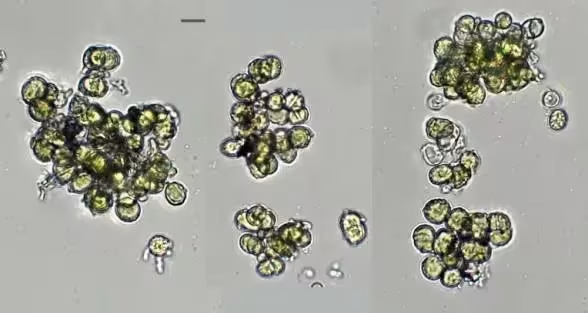
Description
Symptoms
The primary symptom of Apatococcus presence is a distinct green, emerald, or yellow-green powdery coating on the tree trunks and branches.
The growth appears as a fine-textured, matte film that can be easily rubbed off or removed with a soft brush.
It typically favors the north-facing or shaded sides of the tree, where sunlight is limited and humidity persists for longer periods.
Unlike mosses or lichens, Apatococcus lacks complex structures and does not have specialized organs for nutrient uptake from the tree.
The intensity of the green coloration often fluctuates with the weather, appearing more vibrant during damp, overcast seasons.
Pathogen
Apatococcus (Apatococcus lobatus) is a genus of unicellular or colonial green algae that frequently colonize the bark of trees and shrubs.
Biologically, it is not a plant pathogen; it is classified as an epiphytic organism that uses the bark surface merely as a substrate for growth.
It does not penetrate the tree tissue, nor does it derive nutrients from the host plant, meaning it does not cause parasitic diseases.
These algae reproduce through simple cell division and can form extensive mats across the surface of the bark under the right conditions.
Apatococcus is highly resilient and can withstand periods of desiccation, quickly resuming activity once moisture returns.
Conditions for development
Development is driven primarily by persistent high relative humidity and a lack of direct sunlight, which prevents the bark from drying out.
Crowded plantings with poor air circulation create the stagnant microclimate required for these algae to colonize surfaces effectively.
Older trees with rough, fissured bark provide ideal microsites that capture and hold the moisture necessary for algal cells to survive and propagate.
Nitrogen-rich environments, often caused by heavy fertilization or nitrogen deposition from pollution, can significantly accelerate algal growth.
The absence of proper crown maintenance, such as pruning, creates the deep shade that encourages Apatococcus to thrive on the main limbs and trunks.
Why it matters
While Apatococcus is not a parasite, heavy coverage may theoretically inhibit gas exchange by slightly occluding the lenticels on the bark surface.
The presence of significant algal growth is often a bioindicator that the tree or its immediate environment is not in optimal physiological condition.
Prolonged moisture retention on the trunk, associated with the presence of algae, may increase the risk of secondary infections by opportunistic fungi.
For ornamental trees, the buildup of algal coatings is considered an aesthetic issue that detracts from the visual health and appearance of the landscape.
In neglected orchards, such growth can be a warning sign that the tree requires better thinning or environmental management to prevent future stress.
Protection
The most effective management strategy for Apatococcus is improving the overall growing conditions and hygiene of the orchard or landscape.
Mechanical removal, including gentle scrubbing of the bark with a stiff brush, is the simplest way to reduce the presence of the algae.
Applying a lime wash (whitewash) to trunks and skeletal branches during the dormant season is a highly effective preventative measure against colonization.
Structural pruning is essential to increase sunlight penetration and improve airflow throughout the canopy, which effectively discourages algal growth.
- Regular canopy thinning for improved air circulation.
- Annual whitewashing of tree trunks.
- Manual brushing of bark to remove old residue.
- Maintaining proper drainage to reduce humidity levels.
Discussion
No discussions yet — be the first.