
Anemone brown spot
Anemone brown ringspot virus
Description
Symptoms
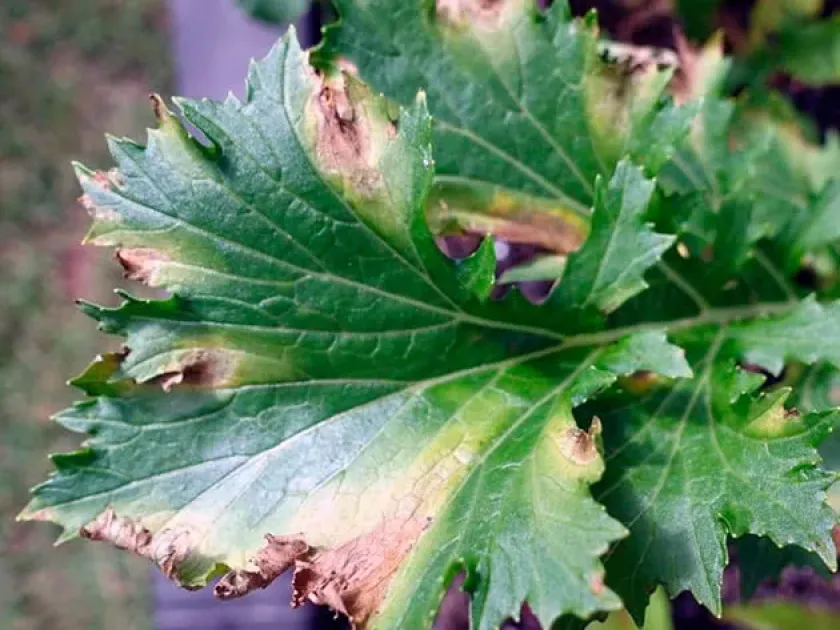
The primary symptom of the disease is the appearance of small, circular or irregular brown spots on the leaf blades. Over time, these spots enlarge and often develop a dark margin, with the center occasionally becoming light or necrotic.
During periods of high humidity, minute black dots—pycnidia—become visible on the spots, which represent the fungal fruiting bodies. These structures produce mass amounts of spores that further propagate the infection.
As the disease progresses, the infected leaves turn yellow and drop prematurely. This leads to sparse foliage and significantly reduces the overall aesthetic and ornamental value of the plant.
In severe cases, the fungus attacks petioles and flower stalks, causing distortion and drying of the buds. The plant exhibits stunted growth and poor vitality, struggling to complete its life cycle.
- Appearance of brown spots with dark borders.
- Visible black fungal fruiting bodies (pycnidia) on the spots.
- Chlorosis and premature leaf drop.
- Distortion and drying of stems and flower stalks.
Pathogen
The causative agent of brown spot in anemones is a fungal infection, typically caused by species of the genus Septoria or Phyllosticta. These fungi are common pathogens that thrive in diverse environmental conditions.
The fungus invades plant tissues through stomata or mechanical wounds on the epidermis. Once inside, it develops a mycelium that spreads through the leaf tissue, disrupting normal metabolic and photosynthetic functions.
The pathogen overwinters as pycnidia on infected plant debris or in the upper soil layers. When favorable conditions return in the spring, spores are released and disseminated via rain splashes or wind to healthy plants.
This disease affects various Anemone species, impacting both commercial crops and garden varieties. Weakened plants or those grown in poor conditions are significantly more susceptible to these fungal invasions.
The biology of the pathogen allows for rapid adaptation to different climates, making it a persistent issue for gardeners and growers who do not implement proper sanitation protocols.
Conditions for development
The development of brown spot is heavily favored by warm, humid weather with frequent rainfall. High relative humidity and poor air circulation within the plant canopy provide optimal conditions for fungal growth.
Overhead irrigation is a common factor that exacerbates the disease, as water droplets on the leaf surface act as a medium for spore germination and transmission from leaf to leaf.
Densely planted garden beds hinder air movement, causing microclimates with stagnant moisture. These conditions are perfect for the fungus to establish itself and spread rapidly through the patch.
Shaded or poorly ventilated environments weaken the anemones' natural immunity, leaving them prone to fungal attacks. Furthermore, excessive nitrogen fertilization can produce soft tissue that is more vulnerable to infection.
Temperature fluctuations and persistent dew or fog help maintain the humidity levels necessary for the pathogen to thrive throughout the active growing season.
Why it matters
Anemone brown spot significantly damages the plant by limiting photosynthesis. The loss of healthy leaf surface reduces the energy available to the plant for developing healthy rhizomes or tubers for the next season.
Infected plants often struggle to survive the winter and may succumb to rot or frost damage. This leads to poor flowering or even death of the plants in subsequent years, causing economic losses for growers.
The aesthetic degradation caused by the spots and leaf drop makes the plant unsuitable for display. It creates a negative impact on the overall garden design or commercial crop yield.
If left unmanaged, the fungus can quickly spread across the entire garden, necessitating the removal of multiple plants. This cumulative effect makes brown spot a major concern for anemone conservation.
Furthermore, the pathogen can persist in the soil and on debris, serving as a reservoir of infection that threatens other nearby floral species susceptible to the same fungal family.
Protection
Strict sanitation is the foundation of disease control. Gardeners must promptly remove and destroy all infected leaves and plant debris to minimize the source of primary inoculum for the next year.
Applying contact fungicides, such as copper-based products or Bordeaux mixture, is effective if performed at the early stages of symptom appearance to prevent widespread spore dissemination.
For more severe outbreaks, systemic fungicides belonging to the triazole or strobilurin classes may be necessary. These products penetrate the plant tissue and combat the fungus from within.
Preventative measures include choosing well-drained planting sites, maintaining proper spacing to ensure air circulation, and practicing sub-soil watering rather than overhead irrigation.
Regular monitoring of the garden allows for early detection of infected foliage. By removing affected parts immediately, you can prevent the disease from becoming an epidemic in your planting.
Discussion
No discussions yet — be the first.