
Ampeloviruses
Ampelovirus
Description
Symptoms
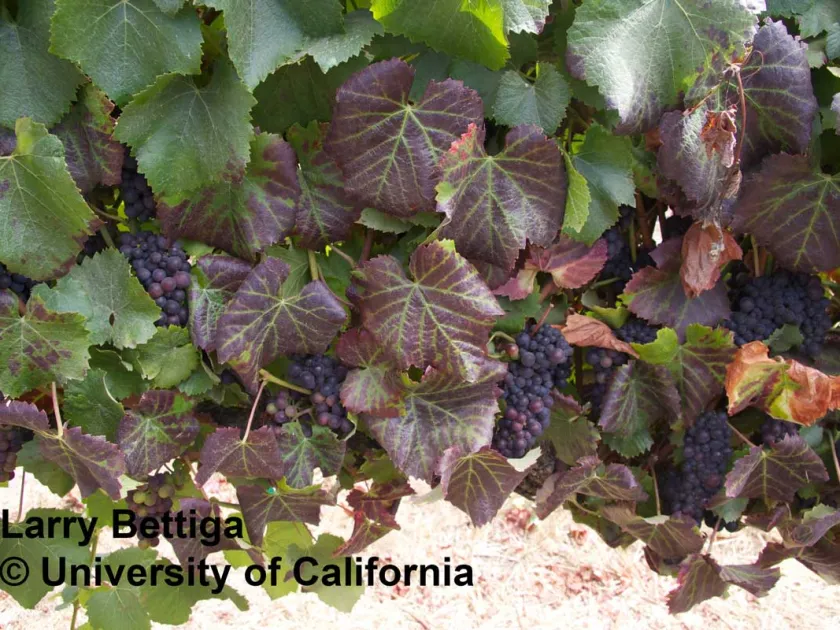
The hallmark symptom is the downward rolling of leaf margins, which is most visible in the basal leaves during the later stages of the growing season. Red-berried cultivars often show reddening of interveinal leaf tissue.
In white-berried cultivars, leaves may exhibit yellowing or chlorosis between the veins. These symptoms are often mistaken for nutrient deficiencies, but unlike nutritional issues, they are not corrected by fertilization.
Affected vines show inhibited vegetative growth and shortened internodes. The overall canopy density may be reduced, and the vines appear stunted compared to adjacent healthy specimens in the same plot.
Poor wood maturation is a critical sign of infection. The shoots often remain green until the onset of winter, which significantly reduces the vine's cold hardiness and leads to severe frost damage.
- Delayed bud burst in spring.
- Reduced fruit cluster weight.
- Low sugar accumulation in berries.
Pathogen
Ampeloviruses belong to the genus Ampelovirus within the family Closteroviridae. They are identified as the primary etiological agents of Grapevine Leafroll-Associated Viruses (GLRaVs), which are widespread throughout global viticulture.
The virus consists of a single-stranded RNA genome enclosed in long, flexuous, filamentous particles. These pathogens are strictly phloem-limited, meaning they colonize and disrupt the vascular tissue responsible for carbohydrate transport.
Transmission occurs primarily through vegetative propagation using infected rootstocks or scions. Additionally, insect vectors, specifically mealybugs (Pseudococcidae) and soft scales (Coccidae), play a crucial role in spreading the virus in vineyards.
Ampeloviruses are known for their ability to remain latent in host plants for extended periods. During this phase, plants may show no signs of distress, which complicates early detection and management efforts.
Biological interactions between the virus and the host lead to significant metabolic shifts. By interfering with phloem loading and unloading, the virus creates a systemic physiological imbalance that persists throughout the plant's life cycle.
Conditions for development
The spread of ampeloviruses is heavily influenced by the population density of their insect vectors. Mealybugs thrive in environments with mild winters and moderate humidity, which facilitates their reproduction and movement.
Vineyard management practices play a decisive role in virus spread. High-density planting without adequate vector control programs creates ideal conditions for rapid secondary transmission of the virus.
Climatic factors impact the vector populations directly. However, the virus itself is highly stable within the vine, as it is adapted to survive the dormant winter season in the woody tissues of the grapevine.
The introduction of infected nursery stock is the main route for long-distance dissemination. Without strict quarantine and testing protocols, the pathogen can easily move between different regions and countries.
Systemic infection means the virus colonizes all parts of the vine, including roots, cordons, and canes. Therefore, environmental stress, such as drought or heat, often exacerbates the visibility of symptoms.
Why it matters
The economic impact of ampelovirus infection is substantial, primarily due to yield losses. The reduced photosynthate transport leads to lower sugar levels, directly affecting the quality and market value of the grapes.
Grapevine leafroll disease weakens the vine over time, leading to a loss of vigor and longevity. Infected vineyards often require premature replanting, which represents a massive capital expenditure for growers.
Wine quality is significantly compromised. Lower sugar content, combined with altered acid balance and phenol development, makes it difficult to produce premium-quality wines from infected harvests.
The presence of the virus increases susceptibility to secondary diseases and environmental stressors. This results in higher input costs for fertilizers and plant protection products without a corresponding increase in yields.
In cases of severe infection, the fruit might not reach the desired maturity levels, leading to massive financial losses for wineries and growers who fail to control the spread of the virus.
Protection
The most critical control strategy is the use of certified virus-tested propagation material. Planting only disease-free nursery stock is the only way to ensure the long-term health of a new vineyard.
Vector management is essential for limiting transmission in established vineyards. This includes scheduled applications of systemic insecticides targeting mealybugs and soft scales during peak activity periods.
An aggressive roguing program is necessary once an infection is detected. Infected vines must be identified through diagnostic testing (such as ELISA or PCR), removed completely, and destroyed to eliminate inoculum.
Sanitation of tools used for pruning and grafting is mandatory. Disinfecting blades with an appropriate solution (such as sodium hypochlorite or alcohol) prevents mechanical transmission of the virus between vines.
Monitoring and isolation of young blocks from older, infected vineyards can mitigate the risk of vector migration. Maintaining a clean-plant program is the foundation of sustainable and profitable viticulture.
Discussion
No discussions yet — be the first.