
Plant amoebiasis
Amoeba
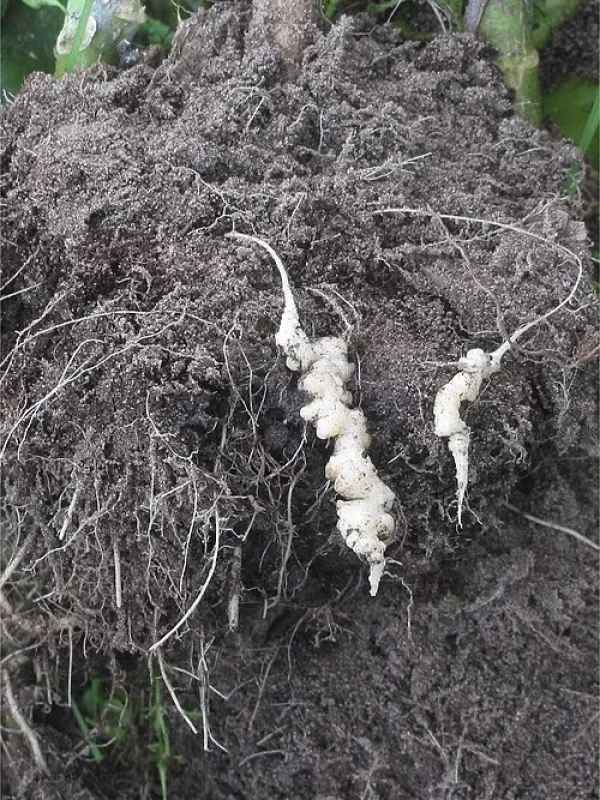
Description
Symptoms
The visual symptoms of plant amoebiasis often mimic nutrient deficiencies, characterized by general stunting and chlorosis. Despite adequate fertilization, affected plants fail to reach their full growth potential due to impaired nutrient uptake.
Close inspection of the root system reveals characteristic darkening and necrotic lesions on the fine root structures. Young roots are often deformed or shortened, significantly reducing the plant's surface area for water and nutrient absorption.
Affected plants often display wilting during peak sunlight hours, which may improve at night. This is a direct consequence of the damaged root system failing to meet the transpiration demands of the plant during periods of high evaporative demand.
In root and tuber crops, the infection may manifest as soft, mushy spots or shallow ulcers on the outer skin. If untreated, these lesions may expand, potentially leading to severe decay and total loss of the harvestable product.
- Stunted growth and delayed development
- Leaf chlorosis and premature yellowing
- Necrosis and death of fine root hairs
- Reduced plant turgor and midday wilting
- Softening or ulceration of tubers and roots
Pathogen
Plant amoebiasis is caused by specific soil-dwelling protozoa, primarily within the Amoebozoa group. Research indicates that certain species, particularly from the genus Thecamoeba, can act as opportunistic pathogens in the rhizosphere of various agricultural crops.
These microscopic organisms utilize specialized enzymatic systems to compromise the integrity of plant cell walls, specifically targeting root hairs. Unlike many fungal pathogens, amoebae are mobile, moving through the soil film to actively locate and colonize root surfaces.
The life cycle of these pathogens includes a robust cyst stage, allowing them to withstand harsh environmental stressors such as desiccation or cold temperatures. These cysts can remain dormant in the soil for several years, ensuring long-term survival.
Infection spreads through water runoff, contaminated soil particles, and infected agricultural equipment. When environmental conditions improve, the cysts release trophozoites, which begin feeding on plant roots, thus initiating the colonization process.
Frequently, this infection is exacerbated by secondary microbial invaders, as the tissue damage caused by the amoebae provides an entry point for bacteria and fungi, making the primary cause of the disease difficult to identify in field conditions.
Conditions for development
High soil moisture is the primary driver for the development of amoebiasis. Poorly drained, waterlogged soils provide the necessary aquatic medium for the movement and active reproduction of the pathogenic amoebae.
Temperature plays a crucial role, with the optimal range for development being between 18°C and 25°C. Within these parameters, the metabolic activity of the protozoa is at its peak, facilitating rapid colonization of susceptible host roots.
Heavy, compacted soils with low oxygen availability encourage the build-up of the pathogen population. The lack of proper aeration within the rhizosphere supports the survival of these organisms over aerobic microorganisms.
High levels of undecomposed organic matter in the soil serve as a nutrient source for the amoebae, allowing their population to persist even when host plants are not present in the immediate vicinity of the field.
Continuous cropping of susceptible species leads to the accumulation of cysts in the topsoil. Returning host crops to the same plot too frequently significantly increases the infection pressure on subsequent seasons.
Why it matters
The main danger of plant amoebiasis lies in its subtle impact on crop yield, which often goes unnoticed until significant damage has already occurred. This leads to diminished economic returns for farmers.
Infected crops exhibit reduced vigor and increased susceptibility to other environmental stressors, including heat and drought. This makes it challenging to maintain crop health throughout the entire growing season.
The quality of harvested produce is often compromised, with tubers and roots suffering from internal decay or reduced shelf life. This leads to substantial post-harvest losses and lower market value for the final product.
By weakening the host's primary immune barriers, amoebiasis facilitates secondary infections from other pathogens. This necessitates additional chemical treatments, further increasing production costs and decreasing overall farm profitability.
In severe cases, the seedling emergence is drastically reduced, leading to poor stand density and the need for costly replanting efforts, which disrupts the scheduled farm management cycle.
Protection
The most effective management strategy is a robust crop rotation plan that excludes susceptible host species for several years. This interruption in the host cycle helps to reduce the pathogen population density in the soil.
Implementing sound soil management, including the use of cover crops and proper tillage, is essential. Improving soil structure and drainage minimizes the moisture-heavy conditions that amoebae require for their survival.
In greenhouse settings, thermal disinfection of the soil or the use of sterile growing media is recommended. This practice effectively eradicates the pathogen's cysts before the planting phase begins.
Biocontrol agents, particularly those that target soil-borne pathogens, can be highly effective. Beneficial bacteria or fungi introduced into the rhizosphere create a hostile environment for the amoebae, limiting their ability to infect roots.
Strict sanitation protocols for farm machinery are vital to prevent the movement of contaminated soil between fields. Cleaning all tools and tractor tires is a simple yet crucial step in containing the spread of the infection.
Discussion
No discussions yet — be the first.