
Amanita strangulata
Amanita strangulata
Description
Symptoms
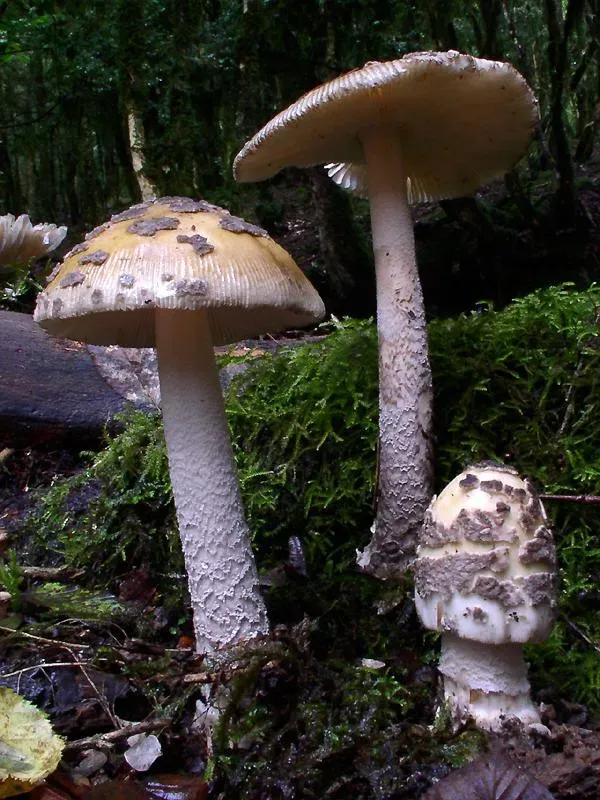
The mushroom is characterized by a greyish, often shiny cap featuring distinct radial striations at the margins.
The stipe has a unique structure, typically lacking a persistent ring, which serves as a key diagnostic feature for distinguishing it from other Amanita species.
Fruiting bodies usually appear in late summer or early autumn, most frequently in proximity to trees with which they establish mycorrhizal bonds.
The fungus does not induce deformities, spotting, or necrosis on crops, as it lacks a parasitic mode of nutrition.
When detected on a site, soil conditions should be assessed, as their mass appearance suggests acidic environments and potential waterlogging.
Pathogen
Amanita strangulata, commonly known as the grisette or Amanita ceciliae, is an agaric mushroom belonging to the Amanitaceae family.
This species is not a plant pathogen and does not cause diseases in agricultural crops in the traditional sense.
It functions primarily as a saprotroph, decomposing organic matter in the soil, or forms mycorrhizal associations with forest trees.
The scientific community categorizes it as a forest fungus rather than an infectious agent responsible for root rots or vascular wilts.
In an agronomic context, its presence indicates high soil moisture and the availability of abundant leaf litter or humus.
Conditions for development
The development of the mycelium requires moist forest or garden soils rich in humus and organic content.
Optimal conditions include high humidity in both air and soil, common in shaded areas of gardens or woodland edges.
The fungus prefers acidic soil substrates where the decomposition of organic debris is facilitated by specific microbiota.
Temperature requirements for fruiting correspond to the moderate climate typical of the late summer season.
The presence of tree roots suitable for mycorrhizal formation is a primary limiting factor for its distribution.
Why it matters
From an agronomic perspective, Amanita strangulata does not inflict direct damage on harvests or the health of cultivated plants.
The only indirect risk is the potential toxicity of the fruiting bodies if they are accidentally ingested.
The presence of this fungus does not require the use of fungicides, as it fulfills its functional role in the ecosystem as a decomposer.
Due to the absence of negative impacts on plant root systems or foliage, it is not considered a regulated or quarantine pest.
Any perceived harm is purely aesthetic, affecting gardeners who prefer pristine lawns free of any fungal flora.
Protection
Specific protective measures against Amanita strangulata are unnecessary, as it is not an agricultural pest.
If the presence of these fungi interferes with agricultural activities, liming the soil to reduce acidity is an effective management strategy.
Improving site drainage is recommended to prevent excessive moisture accumulation that favors mycelial growth.
Regular soil aeration and the removal of excessive organic mulch can help reduce the density of fungal spores in the area.
The application of chemical fungicides against this species is considered economically non-viable and ecologically unjustified.
Discussion
No discussions yet — be the first.