
Amanita oreina
Amanita oreina
Description
Symptoms
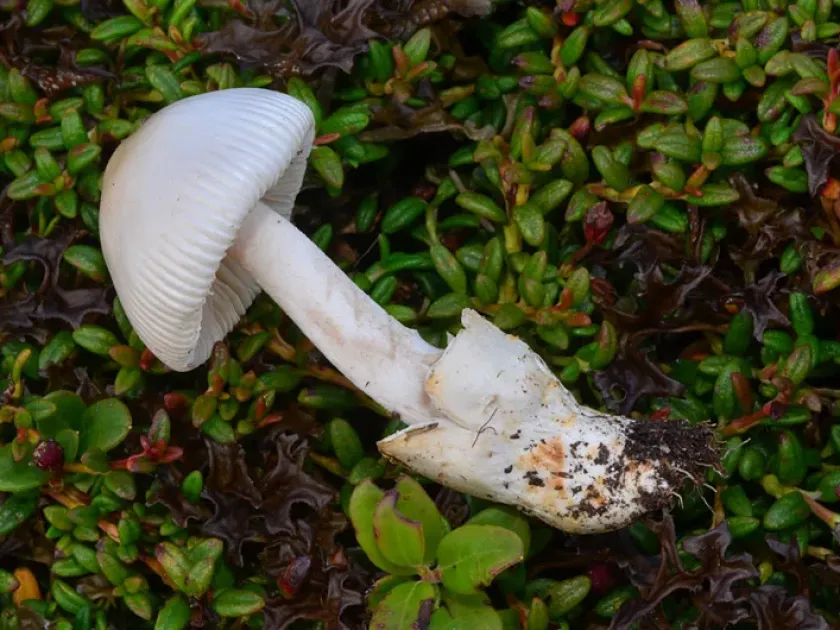
Amanita oreina is a mushroom characterized by a distinct appearance, often featuring a pale cap covered with remnants of the veil.
The gills underneath the cap are typically free or narrowly attached to the stem, exhibiting a delicate and white structure common in this genus.
The stem is robust, featuring a ring and a volva at the base, which is a key diagnostic feature for identifying members of the Amanita family.
Spore prints of this species are white, which is a standard observation used by mycologists during identification in the field.
The fungus is usually found growing on the forest floor, often partially hidden by leaf litter and decaying organic matter.
Pathogen
As a member of the Amanitaceae family, Amanita oreina is a eukaryotic organism that forms an extensive mycelial network in the soil.
It is primarily known for its mycorrhizal nature, establishing symbiotic relationships with specific forest tree species to survive.
The fungus acts as an underground partner, exchanging minerals and water collected from the soil for carbon compounds from the tree roots.
Reproduction is carried out through the release of microscopic spores from the mature fruit body, which are disseminated by wind.
The genetic makeup of this species is optimized for survival in cool, high-altitude climates, restricting its range to specific regions.
Conditions for development
The development of Amanita oreina depends on high-altitude forest environments that offer suitable moisture levels and shaded ground.
Adequate soil composition, rich in organic matter and forest litter, is essential for the mycelium to establish a firm root system.
The species prefers cool temperatures, as excessive heat can lead to the desiccation of the mycelium and inhibit fruit body development.
The presence of host trees is a crucial prerequisite, as the fungus relies on these symbiotic partners for long-term nutrition and stability.
Regional climate variability plays a significant role in determining the seasonality of the growth of these mountain mushrooms.
Why it matters
Amanita oreina is not considered a plant pathogen, meaning it does not pose a direct threat to commercial agricultural crops.
The potential harm is limited to the toxicity of certain specimens, which could be hazardous if consumed by grazing livestock.
It does not interfere with standard agronomic practices, as its habitat does not overlap with intensive agricultural production zones.
In forest ecosystems, its role is mostly beneficial due to its mycorrhizal contribution, supporting the health of the host trees.
There is no evidence suggesting this species impacts the productivity of soil or the growth rate of non-symbiotic plants.
Protection
There are no specific chemical or mechanical control measures required, as the species is not an agricultural pest.
Good pasture management practices should be followed to prevent livestock from grazing in areas where toxic Amanita species are present.
Education regarding the identification and potential toxicity of wild mushrooms is the most effective safety measure for farm personnel.
Protecting the natural balance of forest fungi is recommended rather than attempting to eradicate fungal species through chemical intervention.
General site sanitation, such as removing unwanted debris, is sufficient to maintain the integrity of fields adjacent to forest areas.
Discussion
No discussions yet — be the first.