
Alternaria leaf spot of sunflower
Alternaria protenta
Description
Symptoms
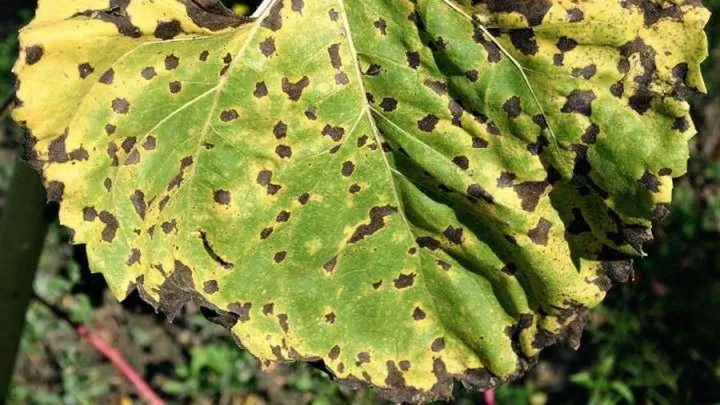
The symptoms typically manifest as small, dark brown or black spots on the leaves, which gradually expand into larger, circular, or irregular lesions.
As the spots age, they often develop a characteristic concentric zonation pattern and are surrounded by a distinct yellow chlorotic halo.
Under conditions of high humidity, the lesions show a dark, velvety growth on their surface, which consists of the conidiophores and conidia of the fungus.
In severe infections, the lesions merge together, causing extensive necrosis of the leaf tissue, followed by leaf curling, wilting, and premature senescence.
The fungus can also attack stems and petioles, leading to necrotic streaks that weaken the structural integrity of the plant and cause lodging.
Pathogen
The causative agent of Alternaria leaf spot in sunflowers is the fungus Alternaria protenta (sometimes associated with Alternaria helianthi). It is a necrotrophic pathogen that specifically targets the sunflower plant.
The pathogen overwinters as mycelium and conidia in infected plant debris left on the soil surface, as well as in soil or on alternative weed hosts belonging to the Asteraceae family.
The fungal spores are dispersed primarily by wind, rain splashes, and sometimes through mechanical contact by insects or agricultural machinery during field operations.
The fungus invades the leaf tissues through stomata or directly via wounds, establishing a colonization that secretes enzymes to break down host cell walls.
It is a highly persistent pathogen that can thrive in various agricultural environments, making it a recurring challenge for sunflower production across the world.
Conditions for development
Warm temperatures ranging from 20 to 30 degrees Celsius, combined with frequent rainfall or heavy dew, create the optimal conditions for Alternaria development.
High relative humidity (usually above 75-80%) is essential for the rapid germination of conidia and the successful penetration of the leaf tissue by the germ tubes.
Poor aeration within dense crop stands promotes moisture retention, which facilitates the rapid spread of the disease within the field.
Prolonged leaf wetness periods are the most critical factor for infection; the longer the leaves remain damp, the higher the risk of severe disease progression.
Fields with a history of sunflower monoculture have significantly higher levels of inoculum, leading to earlier and more damaging outbreaks during the season.
Why it matters
The primary damage caused by Alternaria leaf spot is the massive reduction of leaf area, which decreases the plant's capacity for photosynthesis and energy production.
This physiological stress results in reduced seed fill, lower kernel weight, and a significant drop in the overall oil content of the seeds.
In severe cases, the disease can lead to the premature death of the entire plant before the seeds reach maturity, causing substantial yield losses of up to 30%.
Seeds harvested from heavily infected plants are often of poor quality, lighter in weight, and may carry the pathogen, impacting their viability for future planting.
The weakened plants become more susceptible to stalk rot complexes and other opportunistic pathogens, further complicating the impact on field productivity.
Protection
Integrated disease management involves crop rotation as the first line of defense, planting non-host crops for at least three to four years to reduce soil inoculum.
Using certified, disease-free seed and treating it with appropriate fungicides is crucial for preventing the introduction of the pathogen into new fields.
Foliar application of fungicides during the vegetative and early reproductive stages can significantly suppress the spread of the disease when conditions are favorable.
Cultural practices such as deep tillage help incorporate crop residues into the soil, which speeds up the decomposition and destruction of fungal structures.
- Use of resistant or tolerant sunflower hybrids
- Proper sanitation and destruction of volunteer plants
- Balanced fertilization, especially potassium, to improve plant vigor
- Regular scouting of fields to identify early infection
- Timely fungicide applications when the disease threshold is reached
Discussion
No discussions yet — be the first.