
Description
Symptoms
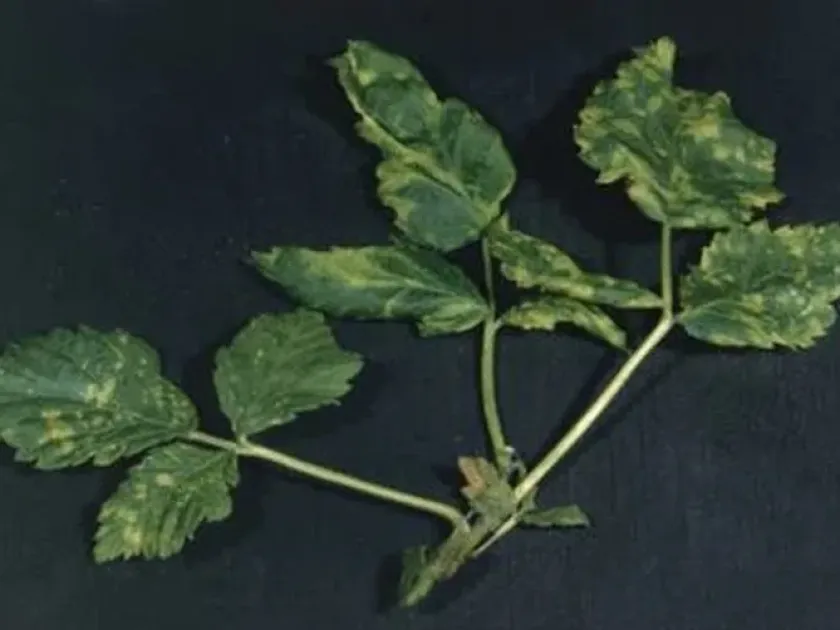
The primary symptom of raspberry mosaic is the characteristic mottled pattern appearing on the leaves. The leaf surface displays irregular spots, creating a contrast between light green, yellowish, or creamy areas and the healthy dark green tissue.
In the early stages of the growing season, these symptoms often manifest on young leaves near the base of the canes. As the disease progresses, the mottling covers a larger portion of the foliage, making the plant look notably variegated and unevenly colored.
Deformation of the leaves is a common consequence of severe infection. The leaf margins may become wavy, crinkled, or asymmetrical, while the leaves themselves are often smaller in size compared to healthy, vigorous plants of the same variety.
Symptoms on current-year canes might be mild, but they become very distinct in the second year. The overall appearance of the bush becomes stunted, and the plant loses the vibrancy and healthy pigmentation typical of its specific variety.
It is important to differentiate mosaic from nutritional deficiencies, such as chlorosis. Unlike chlorosis, which usually follows a specific pattern related to leaf veins or general yellowing due to nutrient lockup, mosaic spots have sharper boundaries and are clearly viral in nature.
Pathogen
The disease is caused by a complex of viruses, most notably the Raspberry mosaic virus complex. This is a systemic infection that colonizes the plant's vascular system, disrupting the fundamental physiological processes necessary for growth.
Once the virus enters the plant, it spreads throughout the entire structure, including the roots. Because it resides in the sap and tissue, it cannot be cured by chemical applications, making once-infected plants permanent carriers of the pathogen.
Aphids, specifically the raspberry aphid, are the main natural vectors of this disease. These insects feed on the sap of infected plants, acquiring viral particles, and then transmit the infection to healthy plants as they move through the plantation.
Mechanical transmission is also a significant factor in the spread of mosaic. Viral particles can be transferred between plants via contaminated pruning tools, such as shears and knives, if they are not properly sanitized after coming into contact with diseased material.
Furthermore, the virus is often introduced into new plantations through infected planting stock. Using cuttings or suckers from an infected bush ensures the virus persists in the new plant, eventually leading to disease symptoms as the plant matures.
Conditions for development
The spread of the virus is highly dependent on the activity of its insect vectors. Warm, humid weather conditions encourage the rapid reproduction of aphids, leading to a massive increase in the number of infected plants over a single season.
Plants under stress, whether from poor soil quality, improper irrigation, or nutrient imbalances, are significantly more susceptible to viral infections. A weakened immune system reduces the plant's ability to resist the initial colonization by the virus.
High planting density promotes the spread of mosaic. When canes are too close together, their foliage frequently brushes against each other, facilitating the movement of aphids and allowing for quick and efficient transmission across the entire row.
Weeds within the field act as important reservoirs for the virus. Several common weed species can harbor the virus, allowing it to survive in the environment even when the raspberry plants are dormant or have been removed.
Failure to implement a proper crop rotation strategy can lead to soil-borne transmission or persistence of the virus in remnant root systems. Planting new raspberries in a site that previously held diseased plants significantly increases the risk of early infection.
Why it matters
The most devastating impact of raspberry mosaic is the drastic reduction in yield. Infected bushes produce smaller, crumbly, and low-quality berries that lack the characteristic sweetness and flavor, rendering them unsuitable for market.
The plant gradually loses its vigor, resulting in thin, weak canes that struggle to support foliage. Over time, the bush may stop producing fruit altogether, leading to a shortened lifespan of the plantation and eventual total plant death.
Mosaic-infected plants exhibit significantly reduced winter hardiness. Because the virus interferes with carbohydrate accumulation, the canes do not harden off properly, making them highly prone to winter injury even in moderate climates.
The disease weakens the plant's natural defense systems, making it more susceptible to secondary infections. Fungal diseases such as anthracnose, cane blight, and powdery mildew tend to infect mosaic-stressed plants far more aggressively than healthy ones.
Ultimately, a mosaic infection necessitates the removal of affected plants to protect the rest of the crop. This leads to economic loss, the cost of clearing the land, and the need to replace entire sections of the plantation to maintain productivity.
Protection
The cornerstone of disease management is the use of healthy, certified planting material. Always source your raspberry starts from reputable nurseries that employ rigorous virus-testing protocols to ensure the plants are clean.
Regular inspection and sanitation of the plantation are critical. If any bush shows symptoms of mosaic, it should be promptly removed, including the root system, and destroyed by burning to eliminate the virus source from the field.
Effective aphid control is essential to stop the spread of the virus. Regular applications of appropriate insecticides during peak pest activity times can suppress aphid populations and significantly reduce the chances of viral transmission.
Strict tool hygiene must be observed during pruning and maintenance. Disinfecting shears and knives with alcohol or a specialized disinfectant solution between every single bush prevents the accidental spread of the virus to healthy canes.
Good agricultural practices, such as proper fertilization, timely irrigation, and weed management, build plant resilience. Healthy, robust plants are better equipped to tolerate environmental stress and resist the colonization efforts of viral pathogens.
Pathogens and affected parts
Affects crops · 1
Discussion
No discussions yet — be the first.