
Vicia partitivirus
Alphapartitivirus viciae
Description
Symptoms
Infections are frequently latent, meaning that plants may carry the virus without displaying any visible symptoms, which complicates field diagnosis.
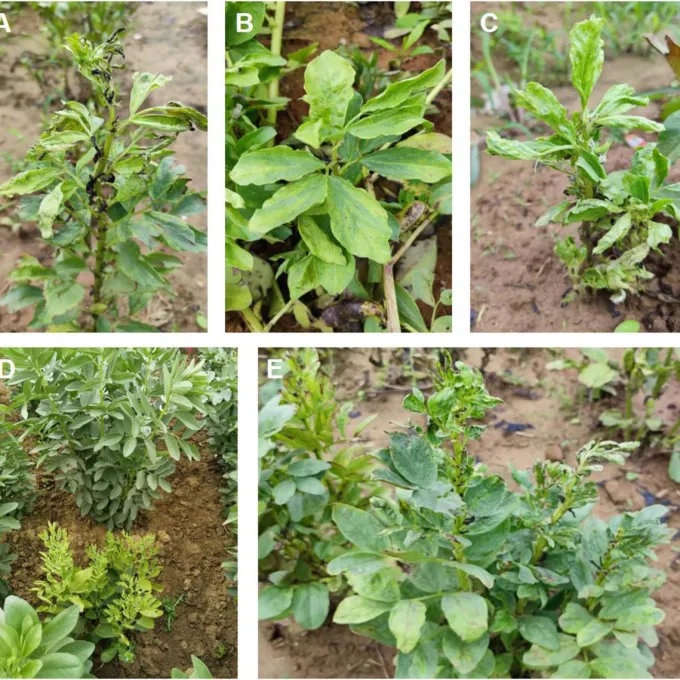
When symptoms do manifest, they typically include stunted growth and general lack of vigor compared to healthy plants in the same field.
Leaf symptoms may involve mild mosaic patterns, chlorotic spotting, or slight deformation of the leaf blades, affecting photosynthetic efficiency.
Root systems may appear underdeveloped, which inhibits the plant's ability to efficiently absorb water and essential nutrients from the soil.
During the reproductive stage, infected plants often produce fewer pods, and seed quality may be significantly reduced compared to non-infected crops.
Pathogen
The causal agent of the disease is Alphapartitivirus viciae, a virus belonging to the family Partitiviridae. It is a specific plant pathogen characterized by a double-stranded RNA genome.
The virus particles are isometric and small in size, typical for this family. Its host range is primarily limited to species within the Fabaceae (legume) family.
The primary mode of transmission is vertical, occurring through infected seeds. This seed-borne nature makes the virus particularly difficult to manage in seed production programs.
Horizontal spread in the field may occur through mechanical damage or via specific vectors, although seed transmission remains the most significant factor for pathogen persistence.
The biology of this virus is studied as part of understanding latent infections that do not always cause dramatic symptoms but affect plant physiological processes.
Why it matters
The primary economic impact is the reduction in overall crop yield, caused by the plant's weakened physiological state and inhibited development.
Infected seeds serve as a reservoir for the virus, ensuring that the pathogen persists in the environment and spreads to new planting areas in subsequent seasons.
Viral infection increases plant susceptibility to abiotic stresses, such as drought, extreme heat, or nutrient deficiencies, leading to crop failure.
The presence of the virus negatively impacts the quality of the harvested produce, which may result in lower market value and seed certification issues.
Accumulation of the virus in soil and crop debris creates a long-term sanitary challenge, requiring careful field management and rotation strategies.
Protection
The most effective strategy is the exclusive use of certified, virus-free seeds to prevent the introduction of the pathogen into new areas.
Regular field scouting during the growing season is essential to identify and rogue out plants showing any signs of viral-like symptoms.
Implementing proper crop rotation helps minimize the persistence of the pathogen in the field and breaks the cycle of local transmission.
Managing potential insect vectors and maintaining spatial isolation from older, potentially infected crops can help reduce the rate of field spread.
Early laboratory diagnosis of seed stocks using molecular methods is recommended to ensure that the initial plant population is free from the virus.
Discussion
No discussions yet — be the first.