
Maize rhabdovirus infection
Alphanucleorhabdovirus zeairanense
Description
Symptoms
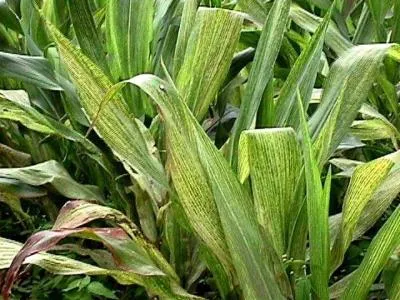
The primary symptom of infection is the emergence of characteristic chlorotic stripes on the leaves, which gradually extend along the leaf veins.
Infected plants often exhibit significant stunting and reduced overall growth vigor compared to healthy plants in the same field.
As the disease progresses, leaf margins may curl and show signs of premature yellowing, which significantly decreases the plant's total photosynthetic area.
Reproductive structures such as tassels and ears often develop poorly, leading to incomplete grain fill and reduced yield quality.
- Yellow striped patterns on leaves.
- Significant stunting of plant height.
- Deformed ears and poorly filled grains.
- Premature yellowing and leaf necrosis.
Pathogen
The causal agent of this disease is the virus Alphanucleorhabdovirus zeairanense, which belongs to the family Rhabdoviridae. It is a systemic plant pathogen that disrupts cellular functions.
This disease is classified as a systemic viral infection, often resulting in chlorosis and necrosis. The virus is transmitted via specific insect vectors, making vector control crucial for management.
The genome consists of single-stranded RNA, which utilizes the host plant's cellular machinery to replicate and produce viral particles throughout the plant's vascular system.
The primary host crop is maize (Zea mays), although certain wild grass species can act as alternative hosts and reservoirs for the virus during the off-season.
The pathogen thrives in environments where vector populations are active, often correlating with specific climate patterns that favor the growth and reproduction of these insects.
Conditions for development
The spread of the disease is directly tied to the density of insect vector populations that transmit the virus while feeding on plant sap.
Optimal conditions for viral development often coincide with warm and dry weather periods, which promote the activity and reproduction of the vectors.
The presence of grassy weeds in or near maize fields serves as a critical source for overwintering and early-season reservoir for the viral pathogen.
Early-season migration of vectors from overwintering sites or adjacent crops can trigger widespread outbreaks if conditions are favorable for transmission.
Poor agricultural practices, such as lack of crop rotation, can contribute to higher levels of the virus within the local environment over several seasons.
Why it matters
The virus causes significant economic losses by reducing total grain yield and negatively impacting the quality of the harvest for commercial use.
Early-stage infection often renders plants unable to form full ears, leading to substantial crop failure in affected areas of the field.
Plants weakened by the virus have lower resistance to secondary biotic stresses, such as fungal or bacterial infections, which further complicate crop health.
Infected plants consume water and soil nutrients inefficiently, leading to higher production costs with a lower return on investment per hectare.
In some regions, the cumulative effect of the disease can force farmers to reconsider crop choices if management costs become too high.
Protection
The most effective strategy for control is the management of insect vectors through timely insecticide applications during critical plant growth stages.
Strict weed management and field sanitation are essential to eliminate alternative host plants and reduce the overall viral pressure in the area.
Implementing effective crop rotation is a key practice to break the cycle of virus transmission and discourage the buildup of vector populations.
Selecting and planting genetically resistant or tolerant maize hybrids is the primary method for long-term reduction of disease impact.
Regular field scouting and the use of sticky traps can assist agronomists in making informed decisions about the timing of protective measures.
Discussion
No discussions yet — be the first.