
Alphaendornavirus viciae
Alphaendornavirus viciae
Description
Symptoms
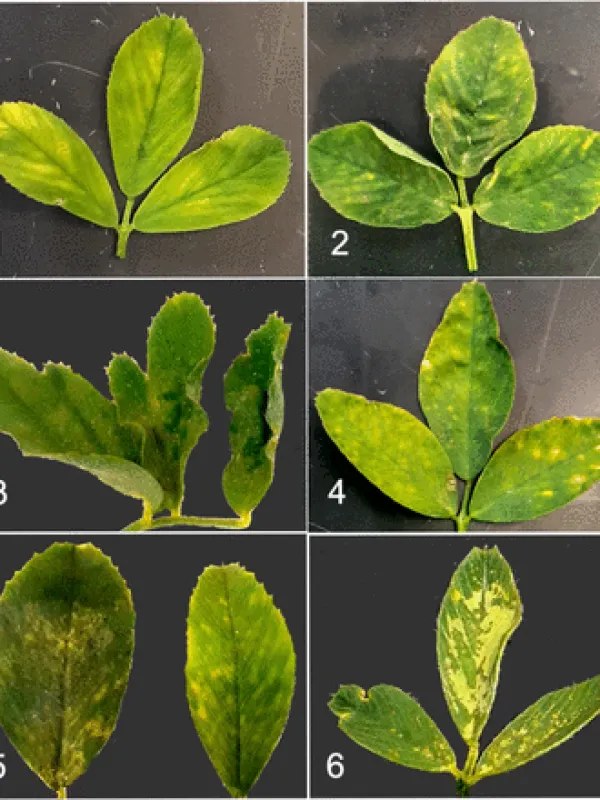
The hallmark of Alphaendornavirus viciae infection is its latency. Infected plants generally show no visible symptoms or signs of disease, appearing identical to healthy plants.
There are no characteristic mosaics, leaf curling, or stunted growth patterns associated with this virus. This makes it impossible to detect infected plants through visual field inspections.
Diagnosis requires sophisticated molecular biology techniques. RT-PCR is the primary method used to detect the presence of viral double-stranded RNA in plant tissue samples.
Microscopic changes in cell structures, such as chloroplasts, might occur, but these are not diagnostic in a practical agricultural setting.
The absence of symptoms creates a significant challenge for farmers and seed producers, as the virus can be unknowingly spread through contaminated seed lots.
Pathogen
Alphaendornavirus viciae is a member of the Endornaviridae family. These viruses are characterized by a double-stranded RNA genome that does not assemble into complete viral particles (virions) in the classical sense.
As an endornavirus, it acts as a persistent, intracellular agent. It maintains a stable, long-term infection within the host plant cells without inducing rapid host death.
The virus is strictly seed-borne, meaning it is transmitted vertically through the embryo to the next generation of plants, ensuring its survival within the host population.
Unlike many other plant viruses, it lacks an extracellular phase, meaning it cannot be transmitted by insect vectors or simple mechanical contact between leaves.
Its biological cycle is integrated with the host's metabolism, making it a unique example of a virus that has adapted to coexist with its host over long periods.
Conditions for development
The development of the virus is governed by the host plant's internal physiology. Replication occurs continuously as the host cells divide and proliferate.
Environmental factors do not directly regulate the viral life cycle. Since the virus is transmitted through the seed, the primary "condition" for its spread is the planting and propagation of the infected host species.
The virus remains active throughout the entire growth cycle of the plant, from the moment of seed germination until the development of the next generation of seeds.
Metabolic activity in meristematic tissues supports higher concentrations of the viral genome, ensuring its transmission to all parts of the developing plant.
No external vector is required for the survival of the pathogen; its environment is entirely controlled by the life cycle of the host plant.
Why it matters
While often described as asymptomatic, the presence of Alphaendornavirus viciae may induce subtle physiological costs to the host plant.
The diversion of cellular resources for viral replication might slightly reduce the plant's overall biomass or physiological robustness, although this is difficult to quantify.
The most significant harm is observed in professional plant breeding and seed production, where the presence of the virus can undermine the quality of germplasm.
Persistent infections can impact the purity of plant lines, making it necessary to implement strict screening protocols to avoid long-term yield penalties.
Economic damage is largely indirect, resulting from the need for rigorous lab testing and potential disqualification of seed stocks intended for sensitive markets.
Protection
The primary control strategy for Alphaendornavirus viciae is the use of certified virus-free seed stocks verified by molecular diagnostic testing.
Plant breeding programs should prioritize the screening of mother plants to ensure that only virus-free lineages are propagated.
Quarantine measures and careful inspection of imported seeds are essential to prevent the introduction of new viral variants into non-infected regions.
Since no chemical or biological treatments exist to eliminate the virus from already infected plants, prevention remains the only effective management tool.
- Strict molecular screening of breeding materials.
- Certification of seed health.
- Isolation of germplasm collections.
- Avoidance of infected seed sources.
Discussion
No discussions yet — be the first.