
Alfamovirus
Alfamovirus
Description
Symptoms
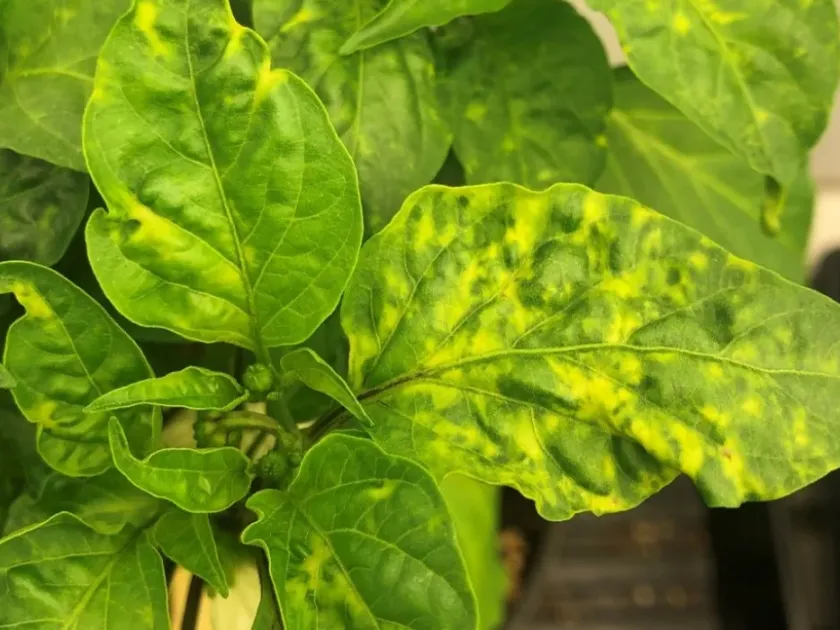
Symptoms caused by Alfamoviruses are highly variable, depending on the specific virus strain and the host species. The most common manifestation is mosaic patterns, which consist of irregular patches of light and dark green tissue on leaves.
Affected plants often exhibit leaf deformation, including curling, crinkling, or stunting. In some host species, systemic infection leads to the development of ring spots, necrotic streaks, and eventual tissue death.
In vegetable crops like tomatoes or peppers, the fruit quality is significantly compromised. Infected fruits often show mottling, deformation, and spotting, rendering them unsuitable for market consumption.
For alfalfa and other legumes, the disease is manifested as chlorosis (yellowing) and stunted growth. This significantly reduces the biomass yield, which is critical for agricultural and fodder production systems.
In many cases, the severity of symptoms changes depending on the environmental conditions. Under favorable temperatures, symptoms may become more aggressive, leading to total plant decline or premature leaf drop.
Pathogen
Alfamovirus is a genus of plant viruses, with the Alfalfa mosaic virus (AMV) being its most significant representative. These are single-stranded RNA viruses characterized by their distinct bacilliform particles of varying lengths.
A notable biological trait of this genus is its extremely broad host range, infecting over 600 plant species across various families. This versatility allows the virus to persist in diverse ecological niches, complicating management strategies.
The virus is primarily transmitted by numerous species of aphids in a non-persistent manner. The insects acquire the virus by feeding on infected tissue for a short time and transmit it to healthy plants during subsequent feeding sessions.
Seed transmission is another critical pathway, allowing the virus to survive and spread over long distances. Infected seeds serve as primary sources of infection, leading to disease outbreaks as soon as the seedlings emerge.
Upon entry, the virus replicates within the cytoplasm of host cells and moves systemically throughout the plant via the phloem. This process severely disrupts cellular metabolism, particularly photosynthetic activity, leading to characteristic disease symptoms.
Conditions for development
The spread of Alfamovirus is highly dependent on the population dynamics of its aphid vectors. Warm temperatures generally promote insect migration, thereby increasing the rate of viral transmission throughout the field.
Weed reservoirs play a crucial role in the disease cycle. Many perennial weeds act as overwintering hosts for both the virus and the aphids, providing a continuous source of infection for emerging spring crops.
Mechanical factors, such as wind-driven plant friction or human handling during cultivation, can facilitate virus entry through micro-wounds, although insect vectors remain the primary drivers of field-scale epidemics.
Excessive nitrogen fertilization can lead to vigorous, soft growth, which is highly attractive to aphids. This indirectly increases the risk of viral inoculation by encouraging higher insect activity on the crop.
Environmental conditions that favor the buildup of aphid populations also accelerate the secondary spread of the virus. Even during brief feeding intervals, aphids can effectively inoculate healthy plants in a field.
Why it matters
The economic impact of Alfamovirus is significant due to its ability to cause systemic damage. By redirecting the plant's resources toward viral replication, the pathogen severely limits growth and reproductive capacity.
Yield losses can range from 20% to over 50% in heavily infested fields. Beyond quantity, the quality of harvest is often degraded, resulting in severe financial losses for farmers who cannot sell market-grade produce.
In perennial plantings, the virus accumulates over time, weakening the plants and making them more susceptible to cold stress, drought, and secondary pathogens, eventually leading to field exhaustion.
Seed-borne infection reduces germination vigor and ensures that every new crop starts with a baseline level of disease pressure, which is exceptionally difficult to eradicate without replacing the seed stock.
Currently, there are no curative treatments for infected plants, forcing growers to rely on costly prevention and eradication measures that rarely eliminate the virus entirely once it has become established.
Protection
Management of Alfamovirus is focused entirely on prevention, as curative measures for field crops are unavailable. The use of certified, virus-tested seed is the first line of defense to prevent initial outbreaks.
Systemic insecticidal treatments targeting aphid populations can effectively reduce the incidence of the disease. These treatments are most effective when applied during periods of peak insect migration and early plant development.
Sanitation practices, such as removing weed reservoirs and infected symptomatic plants, are vital for reducing the inoculum pressure. Spatial isolation between new fields and older, potentially infected plantings is also highly recommended.
In some regions, the use of resistant or tolerant cultivars provides the most sustainable method of control. Ongoing breeding programs continue to focus on identifying genetic sources of resistance to these viruses.
- Use of certified, virus-free planting material.
- Rigorous control of aphid vectors using systemic insecticides.
- Elimination of weed reservoirs surrounding fields.
- Prompt removal and destruction of symptomatic plants.
- Implementation of spatial isolation from known infection sources.
Discussion
No discussions yet — be the first.