
Tobacco beta mosaic virus
Albetovirus betatabaci
Description
Symptoms
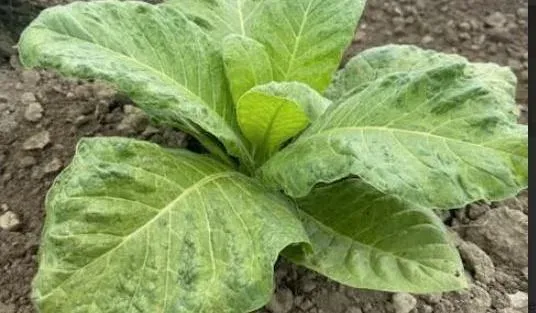
The primary symptom is the emergence of chlorotic spots on young leaves, which gradually evolve into a distinct mosaic pattern of alternating light and dark green patches.
As the infection progresses, the leaf blades often exhibit deformation, becoming crinkled or puckered, with leaf margins frequently curling or rolling.
Infected plants show noticeable stunting, characterized by shortened internodes and reduced plant height compared to healthy specimens.
In severe cases, the tissue may develop necrotic spots, leading to premature yellowing and eventual shedding of the affected leaves.
- Light green or yellow mosaic patterns on leaves.
- Stunted growth and reduced leaf size.
- Distortion and curling of leaf margins.
- Reduced vigor and stunted root development.
Pathogen
The causative agent of the disease is the Albetovirus betatabaci, a virus belonging to the genus Albetovirus. This pathogen disrupts the genetic processes within the plant cells.
The virus primarily targets species within the Solanaceae family, exploiting the host's cellular machinery to replicate its genetic material and propagate systemic infection.
Transmission occurs primarily through biological vectors, such as sap-sucking insects, which facilitate the transfer of viral particles from infected to healthy plants.
The pathogen is characterized by its high systemic mobility within the plant, moving rapidly through the phloem to invade newly developing tissues.
Biologically, the virus exhibits stable infection cycles, allowing it to remain viable in host tissues and contributing to persistent outbreaks in vulnerable regions.
Conditions for development
The spread of the virus is highly dependent on the population dynamics of its insect vectors, which thrive in warm and dry environmental conditions.
Moderate temperatures and high humidity can indirectly foster virus development by promoting the vigorous growth of both the host plant and the vector populations.
Agricultural practices, such as dense planting, create an ideal microclimate for vectors to move between plants, significantly accelerating the transmission rate.
The presence of wild reservoirs, particularly weeds belonging to the nightshade family, helps the virus survive and persist throughout the off-season.
Poor sanitation of farming tools can facilitate mechanical transmission, especially in operations where plants are handled frequently during cultivation.
Why it matters
The damage caused by the virus results in significant yield reduction, as both the quality and the total biomass of the tobacco leaves are compromised.
Infected leaves undergo biochemical changes that degrade their commercial value, affecting essential attributes like nicotine levels and leaf aroma.
The disease weakens the host plant, making it significantly more susceptible to secondary attacks by fungal and bacterial pathogens.
Economic impact is severe, as there are no curative treatments available for plants once they have become systemically infected with the virus.
Massive outbreaks can lead to complete loss of crop viability, forcing farmers to incur significant financial losses due to diminished harvest quality.
Protection
Effective management begins with strict control of insect vectors using integrated pest management (IPM) techniques and timely insecticide applications.
Maintaining a clean field environment by removing weeds that serve as alternate hosts is crucial to disrupting the virus's life cycle.
The selection of resistant cultivars is considered the most reliable strategy to minimize the risk of infection and preserve crop productivity.
Farmers should implement rigorous sanitary protocols for equipment, ensuring tools are cleaned after contact with suspicious or infected material.
Early identification and rogueing of symptomatic plants can prevent the spread of the virus, effectively containing outbreaks to small, manageable areas.
Discussion
No discussions yet — be the first.