
Agrocybe praecox
Agrocybe praecox
Description
Symptoms
The most visible sign of infestation is the appearance of clusters of mushrooms around the base of trees or shrubs during late spring and early summer.
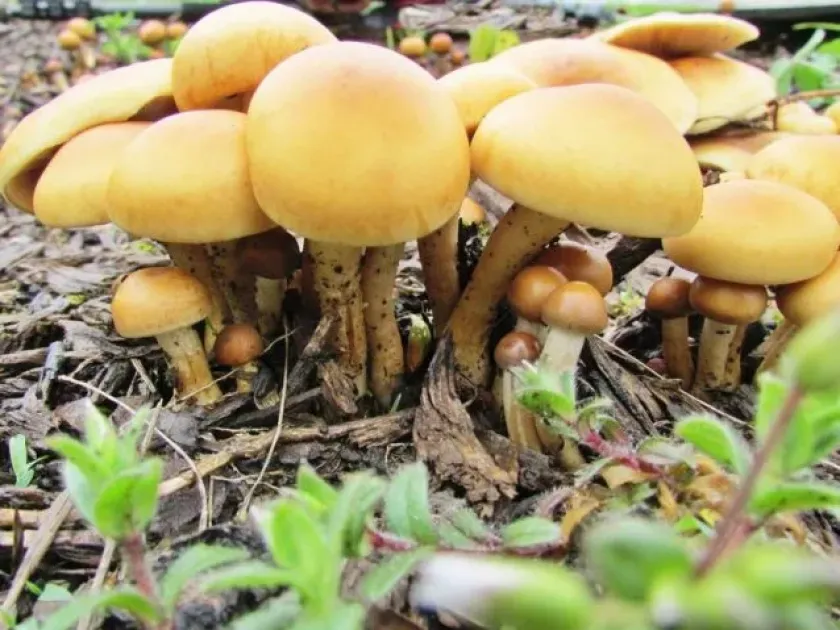
Mushrooms are generally pale, yellowish-brown, and may show remnants of a veil on the cap, indicating the presence of active mycelium in the soil.
Infected plants may exhibit premature yellowing of leaves, wilting during dry periods, and a general decline in annual vegetative growth.
Careful inspection of the root collar often reveals white fungal threads (rhizomorphs) attached to the bark or spreading through the soil nearby.
Wood tissue affected by the fungus displays signs of soft rot, often turning lighter in color and losing its original density and hardness.
Pathogen
Agrocybe praecox, commonly known as the early fieldcap, is a saprotrophic basidiomycete that acts as an opportunistic pathogen for stressed trees and shrubs.
It typically thrives on decaying wood, stumps, and root debris, but under favorable conditions, it can colonize the roots of living plants.
The fungus produces a widespread mycelial network that efficiently extracts nutrients from organic matter, gradually encroaching on live root zones.
While often viewed as a beneficial decomposer in forest ecosystems, in managed orchards or gardens, it functions as a potential hazard to plant health.
Its biological cycle is driven by the breakdown of lignocellulosic compounds, which can weaken the structural integrity of the plant's vascular system.
Conditions for development
The growth of Agrocybe praecox is heavily favored by cool, moist conditions with high humidity levels, typical of spring weather.
Substantial amounts of buried organic debris, such as wood chips or old root systems, create a perfect environment for the fungus to establish itself.
Poor soil aeration and persistent waterlogging significantly increase the risk of fungal colonization, especially in dense planting layouts.
Mechanical damage to roots or bark serves as an entry point for the fungus to transition from the soil into the healthy tissues of the plant.
Plants suffering from drought stress, nutrient deficiency, or prior pest damage are significantly more susceptible to infection by this fungus.
Why it matters
The primary harm caused by the fungus is the degradation of roots and woody tissues, which impairs the plant's ability to transport water and nutrients.
Structural damage due to wood decay makes trees increasingly susceptible to windthrow and mechanical failure, posing a risk in residential areas.
The cumulative stress on the plant leads to reduced vitality, lower yield, and eventually the death of branches or the entire specimen over several seasons.
In nursery environments, the presence of this fungus can lead to the loss of seedlings if they come into contact with colonized organic matter in the soil.
Long-term infestation significantly shortens the lifespan of ornamental plants and fruit trees, reducing the economic output of the garden.
Protection
Effective management begins with the removal of potential food sources, including stumps, dead wood, and large woody debris from the soil.
Proper plant care, including balanced fertilization and controlled watering, helps maintain vigor and resilience against fungal invasion.
Regular inspection of the root collar and prompt application of fungicides can limit the spread if the infection is identified at an early stage.
Removing the fruiting bodies before they release spores can help reduce the density of inocula in the vicinity of susceptible plants.
- Maintain proper drainage to prevent water stagnation.
- Avoid damaging trunks and roots during mechanical weeding.
- Ensure adequate spacing between plants to improve airflow.
Discussion
No discussions yet — be the first.