
Velenovsky's Agaricus
Agaricus velenovskyi
Description
Symptoms
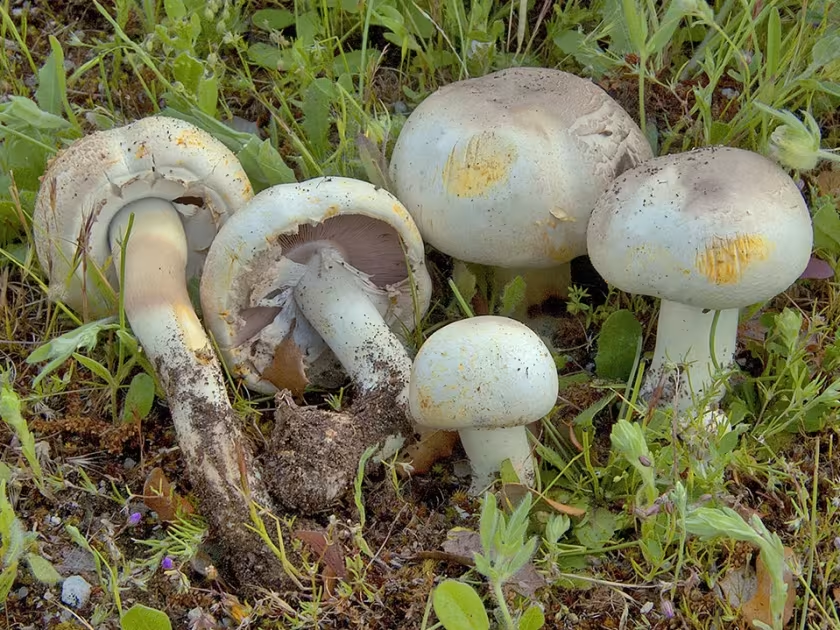
The most visible sign of this fungus is the emergence of sporocarps (mushrooms) on the soil surface following periods of high humidity and moderate rainfall.
The fruiting bodies feature a convex cap that flattens with age, characterized by small brownish scales that contrast with the lighter background of the cuticle.
The gills situated beneath the cap transition from a light pinkish hue in the early stages of development to a dark chocolate brown in mature specimens.
Underground, the mycelium forms a white, fibrous network that spreads through the topsoil or organic substrates to efficiently absorb nutrients from decaying matter.
No necrotic lesions, wilting, or physical damage to adjacent plant roots occur, as the fungus does not interact with the physiology of living vegetation.
Pathogen
Agaricus velenovskyi is a species of gilled mushroom in the Agaricaceae family, functioning primarily as a saprotrophic organism in natural ecosystems.
It is not classified as a plant pathogen because it lacks the biological mechanisms to infect, colonize, or damage the living tissues of agricultural crops.
The fungus plays an essential role in the decomposition of organic matter, assisting in the transformation of plant residues into humus and mineral nutrients.
While often misidentified as a disease in casual agricultural observations, the presence of its mycelium is merely an indicator of organic-rich soil.
In mycological terms, this species is a soil inhabitant that thrives on dead organic material, meaning it poses no direct threat to plant health or vitality.
Conditions for development
The growth and spread of Agaricus velenovskyi are highly dependent on the availability of decomposing organic material within the soil profile.
Optimal conditions for mycelial development include ambient temperatures between 15°C and 22°C and a consistently moist soil environment.
It flourishes in nutrient-dense soils where nitrogenous organic matter, such as manure or leaf litter, is present but not yet fully decomposed.
Environmental humidity facilitates the production of spores, which are disseminated by wind or physical contact to new areas with suitable substrate conditions.
In controlled mushroom farming, the introduction of this species occurs typically through inadequately sterilized compost or poor hygiene in the cropping rooms.
Why it matters
There is no evidence that this species causes economic damage or disease to conventional vegetable, grain, or fruit crops grown in fields.
The harm caused by Agaricus velenovskyi is restricted entirely to commercial mushroom cultivation, where it acts as a competitive weed fungus.
By consuming nutrients within the mushroom compost, it suppresses the growth of the target commercial strain, leading to a significant reduction in overall harvest yields.
Its presence in field soils is generally neutral or slightly beneficial, as it contributes to the overall breakdown of organic fertilizers and soil structure improvement.
The species does not affect the marketability or internal quality of agricultural products, as it neither colonizes the produce nor secretes harmful phytotoxins.
Protection
No specific chemical control measures are required for field crops, as Agaricus velenovskyi is considered a beneficial part of the soil microflora.
In professional mushroom production, management relies on rigorous pasteurization techniques to eliminate competing fungal spores from the substrate.
Hygiene protocols, including the sterilization of tools and equipment, are critical to preventing the accidental introduction of unwanted mycelium into growing beds.
Adjusting the substrate pH levels can also make the environment less hospitable to this species, favoring the development of the primary crop.
Strategic aeration of soil and timely incorporation of organic matter prevent the excessive accumulation of surface debris, thereby naturally limiting the conditions for fruiting body formation.
Discussion
No discussions yet — be the first.