
Agaricus romagnesii
Agaricus romagnesii
Description
Symptoms
Agaricus romagnesii is a basidiomycete fungus that exhibits distinctive morphological features typical of the genus Agaricus while maintaining unique species-specific traits.
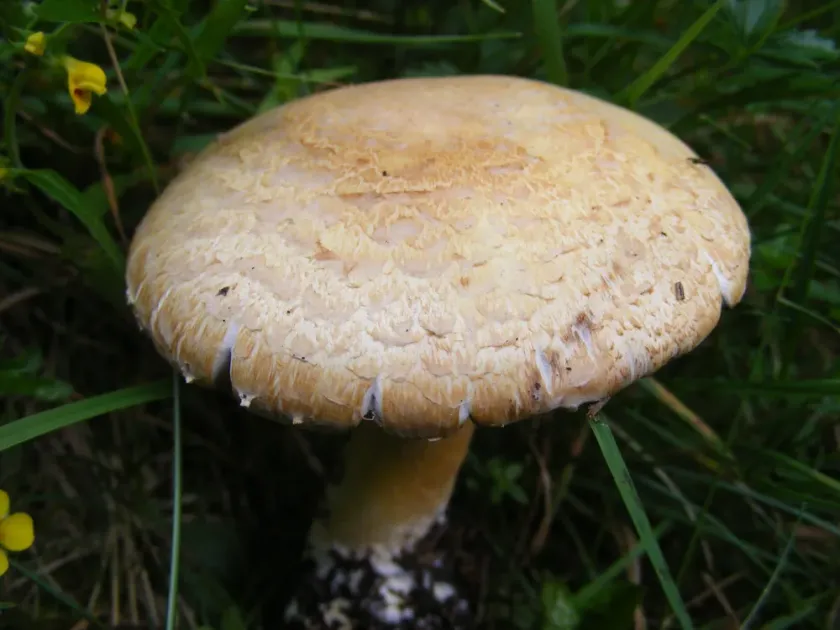
The cap of the mushroom typically reaches 5–10 cm in diameter, evolving from a hemispherical or convex shape to a flattened appearance as it matures.
The surface of the cap is characterized by small, closely pressed scales, usually displaying a brown or greyish-brown color against a lighter background.
The gills of young specimens appear pinkish, but they undergo a significant color change to dark brown or nearly black as the spores mature within the hymenium.
The stem is robust and centrally located, often featuring a persistent or semi-persistent ring, which is a key diagnostic feature for this specific mushroom species.
Pathogen
The agent is the mycelium of the fungus Agaricus romagnesii, which belongs to the family Agaricaceae and functions purely as a saprotrophic organism.
Unlike parasitic fungi that invade living tissue, this species relies on the decomposition of organic matter in the soil to fulfill its nutritional requirements.
Biologically, it acts as a decomposer, breaking down complex organic carbon sources such as leaf litter and humus into simpler nutrients for the soil.
The fungal mycelium permeates the substrate, forming a dense network of hyphae that efficiently extracts resources from the surrounding environment.
It is important to emphasize that this fungus does not cause diseases in plants and is ecologically beneficial for soil nutrient cycling.
Conditions for development
Agaricus romagnesii thrives in moist, organic-rich environments, frequently colonizing forest floors, parklands, and areas with high humus content.
The optimal development of fruit bodies occurs within a moderate temperature range, ideally between 15°C and 22°C, to ensure stable metabolism.
High levels of humidity are essential for the expansion of the mycelium and the subsequent successful emergence of reproductive structures above the soil.
Rainfall events act as primary triggers for the fungal lifecycle, leading to the rapid growth of mushrooms following periods of adequate soil moisture.
The presence of stable organic matter and appropriate soil pH levels are the most critical environmental drivers for the persistence of this species.
Why it matters
From an agricultural standpoint, this fungus is not considered harmful, as it does not infect or damage living crops or ornamental plants.
Potential issues are limited to professional mushroom farming where, if introduced, this wild species can compete with commercial mushroom strains for space and nutrients.
The presence of this fungus in agricultural fields is generally an indicator of high organic activity rather than a sign of a pathological threat to crops.
Risks to humans are primarily associated with the danger of misidentification if consumers confuse this wild species with toxic lookalikes in the genus Agaricus.
As it is not a pathogen, it does not require intervention strategies and should be managed only if its growth significantly interferes with specific land-use goals.
Protection
Since Agaricus romagnesii is not a plant disease agent, specific chemical control or pesticide application is neither necessary nor recommended.
In commercial mushroom cultivation, prevention involves strict pasteurization protocols of the casing soil to eliminate potential competing fungal spores.
Maintaining high sanitary standards in growing chambers is sufficient to prevent the colonization of the substrate by unwanted wild fungal species.
Physical removal and disposal of fruit bodies are the preferred methods if the fungus appears in areas where it is unwanted, such as residential lawns or public parks.
Proper soil management and avoidance of excessive, uncomposted organic fertilizers can help reduce the suitability of an area for fungal growth.
Discussion
No discussions yet — be the first.