
Yellow-staining mushroom
Agaricus praeclaresquamosus
Description
Symptoms
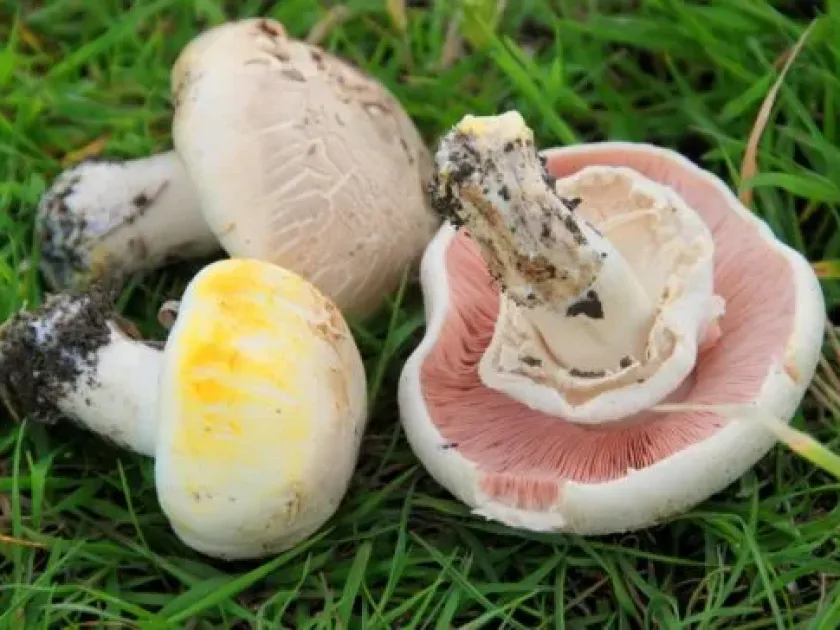
The most distinctive sign of the yellow-staining mushroom is the rapid, intense yellowing of the cap cuticle and stem base when bruised or cut. This reaction occurs almost instantly upon injury.
The cap typically measures 5 to 15 cm in diameter and is covered in greyish-brown scales that are more concentrated in the center. The cap margins often remain in-rolled for a significant period during development.
The stem is cylindrical and features a prominent, wide ring. The base of the stem is frequently thickened or bulbous, which is a characteristic feature that distinguishes it from many common edible varieties.
A tell-tale sign is the odor: when bruised or cooked, the flesh releases a strong, unpleasant chemical or "medicinal" scent, often described as carbolic acid or phenol-like, which is absent in edible species.
The gills are white or pale pink in young specimens but quickly turn a dark chocolate brown with maturity. The spore print is also dark brown, consistent with other members of the Agaricus genus.
Pathogen
The yellow-staining mushroom, scientifically known as Agaricus praeclaresquamosus, is a poisonous fungus often encountered in gardens, lawns, and near wooded areas. While not a plant pathogen, it is significant in agronomy as a hazardous look-alike to edible Agaricus species.
This fungus belongs to the Agaricaceae family and contains toxins that are harmful to human health. Identifying this species is crucial for both amateur gardeners and professionals involved in mushroom cultivation to avoid accidental consumption and contamination.
The species acts as a saprotroph, breaking down organic matter in the soil. Its biological activity is generally beneficial for soil structure, yet its presence indicates high organic content which may also support other undesirable microorganisms.
In mushroom farming, this species is considered a biological contaminant. If its spores enter the growing substrate, the fungus can aggressively colonize the medium, effectively outcompeting the cultivated Agaricus bisporus.
Understanding the biology of this mushroom helps in maintaining proper sanitary conditions in agricultural environments, ensuring that only the desired fungi proliferate in controlled growing zones.
Conditions for development
This fungus thrives in humus-rich soils and is commonly found in gardens, parks, and shaded areas with high organic matter. It requires steady moisture levels and prefers temperatures ranging from +15°C to +25°C.
It often appears in areas with heavy organic accumulation, such as compost heaps, under dense garden shrubs, or near decaying wooden debris. The presence of non-decomposed manure is a major trigger for its growth.
Frequent rainfall followed by mild temperatures promotes the emergence of fruiting bodies. Spores are easily disseminated by wind and water, allowing the fungus to colonize new areas with suitable nutrient profiles.
In greenhouses, improper sterilization of the casing soil or the compost substrate creates an ideal environment for this species to germinate and outcompete the intended crop.
The fungus is highly adaptable and can grow in various soil pH levels, making it a persistent presence once it has established its mycelium in a well-fertilized garden bed.
Why it matters
The primary danger posed by this mushroom is accidental poisoning. Its strong resemblance to edible field mushrooms often leads to mistaken collection, causing severe gastrointestinal distress.
Symptoms of ingestion include nausea, severe abdominal pain, vomiting, and diarrhea. These signs typically manifest within 1 to 3 hours, necessitating professional medical intervention.
In commercial mushroom cultivation, its presence is a sign of poor quality control. It can lead to significant economic losses by contaminating production batches and reducing the overall crop yield of the edible species.
The presence of this poisonous fungus in residential or agricultural areas poses a safety risk to children and pets who might accidentally ingest it while exploring or playing.
Although it does not directly damage crops, its mass appearance indicates potential issues with organic matter management or unsanitary growing conditions that may require immediate correction.
Protection
Prevention is the best strategy. In commercial farming, ensure rigorous pasteurization of all substrates and casing materials to eliminate fungal spores and competing mycelia.
On small farms and garden plots, practice good sanitation by removing excess decaying organic debris. Regular soil turning and aeration help discourage the establishment of persistent fungal mycelia.
If fruiting bodies appear, remove them immediately, including the surrounding soil, to prevent the release of spores. Do not add these mushrooms to home compost piles, as the heat generated is rarely sufficient to kill the spores.
In industrial settings, use appropriate fungicides or sanitizing agents to clean equipment and production rooms if a contamination event is confirmed.
Education is vital. Ensure that staff or family members can confidently distinguish this species by checking for the "phenol" smell and the characteristic yellow staining reaction upon handling.
Discussion
No discussions yet — be the first.