
Agaricales fungi
Agaricales
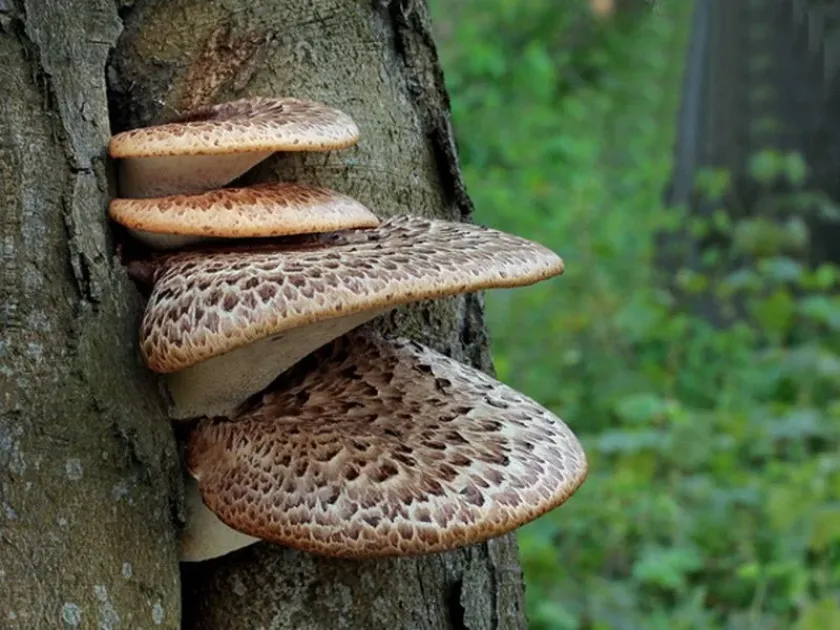
Description
Symptoms
Initial symptoms of infection often manifest as a general decline in the plant's health, such as chlorotic leaves, premature needle drop, or a significant reduction in annual shoot growth.
The most diagnostic sign is the presence of fungal fruiting bodies (mushrooms) on the trunk or in the root zone. Their presence confirms advanced decay of the internal woody tissues.
Inspecting the root system often reveals the presence of white or dark mycelial strands, known as rhizomorphs, which anchor the fungus to the roots. Decayed wood typically appears brittle, discolored, and has a distinct fungal odor.
Cross-sections of affected trunks often show discolored areas bounded by dark lines, which represent the plant's attempts to wall off the advancing fungal infection.
Progressive dieback of branches, starting from the crown or terminal shoots, indicates that the plant's vascular capacity is failing and it can no longer support its entire canopy.
Pathogen
The Agaricales order comprises a diverse group of basidiomycete fungi, which includes several species responsible for significant plant diseases. In an agricultural and forestry context, these fungi function primarily as parasites or opportunistic saprotrophs.
The main types of damage caused by these pathogens include various forms of root and stem decay. The fungi penetrate plant tissues through bark wounds, pruning cuts, or damaged root systems.
The mycelium actively colonizes the xylem, breaking down lignin and cellulose. This process destroys the vascular system of the plant, preventing the transportation of water and essential nutrients from the roots to the canopy.
Dissemination is largely achieved through basidiospores, which are spread by wind or water. Direct root-to-root contact in the soil is another common pathway for the spread of these pathogens within a stand.
Given the immense biological diversity within the Agaricales order, effective management strategies must be tailored to the specific behavior and life cycle of the pathogen present in the field or orchard.
Conditions for development
High humidity in both soil and air creates optimal conditions for the germination of spores and the development of mycelium. Poorly drained soils are especially prone to harboring these pathogens.
The temperature range between +15 and +25 degrees Celsius is generally favorable for the growth of most Agaricales species. However, their spores are highly resilient and can persist in various environmental conditions.
Crowded plantings with poor air circulation facilitate the buildup of fungal spores and increase the likelihood of new infections. Accumulations of plant debris provide an ideal substrate for fungal survival.
Poor agricultural practices, such as deep soil cultivation that damages roots, create entry points for infection, making the plant highly vulnerable to fungal invasion.
Residual stumps and decaying wood in the soil serve as long-term reservoirs for inoculum, allowing the fungi to persist for many years even in the absence of a living host.
Why it matters
The primary damage caused by Agaricales fungi is a reduction in plant productivity and, ultimately, the death of the host plant. In forestry and commercial orchards, this leads to significant economic losses.
Infected plants serve as sources of inoculum for neighboring trees, leading to the development of disease clusters. Once established in the soil, the pathogen is extremely difficult to eradicate.
Wood decay compromises the structural integrity of the plant, posing safety risks due to potential windthrow or stem breakage, which can damage infrastructure or neighboring crops.
Weakened plants are significantly more susceptible to secondary attacks from insect pests, such as bark beetles, which often hasten the demise of the infected plant.
Management and site recovery costs are high, requiring the removal of infected trees, stump extraction, and long-term soil sanitation before the area can be replanted safely.
Protection
The cornerstone of disease management is strict sanitary control: removing dead or dying trees promptly and ensuring that all pruning tools are sterilized between uses.
Maintaining plant vigor through appropriate irrigation and balanced fertilization helps the host resist potential infections. Effective drainage prevents water stagnation, which is critical for root health.
In cases of confirmed infection, biological control methods using antagonistic fungi, such as Trichoderma species, can be used to suppress pathogen growth in the soil environment.
When an outbreak is identified, isolating the area and removing infested roots and soil may be necessary. Site sanitation must be thorough to eliminate all remnants of colonized organic matter.
Regular phytosanitary inspections of the root collar and stems allow for the early detection of disease, enabling timely interventions before the decay becomes irreparable.
Discussion
No discussions yet — be the first.