
Asian Soybean Rust
African soybean dwarf virus
Description
Symptoms
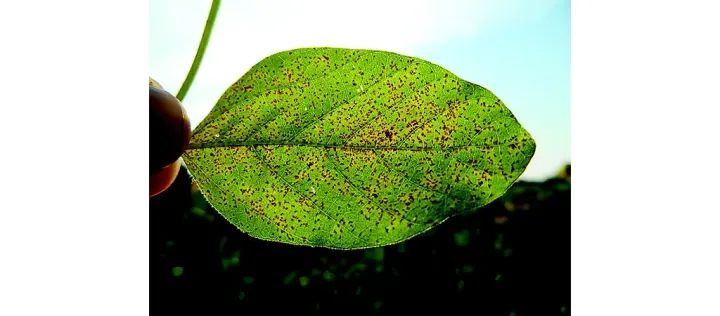
Initial symptoms are often subtle, appearing as small chlorotic spots on the underside of lower leaves. As the infection progresses, these spots evolve into raised pustules called uredinia.
Uredinia typically develop an angular shape because their expansion is restricted by the leaf veins. When mature, they rupture, releasing a massive quantity of tan-colored spores that can be seen as a dusty residue.
As the disease intensifies, the leaves take on a distinct rusty-brown or reddish appearance. This coloration is due to the dense accumulation of spores covering the surface of the infected tissue.
Severe infestations lead to rapid chlorosis and subsequent defoliation. Plants lose their leaves prematurely, which disrupts the physiological processes required for pod filling and grain maturation.
While leaves are the primary target, pustules can also develop on petioles, stems, and pods under high pressure. This systemic colonization further weakens the plant and reduces overall vigor.
Pathogen
The causal agent of this disease is the obligate biotroph fungus Phakopsora pachyrhizi. This pathogen depends entirely on living plant tissue to extract the nutrients necessary for its survival and reproduction.
The fungus invades the leaf epidermis and creates structures known as haustoria to absorb energy from host cells. Because it is an obligate parasite, it cannot thrive on decaying organic matter or dead plant residues.
Spread is primarily achieved through urediniospores, which are easily disseminated by wind currents over vast geographic distances. This makes the disease highly mobile and capable of crossing international borders.
Successful infection requires the presence of free water (dew or rain) on the leaf surface. Without adequate moisture, the spores cannot germinate, and the infection process is halted.
The genetic variability of Phakopsora pachyrhizi is remarkably high, posing a significant challenge for plant breeders. This rapid evolution allows the pathogen to overcome existing resistance genes in commercial soybean varieties.
Conditions for development
Asian Soybean Rust thrives in temperatures ranging from 15°C to 28°C. These moderate temperatures are ideal for the metabolic activities of the fungal colonies within the host tissue.
High relative humidity and prolonged leaf wetness are essential for the outbreak of epidemics. Nights with heavy dew or days with frequent rain provide the perfect environment for spore germination.
Canopy density plays a crucial role in disease development. Crops with thick foliage create a stagnant microclimate where moisture levels remain high for longer periods, facilitating rapid infection spread.
Extended cloudy and rainy periods during the mid-to-late vegetative stages are the most critical times for the pathogen. During such weather, the disease can transition from minor spots to field-wide destruction.
Irrigation practices that involve overhead wetting during evening hours can inadvertently exacerbate the spread. Ensuring that foliage can dry out efficiently is a key management concern.
Why it matters
The economic impact of Asian Soybean Rust is severe, as it directly reduces yield by decreasing the plant's ability to photosynthesize. Defoliation occurs long before the seeds reach maturity.
Yield losses can range from 30% to over 80% if left unmanaged. This loss is primarily driven by reduced pod numbers, smaller seed size, and significantly lower grain weight.
Grain quality also suffers, with lower protein and oil content reported in infected crops. This leads to lower market prices and poorer performance in downstream processing and seed production.
The collapse of the canopy exposes the soil, leading to issues with weed control and increased harvest difficulty. Furthermore, damaged stems are more prone to lodging, complicating mechanical harvesting.
Farmers are forced to invest heavily in multiple fungicide applications to protect their crops. This increases the total production cost and necessitates a complex approach to sustainable agriculture.
Protection
Proactive application of fungicides (particularly triazoles and strobilurins) is the gold standard for managing the disease. Treatments must be applied before or at the very early onset of symptoms.
Crop rotation serves as a primary non-chemical tool to reduce the local inoculum load. By avoiding soybean production for a season, the life cycle of the pathogen is effectively broken.
Developing and deploying resistant or tolerant cultivars is a top priority for soybean research. While resistance genes exist, the pathogen's ability to mutate keeps this as a dynamic, ongoing challenge.
Integrated pest management (IPM) requires constant field monitoring. Scouting the lower canopy during the flowering stage is vital for detecting early pustule formation and timing interventions correctly.
- Regular scouting for disease symptoms
- Preventive fungicide schedules
- Management of volunteer soybean plants
- Balanced fertilization to improve natural plant defense
Discussion
No discussions yet — be the first.