
Description
Symptoms
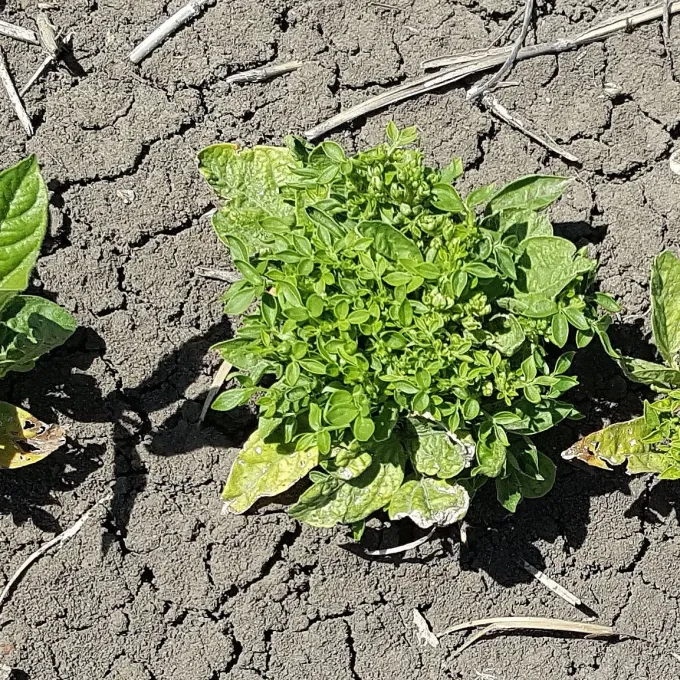
Initial symptoms include chlorosis of the upper leaves, which often curl upwards and develop a distinctive anthocyanin or reddish-purple discoloration.
Infected plants exhibit severe stunting, characterized by shortened internodes, leading to a compact, bushy appearance due to excessive lateral branching.
A diagnostic feature of stolbur is the potential development of small, aerial tubers in the leaf axils of the stems, reflecting the disruption of hormonal balance.
The root system of infected plants is typically poorly developed, often leading to a general decline in the plant's vigor and ability to survive environmental stress.
Harvested tubers from affected plants are often small, hard, and may show internal vascular necrosis, which makes them unsuitable for long-term storage or commercial use.
Pathogen
Potato stolbur is caused by phytoplasmas, specialized parasitic bacteria that lack cell walls and reside within the phloem sieve elements of infected plants.
This disease is classified as a systemic infection, meaning the pathogen spreads throughout the vascular system, disrupting essential plant metabolic pathways.
The disease is transmitted in the field primarily by insect vectors, most notably planthoppers (such as Hyalesthes obsoletus).
Once an insect feeds on an infected plant, it acquires the phytoplasma and remains a carrier for the rest of its life, transmitting the disease to healthy plants.
In addition to insect vectors, the disease is perpetuated through the use of infected tubers as seed, which introduces the pathogen into new planting sites.
Conditions for development
Hot and dry weather conditions are highly conducive to stolbur outbreaks, as these conditions favor the activity and migration of insect vectors.
The presence of perennial weeds, such as bindweed (Convolvulus arvensis), serves as a critical reservoir for the phytoplasma, allowing it to survive between potato cropping seasons.
Environmental stress, particularly drought, exacerbates symptom expression and makes the plants more susceptible to the systemic effects of the phytoplasma.
The synchronization of the insect vector's life cycle with the potato growing season dictates the intensity of the disease spread in a given year.
Regions with significant wild vegetation adjacent to agricultural fields often experience higher infection rates due to the presence of host weeds for both the pathogen and its vectors.
Why it matters
The primary economic impact of stolbur is a drastic reduction in tuber yield, as severely infected plants often fail to produce any viable commercial crop at all.
In addition to volume losses, the quality of the harvested tubers is significantly degraded, affecting their taste, nutritional value, and storage longevity.
Persistent reliance on infected seed tubers leads to the rapid degeneration of potato varieties, which can result in long-term financial losses for the grower.
The necessity for intensive insecticide applications to control vectors increases production costs and may have negative implications for integrated pest management programs.
The disease is highly contagious at the field level, and without proper management, it can rapidly infect neighboring fields and diversify into other solanaceous crops.
Protection
Effective management requires a comprehensive approach, primarily focusing on the control of insect vectors using systemic and contact insecticides during high-risk periods.
Rigorous weed control is essential; removing host plants like bindweed from fields and surrounding areas eliminates the primary overwintering sources of the phytoplasma.
Growers should strictly use certified, disease-free seed tubers, as this is the most reliable way to prevent the introduction of the pathogen into clean fields.
Spatial separation of potato crops from other susceptible solanaceous crops (like tomatoes or eggplants) helps reduce the risk of cross-infection by insect vectors.
Implementing a balanced crop rotation scheme disrupts the life cycles of both the insect vectors and the weeds that act as reservoirs for the disease.
Pathogens and affected parts
Affects crops · 1
Discussion
No discussions yet — be the first.