
Acrasiosis
Acrasis
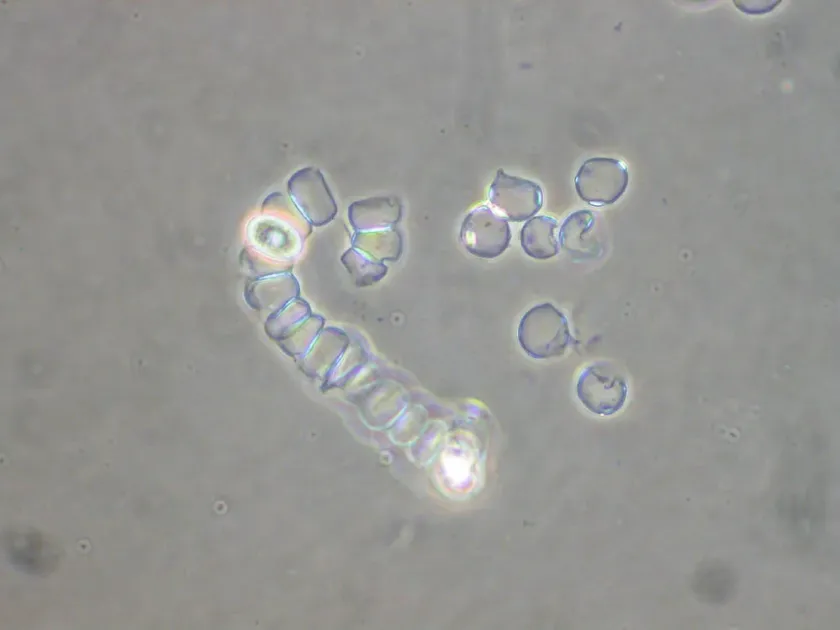
Description
Symptoms
Symptoms of Acrasiosis are frequently similar to typical root rot. The initial sign is a visible yellowing (chlorosis) of the lower leaves, followed by a loss of turgor pressure, leading to wilting that typically occurs during the warmest part of the day.
A closer inspection of the root system reveals a characteristic breakdown of structural integrity. Roots appear soft, watery, and mushy, often showing a thin layer of slimy discharge, which is a classic indicator of slime mold activity.
In the early stages, small brown, water-soaked spots appear on the roots. As the disease progresses, these lesions merge, destroying the fine root hairs responsible for water and nutrient uptake, effectively starving the plant.
Plants affected by this disease exhibit significant stunting and poor vigor. Despite appropriate fertilization, the damaged root system remains unable to transport nutrients effectively to the aerial parts of the plant.
In severe cases, the base of the stem near the soil line may become brittle and discolored. Plants can be easily pulled from the soil due to the advanced decay of the root system, which often shows greyish or brown necrotic patches.
Pathogen
The causative agent of the disease is the genus Acrasis, which belongs to the Acrasiomycota group, often described as cellular slime molds. These organisms exhibit a complex life cycle, featuring amoeboid stages that feed on bacteria and decaying organic matter in the soil.
Unlike true fungi, cellular slime molds are capable of aggregation. When environmental conditions become adverse or food is scarce, individual cells move toward each other to form a pseudoplasmodium, which can later produce spores for survival.
In agronomy, Acrasis is considered an opportunistic pathogen. While usually saprotrophic, these organisms can transition to a parasitic lifestyle when the plant's root system is compromised by excessive moisture or low oxygen levels.
The biology of the pathogen makes it highly resilient. The ability to form durable cysts allows Acrasis to persist in the soil for several seasons, awaiting conditions favorable for rapid colonization of weakened plant tissues.
Transmission primarily occurs through contaminated irrigation water, movement of infested soil via machinery, or the accumulation of untreated organic debris, which provides a constant nutrient source for the pathogen.
Conditions for development
The primary driver for the development of Acrasiosis is persistent soil saturation. High humidity in the soil creates an anaerobic environment, which is highly conducive to the motility and metabolic activity of the amoeboid stages of the pathogen.
The pathogen thrives in moderate temperatures, typically ranging from 18 to 25 degrees Celsius. These conditions stimulate rapid aggregation and colonization of plant roots if the soil is poorly drained.
Soil compaction is a critical risk factor. Lack of oxygen in the root zone limits plant root respiration, weakening the plant's natural defense mechanisms and providing the perfect opening for Acrasis to initiate infection.
Poor agricultural practices, such as the failure to remove crop residues or inadequate rotation intervals, facilitate the buildup of the pathogen's population. Organic matter left on the surface acts as an ideal substrate for the slime mold.
Excessive nitrogen fertilization can also create imbalances, leading to succulent, soft tissue growth that is more susceptible to invasion by microorganisms and pathogens, including slime molds.
Why it matters
The primary economic harm of Acrasiosis is a substantial reduction in yield. Because the root system is incapacitated, the plant cannot maintain the nutrient uptake required for optimal fruit or seed production, leading to smaller, lower-quality harvests.
In cases of high infestation, plant density is significantly reduced. Farmers often face the risk of total crop loss in localized areas, which necessitates costly replanting and disrupts the seasonal production schedule.
Acrasiosis creates an entry point for secondary opportunistic pathogens, including harmful bacteria and other soil-borne fungi. This synergistic effect often accelerates the death of the host plant significantly compared to single-pathogen infections.
The aesthetic and market quality of the produce is frequently compromised. Affected plants often exhibit deformed fruit or abnormal ripening patterns, making the output unsuitable for high-quality market standards.
Long-term contamination of the soil requires significant mitigation efforts. Fields affected by severe Acrasiosis may need to be retired from specific sensitive crops for several years to allow the pathogen population to decline naturally.
Protection
Prevention is the cornerstone of managing Acrasiosis. Improving field drainage is essential to prevent water stagnation in the root zone, which effectively eliminates the primary prerequisite for the pathogen's survival.
Implementing a rigorous crop rotation plan is vital. By ensuring that host-sensitive crops are not planted in the same soil for at least three to four years, the lifecycle of the pathogen is disrupted.
Maintaining soil health through the addition of organic amendments and the use of cover crops improves soil structure and promotes a diverse, healthy microbial community that can outcompete the slime molds.
Careful management of nitrogen levels is recommended to ensure strong root growth without producing overly soft, vulnerable tissues. Balancing nutrition with phosphorus and potassium can enhance the plant's structural resistance.
In instances where disease pressure is high, the immediate removal and destruction of infected plants are necessary to contain the spread. While fungicides exist for various soil pathogens, they have limited efficacy against slime molds, making agronomic and cultural control methods the primary solution.
Discussion
No discussions yet — be the first.