
Description
Symptoms
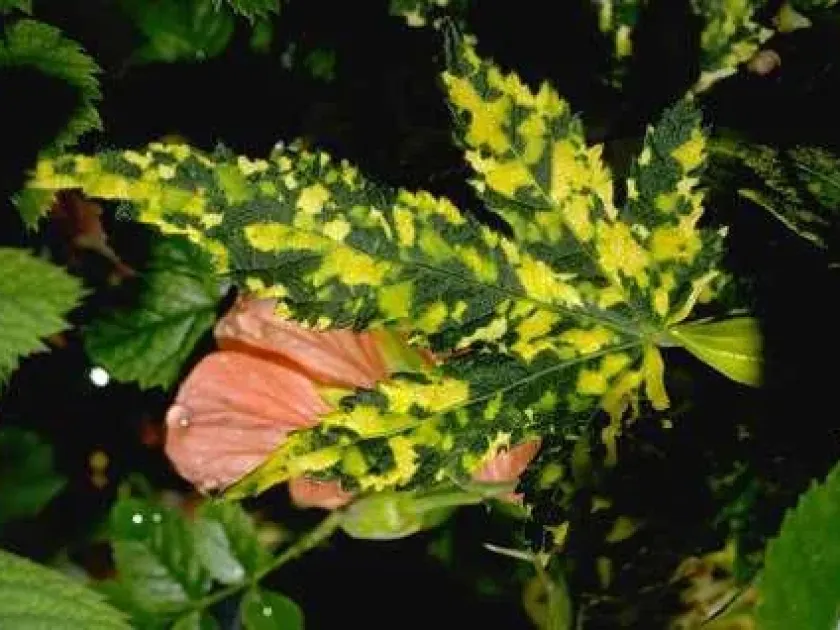
The hallmark symptom is a striking yellow or creamy mosaic pattern on the leaves. Chlorotic spots often present as intricate, marble-like patches across the leaf surface.
Infected leaves are frequently distorted, reduced in size, and show evidence of stunted growth, which leads to a decrease in the overall vigor of the plant.
Severe infection significantly disrupts metabolic processes, particularly photosynthesis, which weakens the plant and increases susceptibility to opportunistic pathogens.
In cotton crops, the virus causes characteristic leaf chlorosis, leading to reduced vegetative biomass and substantial losses in fiber yield and quality.
Symptom expression can vary depending on the host cultivar, environmental temperature, and light intensity, often becoming more pronounced under optimal growth conditions.
Pathogen
The causal agent is the Abutilon mosaic virus (AbMV), belonging to the genus Begomovirus within the Geminiviridae family. It features a single-stranded DNA genome and distinct twinned virions.
The virus affects a broad host range, primarily within the Malvaceae family. Key hosts include ornamental abutilon, mallow, hollyhock, and the economically significant crop, cotton.
AbMV is an obligate parasite that requires living plant cells to replicate. In natural environments, it persists in infected perennial plants and weed species which act as reservoirs.
Transmission occurs primarily through vegetative propagation (cuttings) and biological vectors. Using infected propagation material is the most common cause of outbreaks in nurseries.
The primary vector for the virus is the whitefly (Bemisia tabaci), which acquires the pathogen while feeding on infected sap and transmits it to healthy hosts during subsequent feeding.
Conditions for development
The spread of the disease is closely tied to the population dynamics of its vector. High temperatures and moderate humidity favor the rapid proliferation of whiteflies, triggering virus transmission spikes.
In greenhouse settings, sanitation failures during pruning or taking cuttings are major risk factors, especially if tools are not disinfected between plants.
Long photoperiods and high light intensity may accelerate symptom development by increasing metabolic rates, which makes the loss of chlorophyll more apparent.
Plants stressed by nutrient deficiencies or improper irrigation are generally more susceptible to successful infection and rapid systemic colonization by the virus.
Cultivating susceptible crops in monoculture systems in regions where whiteflies are endemic creates a high risk of widespread epiphytotics.
Why it matters
Economic damage is primarily driven by the loss of ornamental value, rendering affected plants unsaleable in nursery and horticultural markets.
In cotton production, the virus causes significant reductions in raw fiber output and impairs the technological quality required for textile processing.
Chronic infection results in the gradual exhaustion of perennial plants, which eventually leads to the decline and death of the specimen.
Viral diseases of this nature are notoriously difficult to manage because the pathogen spreads systemically throughout the vascular system of the host.
The presence of infection foci requires costly interventions, such as the systematic eradication of diseased plants, which increases the total cost of production.
Protection
The primary management strategy is the use of healthy, virus-free certified propagation material to prevent the introduction of the pathogen into production sites.
Regular monitoring of whitefly populations coupled with timely insecticide applications during peak activity periods is critical for limiting disease spread.
Once infection is detected, affected plants should be immediately rogued and destroyed, as there are no chemical treatments available to cure systemic plant viruses.
All pruning tools must undergo thorough disinfection using alcohol or sodium hypochlorite solutions after every use to prevent mechanical transmission.
Maintaining spatial isolation from potential virus reservoirs and aggressive weed control in and around production areas are fundamental preventative measures.
Pathogens and affected parts
Affects crops · 1
Discussion
No discussions yet — be the first.