
Eastern gamagrass
Tripsacum dactyloides (L.) L.
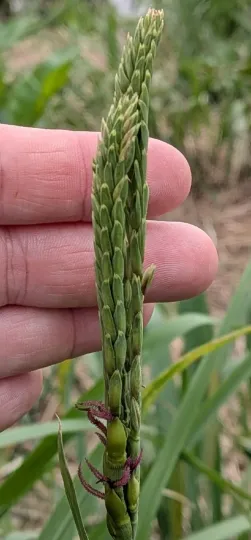
Description
Growing requirements
Eastern gamagrass (Tripsacum dactyloides) is a robust perennial bunchgrass belonging to the Poaceae family. It is widely recognized as one of the most productive native forage grasses in North America, often referred to as the "ice cream" of forage due to its palatability.
The plant originates from the central and eastern regions of the United States. It is known for its deep, fibrous root system, which allows it to thrive in diverse environments ranging from well-drained upland sites to seasonally wet bottomlands.
Ideally, this crop requires deep, fertile, and well-aerated soils to reach its maximum yield potential. While it exhibits impressive tolerance to drought, it also shows surprising resilience in soils that experience temporary waterlogging, unlike many other forage species.
The plant is a warm-season grass, meaning it requires warm temperatures for germination and active growth. It is relatively slow to establish, which makes site preparation and weed management during the first year of growth absolutely critical for long-term success.
Agronomic management includes maintaining optimal soil fertility through regular soil testing and targeted nutrient applications. Since gamagrass is a long-lived perennial, managing soil pH and phosphorus levels prior to planting is highly recommended for sustained production.
Yield
Eastern gamagrass is primarily used for hay production, grazing, and as silage. It is highly valued for its nutritional profile, characterized by high protein content and digestibility, provided that harvesting occurs before the grass reaches a mature, stemmy state.
With intensive management and adequate nitrogen application, yields can vary significantly, often producing between 5 to 10 tons of dry matter per acre annually. Its ability to provide early-season and late-season grazing makes it an essential tool for balancing forage supply.
Main diseases and pests
Diseases such as leaf rust and various leaf spot fungi can affect the crop, particularly in dense stands with poor airflow. Maintaining proper spacing and avoiding over-fertilization with nitrogen can help mitigate the severity of these infections.
Insect pests include aphids, which can stunt early growth, and various lepidopteran larvae. Regular field scouting is necessary to identify outbreaks early, allowing for effective management that prevents significant yield loss in established stands.