
Knotted clover
Trifolium striatum L.
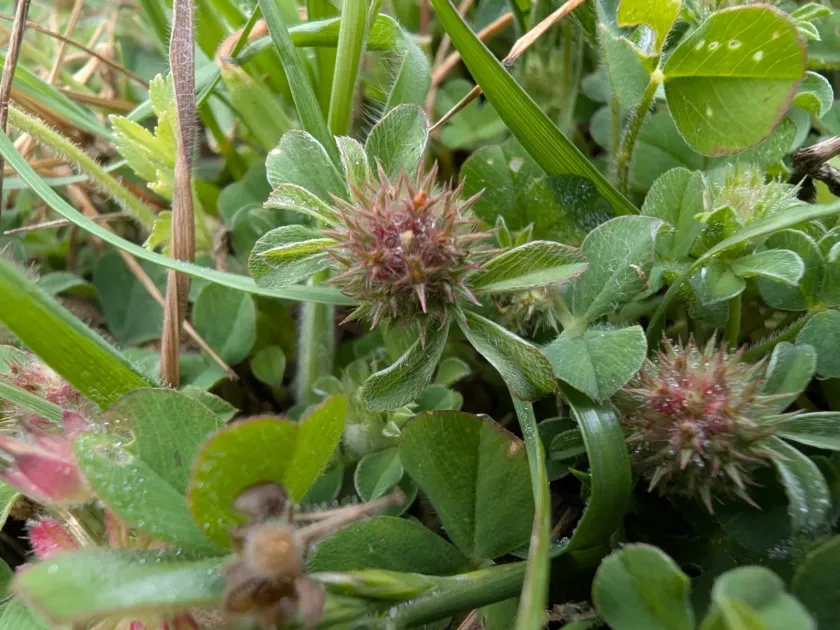
Description
Sowing dates
Knotted clover is an annual legume that is typically sown in early spring, once soil temperatures are consistently above the germination threshold.
Seed scarification is highly recommended before sowing to overcome physical seed coat dormancy and ensure uniform emergence across the field.
The seeds should be sown at a shallow depth of 1 to 2 centimeters, ensuring optimal contact with the soil to prevent drying out during the germination process.
Drill seeding is preferred over broadcasting to achieve the necessary planting density and to provide adequate spacing for individual plant development.
Early establishment is critical, and moisture management during the first few weeks after sowing significantly impacts the final density of the legume stand.
Growing requirements
The plant thrives in well-drained, sandy, or light loamy soils, showing a preference for sites that avoid waterlogging and compaction.
It exhibits notable drought tolerance, largely due to a deep taproot system that allows the plant to access moisture reserves in deeper soil layers.
Knotted clover requires full sun exposure and performs poorly in shaded areas, making it unsuitable for intercropping with tall, competing forage species.
Soil fertility management should focus on sufficient levels of phosphorus and potassium, which are essential for robust nodule formation and nitrogen fixation.
It adapts well to a variety of temperate climates but is most productive in regions with mild winters and warm, moist springs and summers.
Main diseases and pests
Fungal diseases, particularly powdery mildew and various leaf spot pathogens, are the primary biological threats that can reduce photosynthetic capacity.
Pests like clover weevils can cause significant damage to the foliage and developing flower heads, potentially impacting both biomass and seed yield.
Root-knot nematodes can weaken the plant by damaging its ability to fix nitrogen, often leading to stunted growth and increased susceptibility to other stressors.
Effective management strategies include crop rotation, which breaks the pest cycle and prevents the buildup of soil-borne pathogens in the field.
Integrated pest management (IPM) is advised to maintain the ecological balance while protecting the health of the legume forage crop.
Harvesting
The primary use for knotted clover is as a high-quality pasture component, providing excellent nutritional value for grazing livestock.
When harvested for hay, mowing should occur at the early bloom stage to balance nutritional content with the total volume of available dry matter.
The species demonstrates a strong capacity for regrowth, allowing for multiple grazing or cutting rotations within a single active growing season.
Seed harvesting must be carefully timed to avoid excessive shattering, as the seeds mature unevenly across the flowering heads of the plant.
As a legume, its presence in the field significantly improves soil nitrogen status, providing a dual benefit of forage production and long-term soil health.