
Red clover (Trifolium rubens)
Trifolium rubens L.
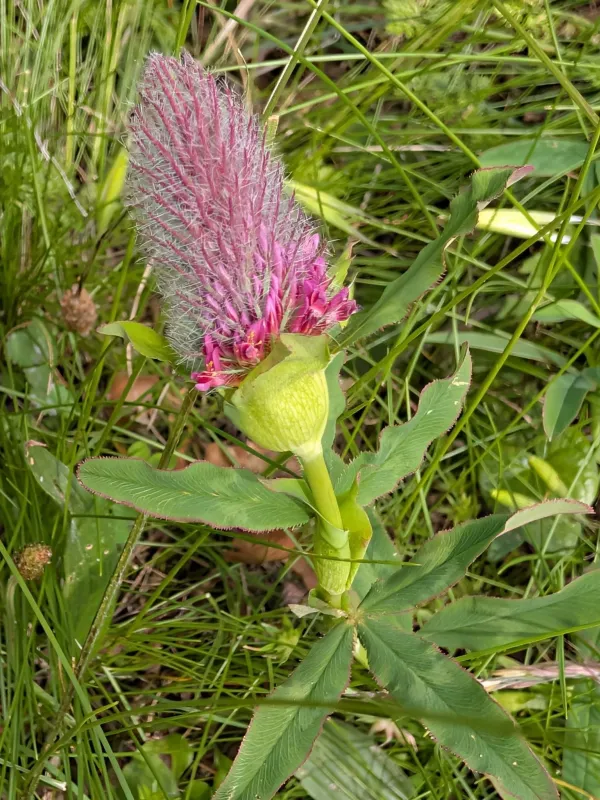
Description
Sowing dates
Sowing Trifolium rubens is best performed in early spring when the soil retains sufficient moisture from melting snow. An autumn sowing is also a viable option in milder climates, allowing for natural stratification of the seeds.
The seeds should be planted at a shallow depth of 1 to 2 centimeters. Because the seeds are small, it is critical to ensure a fine, firm seedbed and to roll the soil afterward to ensure optimal seed-to-soil contact.
The seeding rate typically ranges between 12 and 16 kilograms per hectare, depending on seed purity and germination quality. When establishing a mixed pasture, adjust the rate to account for competing grass species.
Inoculation with specific nitrogen-fixing bacteria is highly recommended for Trifolium rubens. This practice significantly improves seedling vigor and contributes to more robust nitrogen fixation within the root nodules.
Effective weed control during the establishment phase is essential, as the seedlings of this species grow relatively slowly during the first few weeks after emergence.
Growing requirements
Trifolium rubens is a light-demanding plant that thrives in open, sunny environments. It performs poorly when shaded by taller crops or heavy weed infestations, which can lead to elongated, weak stems.
Regarding soil preferences, it favors well-drained loamy or sandy soils with a neutral to slightly acidic pH. It is notably sensitive to waterlogged conditions, which can lead to root rot and reduced plant density.
This species is highly regarded for its drought tolerance, which allows it to persist in dry environments where other clover species might fail. Its deep root system efficiently accesses subsoil moisture during peak summer months.
Soil fertility management should focus on maintaining adequate levels of phosphorus and potassium. While nitrogen fertilizer is generally unnecessary due to its symbiotic nitrogen fixation, micronutrient availability can support overall plant health.
It is commonly found in dry meadows, forest edges, and scrublands, indicating its natural adaptability to varied soil structures and environmental stresses in temperate regions.
Yield
The productivity of Trifolium rubens is closely linked to its growth cycle, typically yielding two to three cuts per season depending on precipitation levels and soil moisture content.
The highest dry matter yields are usually achieved in the second and third years of establishment as the root system becomes fully developed and the plant forms a dense canopy of foliage.
Primary agricultural use is for high-quality hay production. The forage is rich in protein and essential minerals, making it a valuable feed source for livestock, particularly during the winter period.
Beyond forage, the plant is valued for its soil-improving properties. The root biomass contributes significant organic matter to the soil structure, while nitrogen fixation benefits subsequent crop rotations.
Dry matter yields typically range from 30 to 50 centners per hectare under good management conditions. With intensive cultivation practices, these figures can be optimized for higher profitability.
Main diseases and pests
Fungal diseases, including anthracnose and various leaf spots, represent the primary threat to the crop, especially in humid and poorly ventilated fields. Proper field management is key to prevention.
Pest pressures can include clover weevils and nematodes, which target the foliage and root zones respectively. These pests can weaken the plant, making it susceptible to secondary environmental stress.
Cultural control methods such as crop rotation and the avoidance of high plant density are the most effective strategies for minimizing the impact of these threats without relying heavily on pesticides.
Monitoring the field for signs of infestation during the spring and early summer is crucial for timely intervention. Scouting for yellowing leaves or stunted growth provides early warning signals.
Cleaning all farm machinery before moving into the field is another essential practice to prevent the spread of soil-borne pathogens or weed seeds that could compromise the crop's health.
Harvesting
The optimal harvest window is during the early flowering phase. At this time, the ratio of leaves to stems is at its peak, providing the highest nutritional value for harvested hay.
After mowing, the crop should be left in the field to wilt, followed by careful raking to ensure even drying. Over-drying should be avoided to prevent the loss of high-protein leaves during handling.
Proper storage in dry, well-ventilated barns is necessary to preserve the quality of the hay. High moisture levels in stored hay increase the risk of spontaneous combustion and microbial degradation.
For seed production, harvesting should occur when the flower heads have turned brown and reached maturity. Combines must be adjusted to minimize mechanical damage to the delicate seeds.
Effective post-harvest handling, including cleaning and drying the seeds, ensures long-term viability and high germination rates for the following season's planting efforts.