
Hairy clover
Trifolium hirtum All.
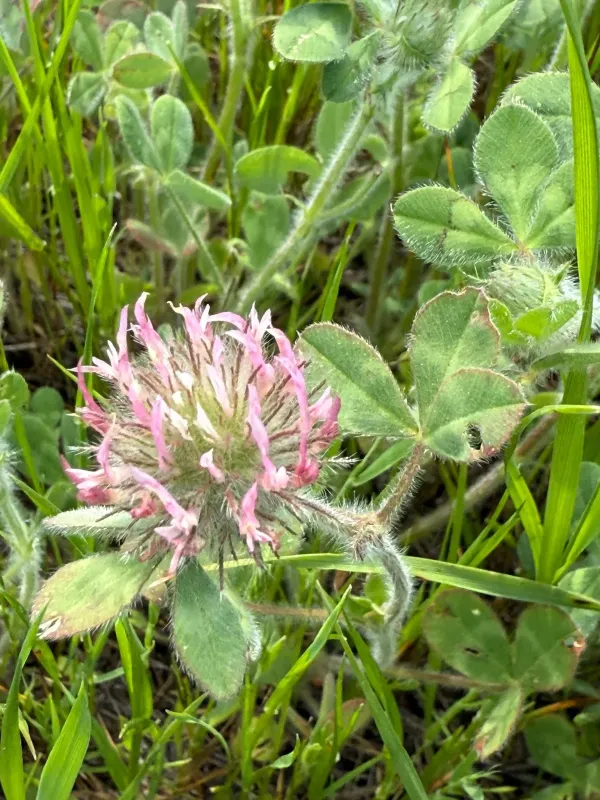
Description
Sowing dates
Hairy clover is an annual legume species that is typically sown in the autumn to establish vigorous growth before the arrival of winter. The timing of sowing is critical and is usually performed after the first autumn rains to ensure the seeds have sufficient moisture to germinate.
In regions with a Mediterranean climate, sowing is generally carried out in October or November. This allows the plants to develop a strong root system during the cool season, enabling them to resume rapid growth early in the spring.
Standard grain drills are commonly used for seeding, providing uniform distribution across the field. The seeding rate varies depending on the intended use, such as pasture or hay production, typically ranging from 15 to 25 kilograms per hectare.
The seeds may require scarification if they have been stored for long periods, as the hard seed coat can otherwise delay germination. Proper seedbed preparation is essential to ensure good soil-to-seed contact and improve overall emergence rates.
Including hairy clover in crop rotation cycles helps improve soil structure and increases nitrogen levels through symbiotic nitrogen fixation. As a cover crop, it is typically incorporated into the soil during the early flowering phase to maximize organic matter turnover.
Growing requirements
This crop is highly adaptable to various soil types but performs best in well-drained loam or sandy soils. It is sensitive to waterlogging and does not tolerate prolonged saturated conditions, which can lead to root failure and poor development.
Hairy clover is known for its excellent drought tolerance, being specifically adapted to climates characterized by dry summers. The plant is evolved to utilize winter and early spring precipitation effectively, completing its life cycle before the onset of extreme heat.
The optimal temperature range for the development of this clover is between 15 and 25 degrees Celsius. While it can withstand mild cold snaps, it is not highly frost-hardy and may suffer damage during prolonged periods of sub-zero temperatures.
Application of phosphorus and potassium fertilizers is often beneficial, as these elements promote robust root formation and stem strength. Because the plant is a legume, it has a high capacity for nitrogen fixation, reducing the need for synthetic nitrogen applications.
Adequate sunlight is crucial for high photosynthetic rates, so planting density should be managed to prevent excessive competition. Proper spacing ensures better airflow, which helps in maintaining plant health and increasing overall biomass production.
Main diseases and pests
Root rots are among the primary threats to hairy clover, particularly in soils with poor drainage. These fungal infections can cause plant mortality in patches and lead to a significant reduction in the overall stand density during the spring season.
Pests such as clover root curculio and other weevils can cause significant damage to the roots and seedlings. These pests impair the plant's ability to fix nitrogen efficiently and can stunt growth, especially during the establishment phase.
Powdery mildew may occur in periods of high humidity or poor ventilation within the stand. Implementing proper crop rotation and avoiding over-seeding can help mitigate the risk of fungal disease outbreaks throughout the growing season.
Leaf-feeding caterpillars, including certain species of armyworms, can quickly consume significant amounts of foliage. Regular scouting and monitoring of the fields are essential for timely intervention and to keep pest populations below economic damage thresholds.
Biological control methods are becoming increasingly utilized to manage pest populations sustainably. Furthermore, selecting disease-resistant varieties remains one of the most effective strategies for minimizing crop losses in both commercial and organic farming.
Harvesting
Harvesting for green forage or hay is ideally performed during the peak flowering stage. This timing ensures that the plant tissue contains the highest concentration of proteins, vitamins, and minerals, providing maximum nutritional value for livestock.
Seed harvesting requires careful timing, as the pods can shatter if left in the field for too long after maturity. Harvesting should commence when the majority of the flower heads have turned brown, indicating that the seeds are fully developed.
The use of advanced hay-making machinery equipped with conditioners can significantly speed up the drying process. Efficient curing is vital for maintaining the quality and nutrient retention of the hay, even when weather conditions are less than ideal.
Pollinator activity is a critical factor for achieving high seed yields. Ensuring a healthy population of bees and other pollinators in the vicinity of the fields during the flowering period is essential for successful fertilization and seed set.
Post-harvest management involves chopping and incorporating the crop residues back into the soil. This practice helps to improve soil organic matter content and enhances fertility, providing a solid foundation for the subsequent crop in the rotation.