

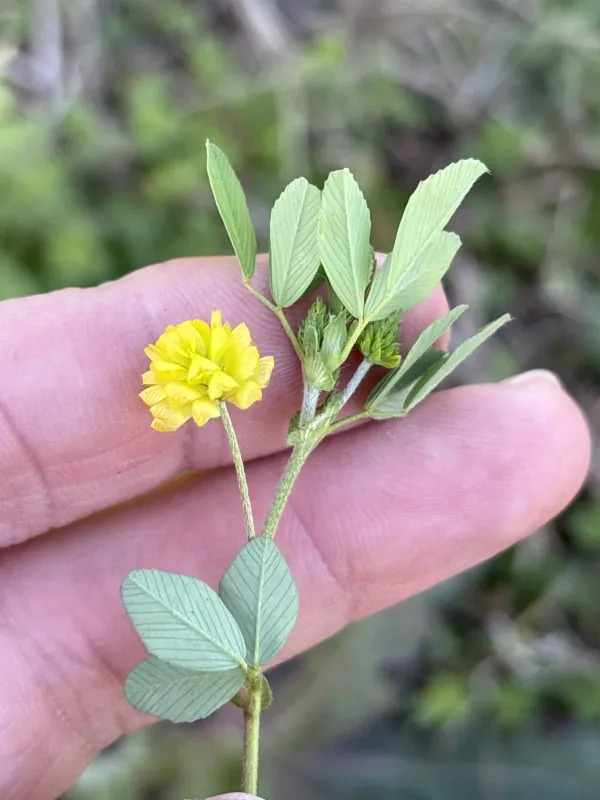
Description
Sowing dates
Hop trefoil is an annual legume that is typically sown in early spring as soon as the soil is workable and has warmed up to promote germination.
The crop is usually drilled in rows with 15 cm spacing, which allows for optimal plant density and reduces competition for sunlight and nutrients.
Seed rates generally range from 6 to 10 kg per hectare, depending on the purity of the seed and the specific fertility requirements of the field.
When used in mixtures with grasses, the seeding rate is adjusted downward to maintain a balanced ratio between the leguminous and grassy components.
Seeds should be planted at a shallow depth of 1–2 cm, as they are small and require close contact with soil moisture to initiate the germination process.
Growing requirements
This species belongs to the Fabaceae family and thrives in open, sunny locations as it does not tolerate shading from taller vegetation well.
Hop trefoil is noted for its adaptability to poor, sandy, or stony soils where other clover species struggle to establish themselves effectively.
While it prefers neutral to slightly acidic soils, it is generally undemanding and will perform well in diverse environments provided there is good drainage.
The plant performs best under moderate moisture conditions and is sensitive to waterlogging, which can cause root rot and significantly reduce yield.
It prefers a temperature range of 18–22 degrees Celsius and exhibits moderate drought tolerance due to its relatively deep taproot system.
Yield
Hop trefoil is primarily utilized for hay production, grazing, and as a green manure crop to enhance soil structure and fertility through nitrogen fixation.
Yields of green biomass are highly dependent on soil phosphorus and potassium levels, which are critical for supporting vigorous legume growth.
In optimal conditions, the crop can yield between 10 and 15 tonnes of green matter per hectare, contributing significantly to pasture productivity.
By fixing atmospheric nitrogen, it improves the nutrient profile of the soil, making it a valuable rotation crop for enhancing subsequent agricultural yields.
Management of the flowering stage is essential for yield quality, as nutrient density tends to peak just before the onset of senescence.
Main diseases and pests
Common pests affecting this crop include various weevils that can damage foliage and interfere with the development of the reproductive organs.
Powdery mildew is a frequent fungal threat, particularly in conditions with high humidity and poor air circulation within the plant canopy.
Rust diseases can also manifest on the leaves, leading to reduced photosynthetic capacity and lower overall quality of the harvested hay.
Effective management includes crop rotation and ensuring that the plant stand is not too dense to prevent the build-up of pathogenic fungi.
Chemical intervention is rarely necessary and is reserved for extreme pest outbreaks that threaten the viability of the seed crop production.
Harvesting
Harvesting for hay should ideally occur during the full flowering stage, as this is when the protein content of the forage is at its highest.
For seed production, harvesting must be timed carefully when the heads have turned brown but before natural seed shattering becomes a major issue.
Proper curing involves swathing the crop and allowing it to wilt until the moisture content drops to approximately 15–17% for safe storage.
Care must be taken during handling to minimize leaf shattering, as the foliage is highly nutritious and represents a large portion of the crop value.
Mowing height should be kept at approximately 5–7 cm to ensure the longevity of the stand and encourage healthy regrowth if multiple cuts are planned.
Content graph
Connections · Hop trefoil
Most often together:
Marketplace
Products · 2
