
Beirut clover
Trifolium berytheum Boiss. & Blanche
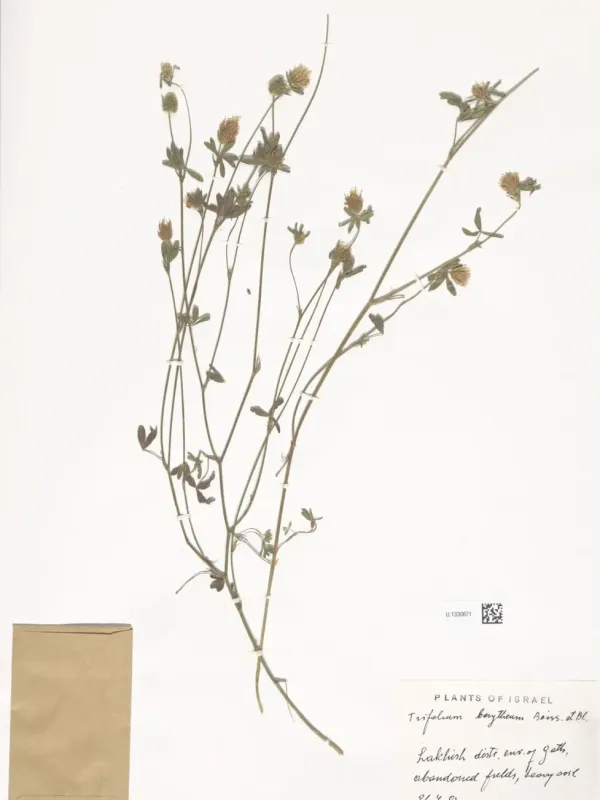
Description
Sowing dates
Beirut clover (Trifolium berytheum) is a unique herbaceous plant species belonging to the Fabaceae family, native to the Eastern Mediterranean region.
The optimal sowing time generally occurs during early spring or autumn, depending on local climatic conditions to ensure adequate soil moisture for germination.
Given the small size of the seeds, they should be sown at a shallow depth to ensure successful emergence and establishment of the seedlings.
Fields should be carefully prepared, weed-free, and leveled to provide the best possible environment for the crop to establish its initial root system.
A soil temperature of approximately 12 to 15 degrees Celsius is typically required to promote vigorous germination and uniform plant development.
Growing requirements
This species has specific habitat requirements derived from its natural origins in the mountainous and coastal zones of the Levant.
It performs best in well-drained calcareous soils with a neutral to slightly alkaline pH, which matches the geological conditions of its native range.
While Beirut clover exhibits moderate drought tolerance, consistent moisture during the peak vegetative phase is essential for maximizing biomass production.
The crop requires full sun exposure for healthy growth and should be protected from strong winds that can increase transpiration and dehydrate the soil.
As a legume, it forms symbiotic relationships with nitrogen-fixing bacteria, which contributes to soil fertility and reduces the need for supplemental nitrogen.
Yield
The primary use of Beirut clover in agriculture is as a high-quality forage crop, providing nutritious green fodder for livestock.
The plant demonstrates an ability to branch intensely, allowing for multiple cuttings throughout the growing season under appropriate management.
Biomass productivity is highly dependent on effective nutrient management and the frequency of harvests, which dictates the rate of regrowth.
The green foliage is rich in proteins and essential minerals, making it an excellent component for inclusion in pasture-based livestock feeding programs.
Maintaining optimal plant density is critical to achieving high yields, as overcrowding can lead to diminished quality and shading of the lower foliage.
Main diseases and pests
The primary threats to Beirut clover include fungal diseases that typically manifest in environments with high humidity and poor air circulation.
Common agricultural pests affecting this species include weevils and various species of aphids that feed on the soft tissues and stems.
During the flowering period, the risk of pathogen transmission via insect vectors increases, which can negatively impact overall seed yield.
Effective management strategies include crop rotation, the use of certified healthy seeds, and timely monitoring for early signs of infestations.
Protective measures should emphasize biological and cultural control methods to maintain the ecological balance and sustainability of the forage crop.
Harvesting
Harvesting should be timed to coincide with the budding to early flowering stage, as this is when the nutritional value is at its absolute peak.
When curing for hay, gentle handling is necessary to retain the foliage, as the leaves contain the highest concentration of digestible proteins.
Utilizing mechanized harvesting equipment allows for efficient processing and minimizes losses, contributing to higher total output of stored fodder.
For seed production, harvesting begins when the pods on the lower and middle stems reach maturity to avoid premature shattering of the seeds.
Proper harvesting practices not only secure a high-quality feed product but also ensure the long-term vigor of the clover stand for subsequent seasons.