
Red clover
Trifolium pratense L.
Description
Sowing dates
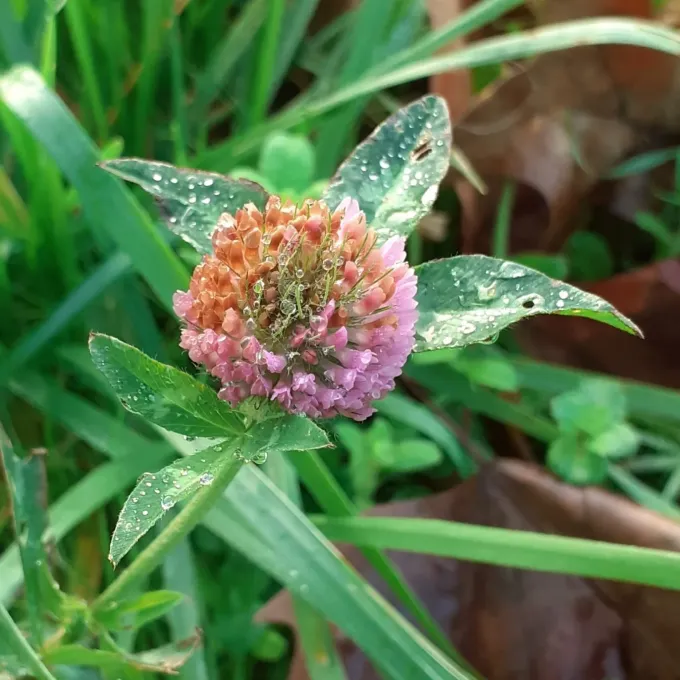
Red clover (Trifolium pratense L.) is a vital perennial forage legume belonging to the Fabaceae family. Known for its ability to fix atmospheric nitrogen through symbiosis with Rhizobium bacteria, it serves as a cornerstone for sustainable agriculture and soil fertility improvement.
Sowing typically takes place in early spring, often as an undersown crop with spring cereals. This method protects the young, sensitive seedlings from intense solar radiation while allowing them to establish a strong root system before the summer heat arrives.
Seedbed preparation is critical; the soil must be firm, fine, and free of weeds. Because red clover seeds are small, they should be sown at a shallow depth of approximately 1-2 cm. Proper soil compaction after sowing ensures optimal capillary water movement to the seeds.
For fields without a history of clover, seed inoculation with specific bacterial strains is strongly recommended. This practice ensures successful nodulation and maximizes the plant's nitrogen-fixing potential, which reduces the need for synthetic nitrogen fertilizers in the future.
Depending on the region, broadcasting or drilling can be utilized. Drilling is generally preferred as it provides more uniform spacing and consistent depth, which leads to a more balanced stand density compared to broadcasting methods.
Growing requirements
Red clover thrives in cool, humid climates and is well-adapted to a wide range of temperate environments. It is highly winter-hardy, allowing it to persist in regions with severe winters provided there is adequate snow cover to protect the crown of the plant.
The ideal soil for red clover is a well-drained, fertile loam or clay loam with a neutral to slightly acidic pH. While it tolerates a variety of soil types, it performs poorly in waterlogged conditions, which can lead to root rot and reduced plant survival rates.
Nutrient management focuses on phosphorus and potassium. Phosphorus is essential for root development and energy transfer, while potassium plays a key role in winter hardiness and general disease resistance, helping the plant store carbohydrates for spring regrowth.
As a long-day plant, red clover requires sufficient sunlight for optimal photosynthetic activity. It is not shade-tolerant, and in mixtures with other grasses, management must ensure that the clover component is not outcompeted for access to solar radiation.
Rotation management is vital for the longevity of the crop. A rotation interval of at least 4 years between red clover plantings helps to break disease cycles and prevents the buildup of soil-borne pathogens that specifically target legume crops.
Yield
Red clover is highly productive, with yields typically ranging from 15 to 30 tons of fresh forage per hectare annually, depending on local conditions and harvest frequency. It is capable of multiple cuts per season, usually providing two or three harvests in favorable climates.
The nutritional profile of red clover is excellent, characterized by high protein, mineral, and vitamin content. This makes it an ideal feed source for ruminants, significantly improving milk yield and weight gain in livestock compared to grass-only forage diets.
Productivity peaks in the second year of the stand. While red clover is often used in short-term leys (3-4 years), modern high-yielding varieties allow for consistent performance throughout the lifecycle of the stand if proper fertilization and cutting management are practiced.
The regrowth capacity, or recovery speed after cutting, is a vital trait of red clover. It depends heavily on the starch reserves stored in the roots and crown. Allowing the plant to reach the early flowering stage before the final cut of the season ensures sufficient reserves for winter survival.
Integrating red clover into grass mixtures, such as with Timothy or Meadow Fescue, often yields a more stable crop. These mixtures enhance both the total yield and the ease of drying the forage, as the grass component helps the clover mat to dry faster in the field.
Main diseases and pests
The most common and destructive disease in red clover is anthracnose, which causes necrotic lesions on stems and petioles. During humid, warm periods, this disease can lead to significant crop loss and reduced forage palatability due to the production of toxins.
Other prevalent threats include powdery mildew and various leaf spot diseases. Preventive strategies involve selecting resistant cultivars, ensuring optimal plant spacing to promote airflow, and practicing timely harvesting to minimize the duration that leaves are exposed to infection.
Pest management is equally important, particularly regarding the clover seed chalcid, which can decimate seed production. Farmers must monitor populations during the seed formation phase and implement integrated pest management techniques to mitigate damage.
Leaf-feeding insects, such as the clover weevil and various aphids, can also impact the photosynthetic capacity of the plants. In cases of severe infestations, targeted and timed insecticide applications may be necessary, provided they do not harm essential pollinating bees.
Effective weed control during the establishment phase is essential for long-term productivity. Once established, the fast-growing nature of red clover helps it outcompete many broadleaf weeds, but aggressive perennial grasses or creeping weeds may still require mechanical or selective chemical intervention.
Harvesting
The optimal harvest window is at the early flowering stage (bud-to-bloom). Harvesting at this time balances the total biomass yield with the highest protein content, ensuring maximum digestibility and nutritional value for the animals.
When producing hay, rapid field curing is necessary to prevent leaf loss. The leaves contain the highest concentration of protein and nutrients; therefore, gentle mechanical handling is required during raking and baling to preserve the structural integrity of the foliage.
For silage production, the crop should be wilted to an appropriate dry matter content and ensiled under anaerobic conditions. Thorough compaction and airtight sealing in pits or round bales prevent the growth of butyric acid-producing bacteria and molds.
Seed harvest is a specialized operation that requires the crop to reach maturity. A two-stage harvest—swathing and subsequent threshing—is common, allowing the seed heads to dry naturally in the field before being combined to minimize mechanical losses.
Following the final harvest of the season, avoiding excessive grazing or late-season cutting is crucial. The plants need time to accumulate carbohydrate reserves in the root system before the onset of dormancy, which is the primary factor in successful overwintering.