
Glandular clover
Trifolium glanduliferum Boiss.
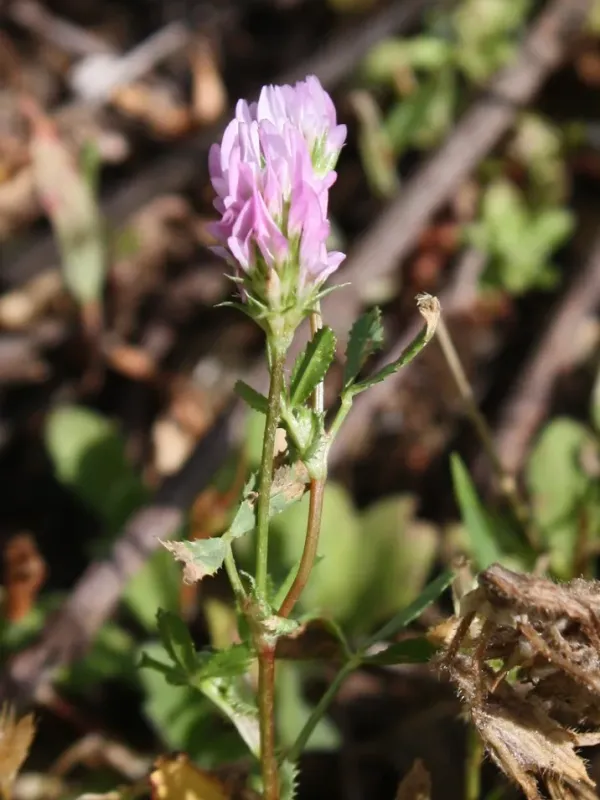
Description
Sowing dates
Glandular clover (Trifolium glanduliferum Boiss.) is a member of the Fabaceae family. This annual herbaceous plant is primarily adapted to regions with warm, temperate climates, commonly found in the Middle East.
Sowing time is generally early spring, once soil temperatures reach 8–10 degrees Celsius. Consistent soil moisture during the germination phase is critical for establishing a healthy stand.
The seeding rate should be adjusted based on the intended use, whether for green forage or seed production. Proper seedbed preparation is essential for optimal results.
Seeds should be planted at a shallow depth of 1–2 centimeters. Planting too deep can significantly reduce emergence rates and lead to uneven crop distribution across the field.
After seeding, rolling the soil is recommended to improve the contact between the seeds and the soil, which helps to maintain the necessary moisture levels for early development.
Growing requirements
This clover species thrives in well-drained soils with a neutral or slightly alkaline pH. It is sensitive to waterlogging, so fields with good drainage systems are highly preferred for cultivation.
The plant requires full sun to maximize its productivity. Shaded areas significantly limit the growth rate and reduce the density of the flowering canopy.
Glandular clover demonstrates moderate drought tolerance once established, though consistent moisture throughout the growing season is required for high biomass yields.
Soil fertility requirements are moderate; as a legume, it fixes nitrogen, which reduces the need for nitrogenous fertilizers, provided that phosphorus and potassium levels are adequate.
In colder regions, it behaves as an annual crop because it does not possess the hardiness required to survive harsh winters, making it suitable only for spring-to-autumn cycles.
Yield
The biomass yield of glandular clover depends heavily on timely mowing. Harvesting at the early flowering stage ensures the best balance of protein content and total volume.
Using the plant as a forage crop provides high-quality nutrition for livestock. It is often integrated into grazing rotations or harvested for silage to support winter feeding needs.
- High protein green forage
- Excellent quality hay
- Seed production for market
- Soil improvement via nitrogen fixation
Seed production is enhanced by the presence of pollinators. Farmers are encouraged to keep beehives nearby to ensure effective cross-pollination and higher seed yields.
Proper management of fertility, particularly the application of phosphorus, can improve the vigor of the plant and lead to more uniform stand development.
Main diseases and pests
Fungal diseases such as leaf spots and root rots are common threats, especially in areas with poor drainage or during seasons with excessive rainfall.
Insect pests like weevils and clover moths can cause substantial damage. Integrated pest management strategies are recommended to keep populations below economic thresholds.
Crop rotation is the most effective way to prevent the buildup of soil-borne pathogens and insect larvae that target leguminous species.
Chemical control should be used sparingly and only when necessary, with careful consideration for the safety of beneficial pollinators and the livestock consuming the forage.
Ensuring adequate ventilation in the field by managing plant density helps to reduce humidity levels, which in turn mitigates the risk of fungal outbreaks.
Harvesting
Harvesting for hay should be done using mowers that condition the crop to allow for faster drying, preserving more leaves and preventing nutrient loss.
For seed production, harvesting should begin when the majority of the pods turn brown. This timing is critical to prevent shattering and seed loss in the field.
Post-harvest processing requires specialized cleaning equipment designed for small seeds, followed by drying to 12-14% moisture to ensure long-term storage stability.
Properly dried seeds should be stored in cool, dry conditions to maintain high viability for the next planting season.
Residues left after the final harvest can be incorporated into the soil, acting as a green manure that improves organic matter content and overall soil structure.