
Crimson clover
Trifolium incarnatum L.
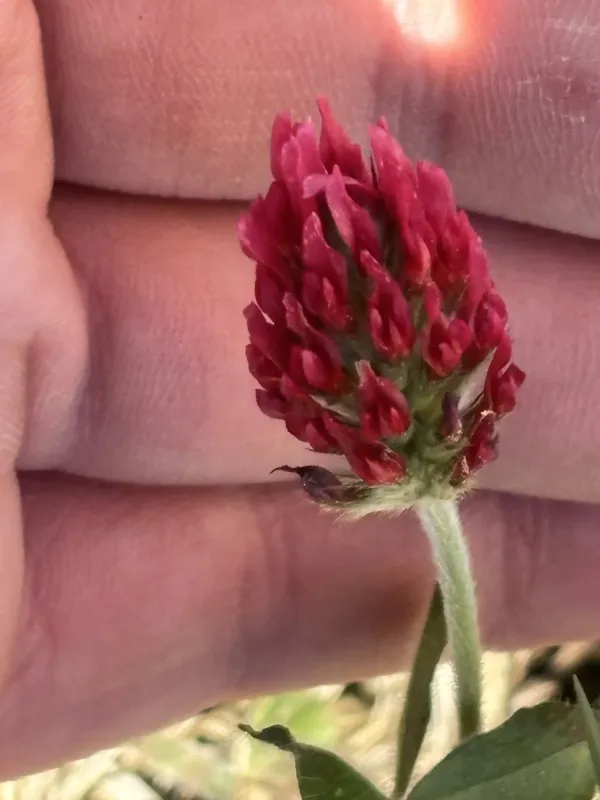
Description
Sowing dates
Crimson clover, scientifically known as Trifolium incarnatum, is a popular annual legume widely used in agriculture. It is typically sown in late summer or early autumn to establish a strong root system before winter.
The seeds require a firm, well-prepared seedbed for optimal germination. Sowing depth should be shallow, generally between 1 and 2 centimeters, to ensure adequate access to soil moisture.
Seeding rates usually range from 20 to 30 kilograms per hectare depending on the method used. Broadcasting followed by light harrowing is a common practice for cover crop applications.
Firming the soil with a roller after planting is essential to maintain good seed-to-soil contact. This step significantly improves moisture retention and germination rates, especially in dry autumn conditions.
Proper inoculation with specific rhizobia bacteria is recommended if the field has not been planted with legumes recently, ensuring the plant's ability to fix nitrogen efficiently.
Growing requirements
Crimson clover prefers well-drained, fertile soils with a neutral or slightly acidic pH. It thrives in loamy soils but can adapt to sandy textures if moisture levels are adequate.
The crop is known for its moderate cold tolerance, making it suitable for regions with mild winters. However, it may struggle in extreme frost conditions without significant snow cover.
It is sensitive to waterlogging. Planting on heavy, poorly drained clay soils should be avoided, as stagnant water can lead to root rot and poor stand establishment.
Sunlight requirements are high, although the plant displays good shade tolerance during its early growth stages, allowing it to be effectively interseeded with cereal crops.
Adequate phosphorus and potassium levels in the soil are crucial for maximizing nitrogen fixation and overwintering success, as these nutrients support root development.
Yield
Forage yield for Crimson clover is generally high, ranging from 200 to 350 quintals of green matter per hectare depending on site-specific soil fertility and weather conditions.
When harvested for hay, it can produce 50 to 80 quintals of dry matter per hectare. The nutritional quality is excellent, characterized by high crude protein content.
As a cover crop, it provides substantial biomass that improves soil organic matter and nitrogen availability for subsequent cash crops in the rotation cycle.
Seed production yields vary based on management, typically ranging from 4 to 9 quintals per hectare when conditions are optimal during the pollination phase.
Maximizing yield requires strict management of harvest timing, ensuring the crop is cut at the peak of nutrient density to optimize livestock production outcomes.
Main diseases and pests
Root rot diseases are the most significant threat, particularly in damp environments. Proper drainage and balanced irrigation are primary cultural methods for disease prevention.
Pests such as aphids and clover weevils can impact the plant's health. Scouting for these insects during the spring is necessary to prevent significant damage to the stand.
Powdery mildew can occur in dense stands or under high humidity conditions, though it is usually manageable through proper canopy spacing and site selection.
Crop rotation remains the most effective strategy to break the life cycles of pathogens and pests, preventing the build-up of specific clover-targeting organisms in the field.
Using certified, disease-free seed is essential to prevent the introduction of weeds and pathogens into new areas, ensuring a productive and healthy stand from the start.
Harvesting
For high-quality forage, the harvest should occur at the early flowering stage. This is when the concentration of nutrients, particularly protein and sugars, is at its absolute peak.
When harvesting for hay, it is important to handle the crop gently to minimize leaf loss, as the foliage contains the most digestible parts of the plant.
For green manure, the crop should be incorporated into the soil at full bloom to maximize the amount of nitrogen and organic carbon returned to the earth.
Seed harvest requires careful combine settings, as the seeds can shatter easily. Harvesting should be performed when the majority of seed heads have turned brown.
After harvest, the remaining stubble should be managed to facilitate decomposition, either through light tillage or by leaving it as mulch to protect the soil surface.