
Alsike clover
Trifolium hybridum L.
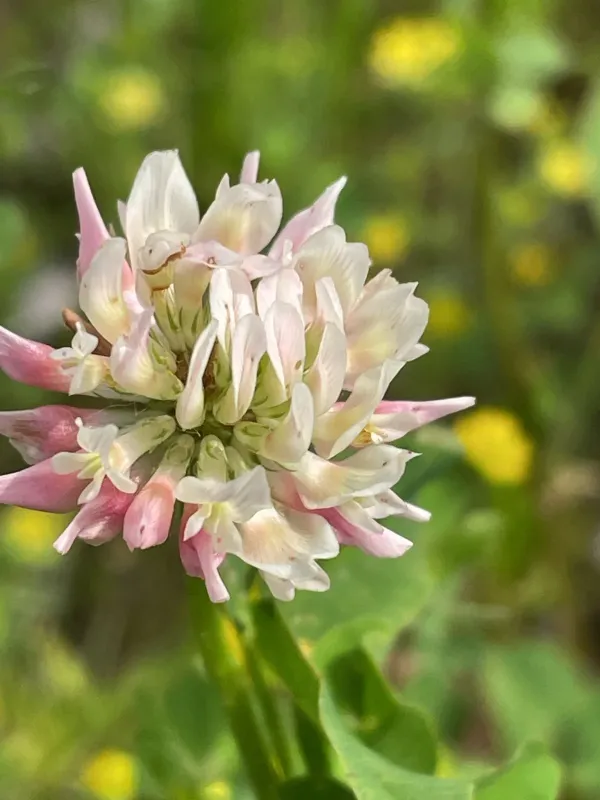
Description
Sowing dates
Alsike clover (Trifolium hybridum L.) is a valuable perennial legume widely used in agriculture for forage and soil improvement. It is particularly valued for its ability to thrive in conditions where other clovers struggle, especially in cool, moist environments.
The ideal time for seeding is early spring, which allows the crop to establish a deep root system before the summer heat. In many regions, frost seeding is also a viable method, spreading seeds onto frozen ground in late winter.
The seeding rate typically ranges from 6 to 10 kilograms per hectare depending on whether it is sown in a pure stand or as part of a mixture. Because the seeds are tiny, they should be placed at a shallow depth of no more than 1–2 centimeters.
Proper seedbed preparation and packing are essential to ensure good soil-to-seed contact. This moisture-retentive practice is crucial for the germination of such small seeds, which are susceptible to drying out in the topsoil layer.
Alsike clover establishes relatively slowly during the first year, focusing energy on root development. By the second year, it typically reaches full productivity, providing a lush, dense canopy that is highly effective at competing with weeds.
Growing requirements
One of the most defining characteristics of Alsike clover is its tolerance for wet, acidic soils. It is the legume of choice for lowland areas, heavy clay soils, or poorly drained sites where high soil moisture would kill red or white clover.
This crop is remarkably well-adapted to acidic conditions, tolerating soil pH levels that are too low for most other legumes. This versatility makes it an excellent candidate for land reclamation and for farmers working on less-than-ideal soil types.
Alsike clover prefers a cool, humid climate and is noted for its exceptional winter hardiness. It performs consistently in northern regions, showing strong resilience against late spring frosts and severe winter conditions.
While tolerant of wet conditions, it still benefits from a balanced fertility program. Applying phosphorus and potassium fertilizers based on soil tests helps sustain vigorous growth and increases the plant's overall longevity in the field.
The plant is moderately shade-tolerant, which makes it suitable for sowing as an understory crop with small grains. This strategy provides additional forage potential without significantly compromising the yields of the primary grain crop.
Yield
Alsike clover is a productive forage crop, capable of yielding significant biomass over the growing season. In optimal conditions, it can produce two heavy cuts per year, totaling up to 30–40 tonnes of green matter per hectare.
As a forage, it is highly nutritious, providing high levels of crude protein and essential minerals when harvested at the right maturity. It is commonly dried for hay or ensiled to serve as a staple for livestock during winter months.
Seed production is another vital use of the crop, with yields reaching up to 300 kilograms per hectare under well-managed conditions. Harvesting seeds requires precision, as the timing of maturity can vary significantly across the field.
Beyond forage, Alsike clover contributes to soil health by fixing atmospheric nitrogen. This natural fertilization process significantly reduces the need for synthetic nitrogen inputs for subsequent crops like cereals or corn.
It is important to manage grazing carefully. Pure stands of Alsike clover have been linked to photosensitivity in horses and some cattle, so it is recommended to maintain it within a diverse forage mixture to mitigate health risks.
Main diseases and pests
Diseases such as anthracnose and powdery mildew are common, particularly in high-humidity periods. Proper management of canopy density through timely cutting can help minimize disease incidence by improving airflow.
Various insect pests, including clover leaf weevils and aphids, can negatively impact seed production and foliage health. Monitoring fields during the bloom stage is essential to assess if chemical or biological intervention is required.
Root rots, particularly Fusarium species, are a potential threat, especially in waterlogged conditions or where crop rotation is neglected. Maintaining a healthy rotation interval of 4–5 years is the best strategy to prevent pathogen buildup.
Nematodes can occasionally cause stunted growth and yield reduction. In fields where these pests are suspected, selecting resistant varieties and following strict sanitary practices are the primary means of mitigation.
- Anthracnose (stem lesions);
- Powdery mildew (foliar fungus);
- Fusarium root rot;
- Clover seed weevil;
- Clover aphids.
Harvesting
The optimal harvest window for hay or silage is early to mid-bloom. Cutting at this time provides the best balance between high protein content and total dry matter yield, preventing the crop from becoming too fibrous.
To produce quality hay, drying must be efficient. Using conditioning mowers that crush the stems allows for faster moisture release, preserving the protein-rich leaves that are otherwise easily lost during mechanical turning.
Seed harvesting should be planned when the majority of flower heads have turned brown. A two-stage process, involving cutting followed by threshing after the windrows have dried, is the standard practice for minimizing seed shattering losses.
Post-harvest, seeds must be cleaned and dried to a moisture content of approximately 12% to prevent mold and loss of viability during storage. Proper aeration in storage bins further ensures long-term seed quality.
Excess forage following a seed harvest can be used as low-quality bedding or biomass, although it will have limited nutritional value compared to primary forage harvests taken earlier in the season.