
Stevia
Stevia rebaudiana (Bertoni) Bertoni
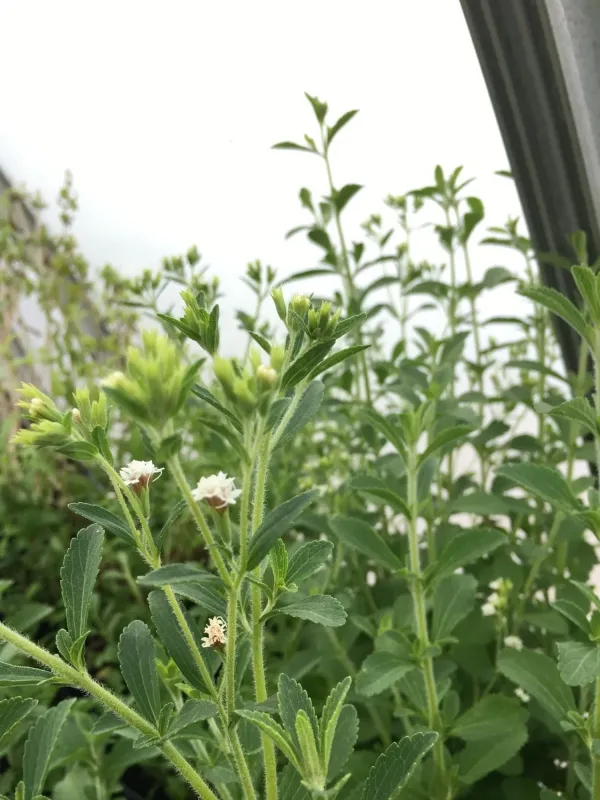
Description
Sowing dates
Stevia is a heat-loving perennial plant; however, in temperate regions, it is most often cultivated as an annual crop or started using seedling methods. Seeds are sown in trays in late February or early March, maintaining an optimal germination temperature of around 25 degrees Celsius.
Transplanting hardened seedlings into open ground should only occur after the risk of late frost has passed and the soil has warmed to at least 15-18 degrees Celsius. In warmer climates, direct seeding is possible, though the germination rate of Stevia seeds is generally low, requiring precise moisture control.
Light quality is a critical factor during the sowing stage, as seedlings are highly sensitive to light intensity. A lack of light during the initial growth phases leads to etiolation, resulting in weak stems and poor stress resistance in the future plants.
Planting density typically ranges from 50,000 to 70,000 plants per hectare, allowing sufficient space for the bush to develop properly. Adequate spacing improves air circulation, which is vital for reducing the risk of fungal infections during the early stages of establishment.
Before sowing or planting, the seed and seedling material must be carefully selected and treated. Choosing certified varieties adapted to specific climatic conditions is essential for maximizing biomass production and ensuring uniform growth across the field.
Growing requirements
Stevia belongs to the Asteraceae family and has high requirements regarding thermal regimes and humidity levels. The optimal temperature for active growth lies between 22 and 30 degrees Celsius; growth significantly stalls when temperatures drop below 10 degrees.
Soil conditions should be light, well-aerated, and slightly acidic to neutral in pH. The best results are achieved in sandy loam or light loamy soils rich in organic matter, where waterlogging is strictly avoided to prevent root damage.
The plant is highly sensitive to moisture stress, making regular irrigation a mandatory requirement for a bountiful harvest. However, excessive soil moisture must be managed carefully, as it can easily lead to root rot and other bacterial or fungal infections.
Successful agronomy involves applying balanced fertilizers, particularly nitrogen during the initial vegetative phase to promote leaf growth. Throughout the active growth period, maintaining high mineral nutrition, including phosphorus and potassium, is key to increasing steviol glycoside concentration.
Native to Paraguay and Brazil, Stevia is adapted to specific day lengths. When grown in other geographical latitudes, it is crucial to consider its short-day nature, which significantly affects the timing of flowering and the accumulation of sweet glycosides in the leaves.
Yield
The yield of Stevia is measured by the volume of dry leaf mass, as this is where the valuable diterpene glycosides are concentrated. On average, one hectare can produce between 2 to 4 tons of dry leaves under intensive cultivation management.
Yield is critically dependent on the number of sunny days and the absence of extreme temperature fluctuations. In industrial-scale operations, plastic covers or drip irrigation systems are often employed to stabilize growth and enhance product output.
The first significant harvest is performed during the mass budding phase, as the concentration of steviol glycosides reaches its peak at this time. Harvesting too late or allowing the plants to fully flower can decrease the quality of the raw material due to nutrient reallocation.
Regular pruning of stems is applied to increase yield, as this stimulates bush branching and the formation of more vegetative mass. Proper crown shaping is directly correlated with an increase in the overall productivity of every individual plant in the field.
Production efficiency also depends on the post-harvest drying technology. Rapid drying in specialized chambers at strictly monitored temperatures allows for the maximum preservation of useful properties and minimizes the loss of active ingredients.
Main diseases and pests
The main threats to Stevia include root and crown rots, which usually occur due to overwatering or improper thermal conditions. Fungal pathogens, such as Fusarium, can quickly devastate a plantation if the drainage system is inadequate or poorly maintained.
Pests that pose the greatest danger include aphids, spider mites, and certain species of soil nematodes. Aphids suck juices from young shoots, weakening the plant and spreading viral diseases, which significantly reduces the commercial appeal of the harvested product.
Pest control on an industrial scale is complicated by the fact that Stevia is a raw material for the food industry. The use of highly toxic pesticides is restricted, necessitating a shift toward biological control methods and strict crop rotation practices to manage pest populations.
Disease prevention starts with preparing high-quality planting material and disinfecting the nursery soil. Maintaining a clean environment, timely weeding, and the prompt removal of infected plants help prevent the spread of epidemics within the field.
It is important to monitor plant health during periods of high humidity, as this environment promotes the development of powdery mildew. Upon the first signs of infection, ensure adequate ventilation and consider treatment with approved biofungicides to protect the quality of the future yield.
Harvesting
Harvesting Stevia requires careful handling, as the plant's leaves are very brittle and can easily lose their market appearance. While mechanized mowing methods are used in large-scale industrial setups, manual harvesting is preferred for smaller plots.
The harvesting process involves cutting the stems at a height of 10-15 centimeters above the soil surface, which promotes quick regrowth of shoots for future harvests. The cut mass is gathered carefully, ensuring that soil contamination and dust are kept to a minimum.
Primary processing, including cleaning and preparation for drying, must begin immediately after cutting. Leaving the raw material in piles in the field for more than a few hours can lead to self-heating processes and the degradation of valuable active components.
Drying is performed in ventilated rooms or specialized dehydrators at temperatures not exceeding 45-50 degrees Celsius. Exceeding this temperature threshold results in the breakdown of active substances that give Stevia its unique, sweet flavor profile.
After drying, the leaves are separated from the stems, which have lower sweetness levels and hold little commercial value. The final product is sorted, packed in airtight containers, and stored in cool, dark places to prevent oxidation and moisture absorption.