
Wild mustard
Sinapis arvensis L.
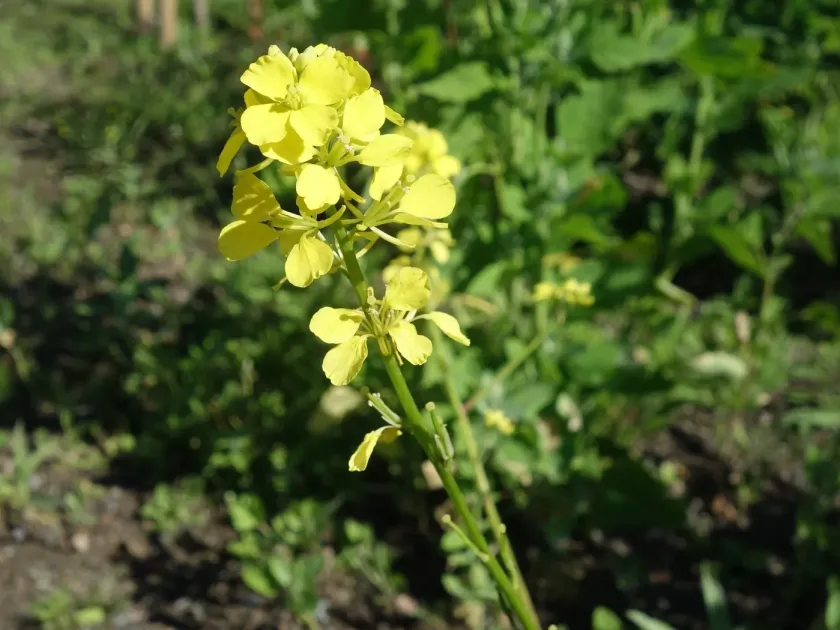
Description
Sowing dates
Wild mustard (Sinapis arvensis) is an annual herb of the Brassicaceae family. While often viewed as a weed, it is intentionally cultivated in sustainable farming as a cover crop to improve soil structure.
The optimal sowing time is early spring, as soon as the soil temperatures reach 5-8 degrees Celsius. The crop exhibits high germination energy, allowing it to establish quickly even in cooler climates.
It is typically sown using standard grain drills with a seeding rate of 10-15 kg per hectare. Seeds should be placed at a depth of 2-3 cm to ensure uniform seedling emergence.
As a green manure, it can also be planted in late summer or early autumn following the harvest of the main crop. This practice helps to build organic matter before winter frosts arrive.
The short vegetation period of wild mustard makes it a versatile choice for crop rotation, fitting easily between successive harvests of major food crops.
Growing requirements
This crop is highly cold-tolerant. It can germinate in cool soil, and its seedlings are robust enough to withstand mild spring frosts without significant damage.
Wild mustard prefers fertile, loamy, or sandy-loam soils with a neutral or slightly alkaline pH. Growth is significantly stunted in highly acidic or waterlogged soil conditions.
Moisture availability is crucial during the early stages of growth. Drought conditions can severely limit biomass accumulation and affect the overall effectiveness of the crop.
The plant is highly responsive to nitrogen fertilizers, which promote rapid vegetative development. Phosphorus and potassium applications also support vigorous root system formation.
Sufficient sunlight is essential for optimal growth. In heavily shaded areas, plants tend to become spindly, brittle, and produce substantially less organic biomass.
Yield
The biomass yield of wild mustard used for green manure ranges from 20 to 35 tonnes per hectare, depending on soil fertility and environmental management.
When grown for seed production, yields typically reach 1.0 to 1.5 tonnes per hectare. Success depends heavily on managing the harvest to minimize shattering of the pods.
Highest productivity is achieved with early spring plantings in regions with moderate rainfall, allowing the crop to complete its development before the heat of summer.
Proper agronomic management, including timely weeding and fertilization, can increase biomass output by up to 30% compared to unmanaged wild stands.
The crop's ability to act as a bio-fumigant can help reduce soil-borne pathogen populations, indirectly supporting higher yields for subsequent cash crops in the rotation.
Main diseases and pests
The most common pests affecting wild mustard are flea beetles, which can devastate young seedlings. Rape blossom beetles and aphids also pose a significant risk to stands.
Downy mildew and Alternaria leaf spot are the primary diseases, particularly during periods of high humidity and in fields with poor air circulation between plants.
Pest management relies on cultural practices like crop rotation and the use of targeted biological or chemical control agents when infestation thresholds are exceeded.
Avoiding the monoculture of cruciferous crops is critical to prevent the buildup of soil-borne diseases that can impact both wild mustard and related commercial crops.
Seed treatment with fungicides prior to planting is a standard practice to protect emerging seedlings from damping-off and other early-stage fungal infections.
Harvesting
Harvest for green manure should be performed at the beginning of the flowering stage. At this point, the plant has optimized its nitrogen and organic matter content.
The green biomass is mowed and incorporated into the top 10-15 cm of soil. Rapid incorporation is necessary to ensure decomposition before the biomass becomes too lignified.
For seed production, harvest is conducted via direct combining when the lower pods turn brown. Precision is required to prevent excessive seed loss during the cutting process.
After harvesting seeds, cleaning and drying are mandatory to prevent heating and spoilage due to moisture. Seeds should be stored in cool, ventilated areas.
Maintaining seed moisture levels below 14% is vital for long-term viability. Proper storage ensures high germination rates for future planting seasons.