
Velvet bean
Mucuna pruriens (L.) DC.
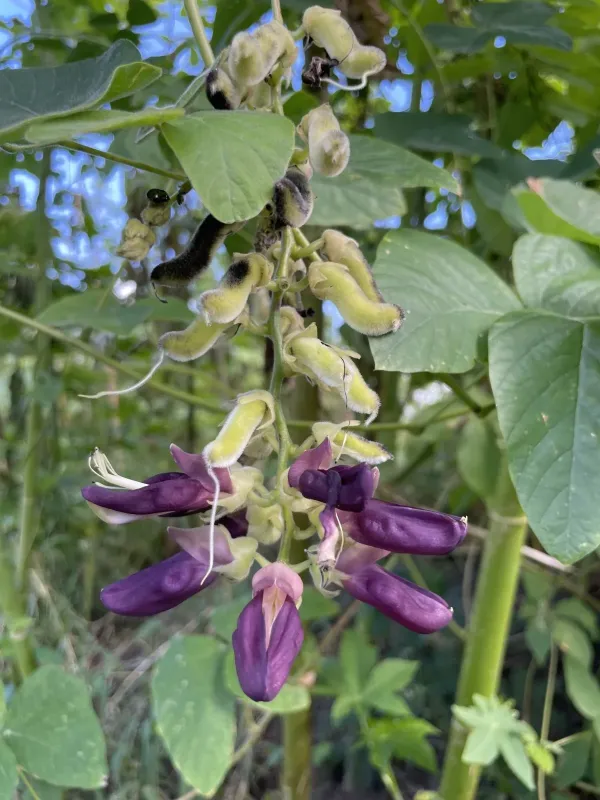
Description
Sowing dates
Velvet bean is a tropical crop that requires specific timing, usually initiated at the onset of the rainy season to ensure adequate soil moisture for germination.
In monsoon-influenced regions, sowing is typically performed in late spring or early summer, allowing the plant to utilize the full duration of the growing season.
Seeds should be planted at a depth of 3 to 5 centimeters, with row spacing ranging from 60 to 90 centimeters to accommodate the vigorous vining habit of the plant.
High-quality, fresh seeds are essential for uniform emergence, especially as the crop performs best when temperatures consistently exceed +20°C at night.
Higher seeding rates are sometimes employed when the crop is intended as a soil-covering mulch to suppress weeds quickly through canopy closure.
Growing requirements
As a member of the Fabaceae family, this herbaceous annual vine thrives in hot, humid tropical and subtropical environments with long growing periods.
The crop is highly valued for its exceptional adaptability to marginal lands, successfully growing on acidic, depleted, or slightly saline soils where other crops often fail.
Velvet bean requires full sunlight and prefers well-drained soil, though it possesses a remarkable tolerance for temporary waterlogging during heavy rainfall.
A key biological trait is its symbiotic relationship with nitrogen-fixing bacteria, which significantly enhances soil fertility and improves soil structure over time.
While the plant benefits from trellising for maximum seed production, it is often grown as a prostrate ground cover to prevent soil erosion and improve organic matter.
Yield
Velvet bean is renowned for its high biomass production, often yielding between 20 and 30 tons of green matter per hectare under optimal conditions.
When grown for grain, seed yields can reach 1 to 2 tons per hectare, provided the crop is managed with proper spacing and adequate soil moisture.
The agricultural value of the crop is frequently measured by its contribution to soil nitrogen, which can exceed 150–200 kg of nitrogen per hectare.
Final yields are highly dependent on the intensity of the rainy season and the availability of phosphorus, which is critical for root nodule development.
Strategic use of phosphorus-based fertilizers can significantly boost both the vegetative biomass and the total seed output of the stand.
Main diseases and pests
Velvet bean generally exhibits high resistance to most agricultural pests, largely due to the protective trichomes found on the pods and its biochemical composition.
In high-humidity environments with poor aeration, the crop may be susceptible to fungal issues like powdery mildew, especially if planted at very high densities.
While some lepidopteran larvae may feed on leaves, such damage is typically minor and rarely impacts the overall survival or productivity of the crop.
Effective management includes implementing a diverse crop rotation cycle and ensuring proper field sanitation after the harvesting phase is complete.
- Proper plant spacing to increase air circulation.
- Water management during peak humidity.
- Selection of resistant local varieties.
Harvesting
Seed harvesting is conducted when the pods transition from green to a dark brown color, typically occurring 120 to 180 days after initial planting.
Precise timing is vital, as the pods can shatter if left too long in the sun, leading to significant seed loss if harvesting is delayed beyond maturity.
For use as a green manure, the crop should be mowed during the peak flowering stage, just before pods set, to maximize nutrient incorporation into the soil.
The biomass is usually left on the surface as mulch or lightly tilled into the topsoil to accelerate the decomposition process and nutrient release.
Manual handling of the pods requires caution, as the fine hairs on many velvet bean varieties are known to cause significant skin and eye irritation.