
Velvet bean
Mucuna pruriens (L.) DC. var. utilis (Wall. ex Wight) Baker ex Burck
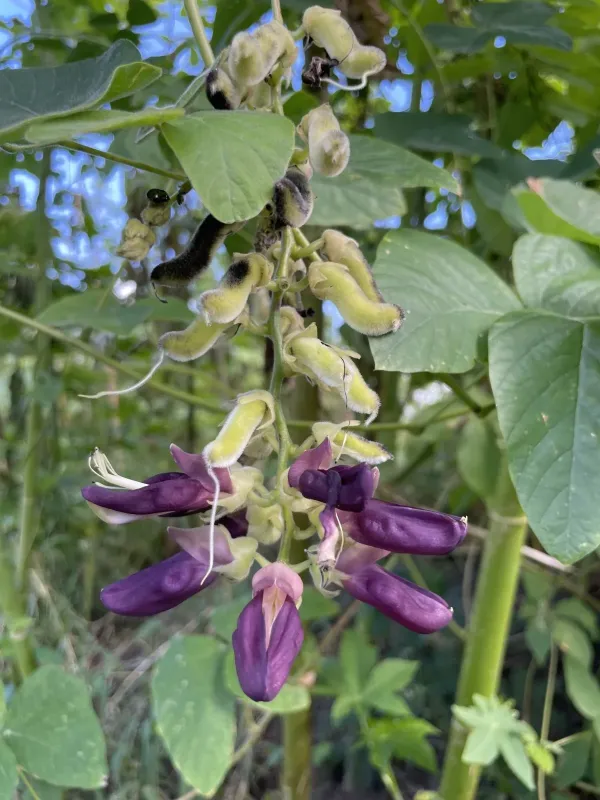
Description
Sowing dates
Velvet bean is a warm-season crop that requires temperatures consistently above 20 degrees Celsius for successful germination. Planting should be timed to coincide with the beginning of the rainy season or when soil temperatures are sufficiently warm to ensure rapid seedling emergence.
The sowing depth is typically set between 3 to 5 centimeters, depending on the soil texture. Proper seed-to-soil contact is essential to facilitate moisture uptake, which is crucial for uniform germination across the field, especially in larger agricultural settings.
Seeding rates differ significantly based on the intended purpose. For seed production, a wider spacing is recommended to reduce competition, while for cover cropping and weed suppression, a denser planting pattern is preferred to ensure a quick canopy closure over the soil surface.
It is important to prepare a clean, well-drained seedbed prior to planting. Since velvet bean starts growing relatively slowly compared to some invasive grasses, eliminating existing weed pressure in the first few weeks is vital for the establishment of a healthy crop.
Pre-soaking seeds or using inoculation with specific rhizobia strains can enhance early development and nitrogen-fixing efficiency, ensuring that the crop maximizes its potential for soil enrichment and biomass production from the very start.
Growing requirements
Mucuna pruriens belongs to the Fabaceae family and is a vigorous climbing legume known for its exceptional soil-improving properties. It thrives in tropical and subtropical regions where it can fully exploit its capacity to fix atmospheric nitrogen and provide massive amounts of biomass.
The crop is highly adaptable to various soil types, ranging from sandy to heavy clay, and can tolerate a wide pH range. However, it performs best in well-drained soils and is generally not suited for waterlogged areas that may cause root rot under certain conditions.
Velvet bean is known for its remarkable drought tolerance once established, making it a valuable crop for regions with seasonal rainfall patterns. Despite this, it requires consistent moisture during the flowering and pod-filling stages to maximize overall yield.
As a light-loving plant, it performs best in full sun. When integrated into cropping systems, care must be taken to provide appropriate space for its climbing growth habit; without vertical support, it forms a dense mat on the ground, which effectively suppresses competing vegetation.
The optimal temperature range for growth is between 20 and 30 degrees Celsius. While it can survive short periods of cooler weather, frost will kill the above-ground biomass, and it will not survive in temperate regions where cold winters are prevalent.
Yield
The biomass production of velvet bean is one of its most significant agricultural features, often exceeding 20 to 30 tonnes per hectare. This makes it an ideal choice for green manuring, as it decomposes to provide essential organic matter and nitrogen to subsequent crops.
Seed yield varies depending on the cultivar and management practices, generally ranging between 1 to 2 tonnes per hectare. To maximize seed collection, vertical support structures or trellises are often used, which improve flower pollination and minimize pod contact with moist soil.
Harvesting needs to be timely because pods can shatter easily upon reaching full maturity. Farmers must monitor the pods closely and harvest before total dehiscence occurs, ensuring that the seeds remain protected and do not drop back into the soil prematurely.
Beyond biomass and grain, the crop's long vegetative phase allows for multiple cuttings if managed correctly for forage or green manure. This flexibility is highly valued in diversified farming systems that prioritize year-round soil coverage.
By contributing significant nitrogen to the soil, velvet bean acts as a natural fertilizer, reducing the dependency on expensive synthetic inputs for following crops, which significantly enhances the overall economic balance of the farming operation.
Main diseases and pests
Fungal diseases are the most prominent threat to velvet bean, especially in high-humidity environments. Leaf spots and root rot are common issues, particularly when plants are grown too densely, limiting the airflow between the thick layers of foliage.
Insect pests, such as lepidopteran larvae, can cause substantial damage by defoliating the plants. While the plant possesses natural defenses, large infestations can significantly reduce the photosynthetic capacity and, consequently, the overall crop yield.
Root-knot nematodes can become a problem in fields where the crop is grown continuously without a proper break. Utilizing crop rotation schemes with non-host plants, such as maize or other cereals, is the most effective management strategy to keep nematode populations in check.
Maintaining a balanced plant density and promoting good field drainage are key agronomic practices to mitigate disease risks. Avoiding excessive shading of the lower canopy by pruning or proper spacing can help keep the foliage dry and reduce fungal infections.
Overall, velvet bean is a robust crop with strong natural vigor. Most threats can be managed through good agricultural practices, such as crop rotation, appropriate irrigation management, and consistent field monitoring, minimizing the need for chemical intervention.