
Guinea grass
Megathyrsus maximus (Jacq.) B. K. Simon & S. W. L. Jacobs var. coloratus (C. T. White) B. K. Simon & S. W. L. Jacobs
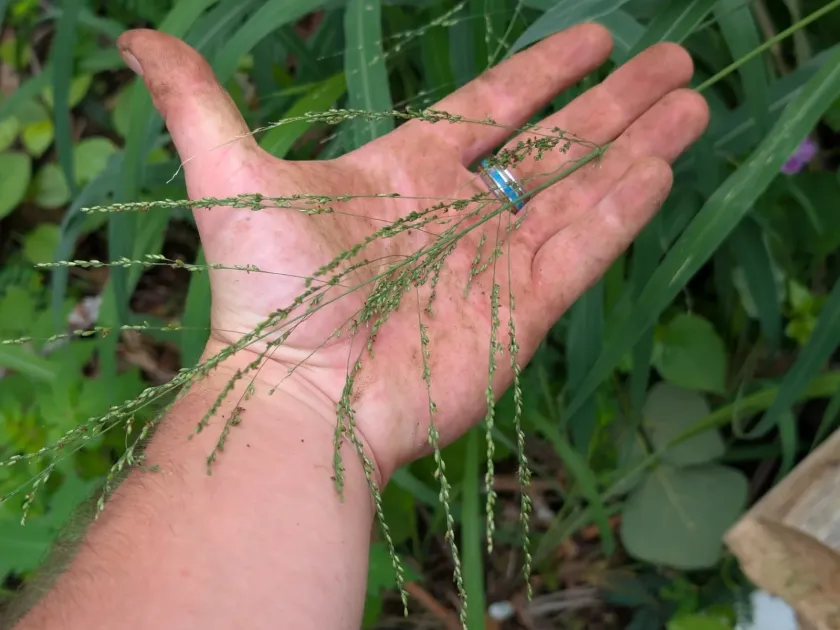
Description
Sowing dates
Guinea grass should be planted when the soil has warmed up sufficiently, ensuring temperatures remain consistently above 18–20°C for optimal seed germination.
Seeding rates are determined by the intended final use, whether the crop is destined for hay production or managed grazing systems for livestock.
Sowing is typically performed in rows spaced 30 to 60 cm apart, which allows for efficient crop management and provides each plant with adequate room for development.
In tropical and subtropical regions, the most favorable time to plant is at the beginning of the rainy season, providing natural moisture for establishment.
After seeding, rolling the soil surface is highly recommended to improve contact between seeds and the soil, leading to faster and more uniform emergence.
Growing requirements
Guinea grass is a perennial member of the Poaceae family, widely recognized for its robust growth habit and versatility in various farming environments.
While the plant thrives in fertile, well-drained soils, it displays remarkable tolerance to a broad spectrum of soil types, ranging from acidic to mildly alkaline.
For peak performance, the crop requires abundant sunlight and steady moisture levels throughout the growing season to support its vigorous biomass production.
It is important to avoid areas prone to waterlogging, as the root system is sensitive to poor drainage and prolonged saturation, which can severely stunt growth.
The plant is highly responsive to nitrogen fertilization, which is often used to maximize foliage density and enhance the overall nutritional value of the forage.
Yield
The yield of Guinea grass varies significantly based on agronomic management practices, soil nutrient availability, and regional climatic conditions.
Under intensive management with adequate moisture, this crop can produce between 40 and 80 tons of green matter per hectare over a single growing season.
Typically, the plant allows for 3 to 5 harvests per season, depending on the length of the growing period and the frequency of mowing or grazing.
The total dry matter yield is heavily dependent on the growth stage at which the crop is harvested, requiring precise timing to balance quality and quantity.
Irrigated systems can potentially double the yields compared to rain-fed crops, making this grass a highly profitable choice for fodder production in drier areas.
Main diseases and pests
The primary threats to Guinea grass include fungal leaf diseases that thrive in humid environments and dense, poorly ventilated stands.
Pests, particularly various lepidopteran larvae and leaf-feeding insects, can cause noticeable damage, leading to reduced foliage and slowed regrowth.
Competition from weeds is most critical during the early establishment phase, requiring active weed control measures until the stand becomes well-established.
Poor soil aeration caused by compaction or drainage issues can lead to root rot, which significantly decreases the lifespan and productivity of the field.
Regular monitoring and integrated pest management are recommended to maintain plant health and prevent the spread of diseases within the pasture.
Harvesting
Harvesting is best performed at the onset of the flowering stage, when the nutrient profile is at its peak, providing excellent digestibility for livestock.
When making hay, it is essential to cut during dry weather to ensure rapid curing, which helps preserve the essential vitamins and protein content of the grass.
Maintaining a stubble height of 10–15 cm is crucial, as this protects the plant's growing points and ensures rapid regrowth for subsequent harvests.
Using forage harvesters or high-capacity mowers allows for efficient processing of large fields, ensuring the biomass is collected at the correct stage of maturity.
Proper harvest management not only preserves the quality of the silage or hay but also promotes the longevity of the Guinea grass stand for future seasons.