
Guinea grass
Megathyrsus maximus (Jacq.) B. K. Simon & S. W. L. Jacobs
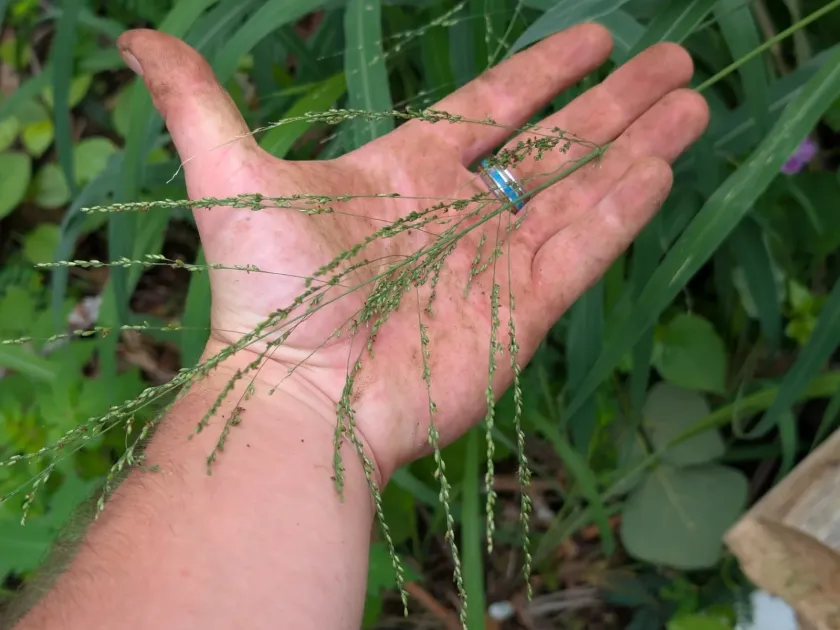
Description
Sowing dates
Guinea grass (Megathyrsus maximus) is a perennial tropical grass that requires warm soil conditions for successful establishment. Planting should coincide with the beginning of the rainy season or when soil temperatures consistently exceed 18°C.
Seedbed preparation is crucial because the seeds are very small. The soil must be finely tilled and firm to ensure good contact, with seeds planted at a shallow depth of no more than 1–2 cm to prevent exhaustion of the seedling's energy reserves before emergence.
In regions with distinct wet and dry seasons, sowing must be timed precisely to capture the initial moisture. Adequate rainfall or irrigation during the first few weeks is essential for the roots to penetrate deep enough into the soil profile to sustain growth.
Mechanical seeding is preferred for large-scale operations to ensure uniform spacing and depth. In smaller plots, broadcasting may be used, though it requires a higher seeding rate and careful raking to cover the seeds lightly and protect them from desiccation.
Establishment speed is moderate, and young plants are initially sensitive to weed competition. Effective weed management during the first month is critical; otherwise, fast-growing local weeds can easily suppress the developing Guinea grass seedlings.
Growing requirements
As a member of the Poaceae family, Guinea grass thrives in deep, fertile, and well-drained soils. It performs best in soils with a pH ranging from 5.0 to 7.0, although it shows moderate tolerance to different soil types if moisture is sufficient.
The plant is highly responsive to nitrogen fertilization. High-yield production systems require regular nutrient supplementation, especially after each grazing or cutting cycle, to replenish the soil and maintain high protein levels in the forage.
While Guinea grass has a deep root system that provides good drought tolerance, it is not a desert plant. It achieves its maximum potential under high rainfall or regular irrigation, and water stress significantly reduces biomass production.
Climate is the primary limiting factor for its range. It is a strictly tropical to subtropical plant that stops growing when temperatures drop below 10-12°C. Frost is lethal to the plants, so cultivation is restricted to areas without significant winter freezes.
Full sunlight is preferred for optimal biomass accumulation. Shaded areas lead to spindly growth and reduced nutritional value, as the plant needs intense solar radiation to drive the photosynthetic process required for high-volume vegetative production.
Yield
Guinea grass is recognized as one of the most productive tropical forage species. Under intensive management, including irrigation and fertilization, it can produce 20–30 tons of dry matter per hectare per year, depending on the cultivar and the local climate.
The frequency of harvesting or grazing dictates the yield profile. More frequent cuttings yield higher quality forage (higher protein), whereas longer intervals between cuts produce larger amounts of total biomass, albeit with lower digestibility due to higher fiber content.
Maintenance of the plant's physiological health is necessary for sustained yields. Overgrazing or cutting too low destroys the crowns and reduces the rate of regrowth, leading to long-term decline in the productivity of the pasture.
Nutritional value is peaked during the vegetative stage. As the plant enters the reproductive phase and begins to produce seed heads, the protein content drops and the concentration of lignin increases, making it less palatable and digestible for livestock.
In industrial forage systems, rotational grazing is standard practice. This method balances biomass production with nutrient density, allowing the grass to recover while ensuring the livestock have access to the highest quality material at every rotation.
Main diseases and pests
Fungal diseases such as leaf spot and rust are the most common pathological threats to Guinea grass. These issues are most prevalent in humid conditions and dense stands with poor air circulation, necessitating strategic spacing and moisture control.
Insects like armyworms, grasshoppers, and spittlebugs can cause significant damage to the leaf tissue and stems. Integrated pest management strategies, including regular field monitoring, are essential to minimize the impact of these pests on the crop.
Viral infections can occasionally occur, often transmitted by insect vectors like aphids or leafhoppers. Maintaining a vigorous, healthy crop through proper nutrition and weed control is the best defense against both viral and fungal pressure.
Soil-related problems, including micronutrient deficiencies, can cause yellowing or stunted growth. Regular soil testing allows producers to correct imbalances early, preventing the crop from becoming susceptible to more serious secondary infestations.
Competition from invasive plant species can be a major threat in older, less managed fields. Routine renovation of the pasture or active weed management is required to prevent the encroachment of aggressive weeds that can eventually outcompete the grass.
Harvesting
The optimal harvest window is just before the plant begins its flowering phase. Harvesting at this stage ensures the best compromise between total dry matter production and the digestibility of the resulting forage.
For silage production, the grass is chopped and packed to exclude oxygen, enabling anaerobic fermentation. Because Guinea grass contains sufficient sugars, it preserves well, resulting in a high-quality, stable feed product for dairy or beef cattle.
When producing hay, the crop is cut and left to dry in the field. It is crucial to manage the drying process to prevent leaf shatter, as the leaves contain the highest concentration of vitamins and protein compared to the thicker, coarser stems.
Mechanical harvesters should be set to leave at least 15–20 cm of stubble. This height is sufficient to protect the plant's growing points and ensures that enough stored energy remains to fuel the next cycle of rapid regrowth.
In grazing scenarios, livestock should be moved to new paddocks once the grass height has been reduced to about 20 cm. This prevents excessive grazing pressure on the root system and promotes long-term pasture sustainability and vigor.