
Dwarf lupine
Lupinus nanus Douglas ex Benth.
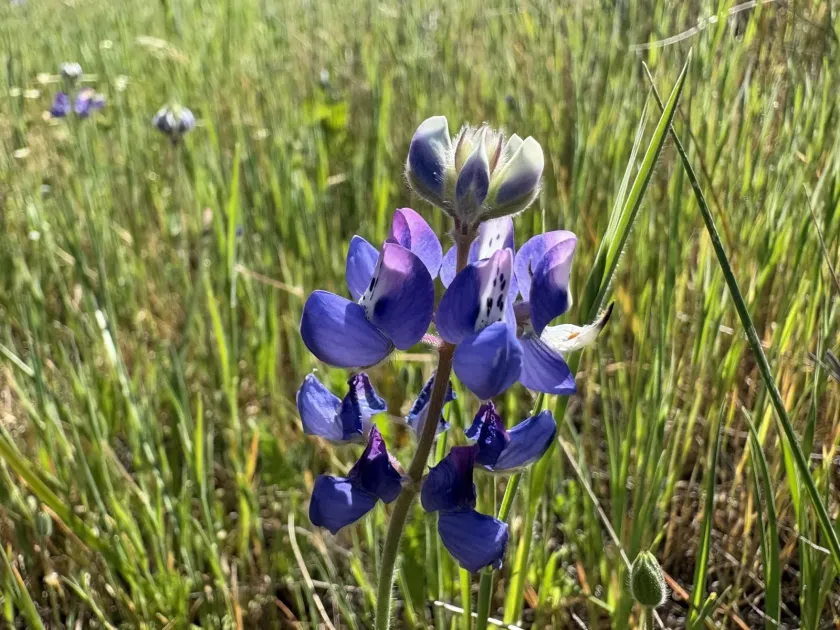
Description
Sowing dates
Dwarf lupine is typically sown directly into the soil during early spring, once the danger of severe frost has passed and the ground is workable.
Sowing depth should be kept shallow, generally around 1 to 2 centimeters, to facilitate rapid germination and ensure that seedlings emerge without excessive stress.
Spacing between plants should be managed to allow for air circulation, preventing the buildup of humidity around the stems which could lead to fungal issues.
In regions with milder winters, fall sowing is an alternative that allows the root system to establish early, leading to more robust spring growth.
Regular monitoring of seed density is crucial to ensure that the stand is uniform, which maximizes the benefits of the crop as a soil nitrogen fixer.
Growing requirements
Lupinus nanus is a member of the Fabaceae family, native to California, and is highly valued for its ability to fix atmospheric nitrogen in its root nodules.
The plant thrives in well-drained, sandy or loamy soils, and it is essential to avoid sites with heavy clay or poor drainage to prevent root rot.
Full sun exposure is a mandatory requirement for this species, as it significantly impacts the production of its characteristic bright-colored flowers.
While the plant is relatively drought-tolerant once established, supplemental irrigation is beneficial during prolonged dry spells to maintain active growth.
The species prefers acidic to neutral soil conditions and is sensitive to alkaline environments, which can lead to micronutrient deficiencies in the foliage.
Main diseases and pests
Fungal diseases, including Fusarium wilt and powdery mildew, are the primary pathogens that affect dwarf lupine stands in humid conditions.
Aphids are common insect pests that can damage the developing buds and also act as vectors for various plant viruses that stunt growth.
The lupine beetle can cause severe damage by feeding on leaves and pods, reducing both the aesthetic value and the potential seed yield of the crop.
Root-knot nematodes can pose a risk in certain soil types, inhibiting nutrient uptake and making the plants more susceptible to other stressors.
Integrated pest management strategies should be employed, focusing on crop rotation and the removal of host weeds to minimize the prevalence of these threats.
Harvesting
Harvesting for seed production should occur once the pods turn brown and start to dry naturally on the stem to ensure maximum seed maturity.
Timing is critical, as delaying the harvest can lead to pod shattering, resulting in significant seed loss before the operation is completed.
The pods are usually harvested manually or with specialized machinery designed for small-seeded legumes to maintain the integrity of the seeds.
After collection, the plant material should be thoroughly dried in a ventilated area to prevent molding of the seeds before final cleaning and storage.
When used as a green manure, the crop should be turned into the soil just as the first flowers appear to ensure maximum biomass and nutrient return.