
Andean lupin
Lupinus mutabilis Sweet
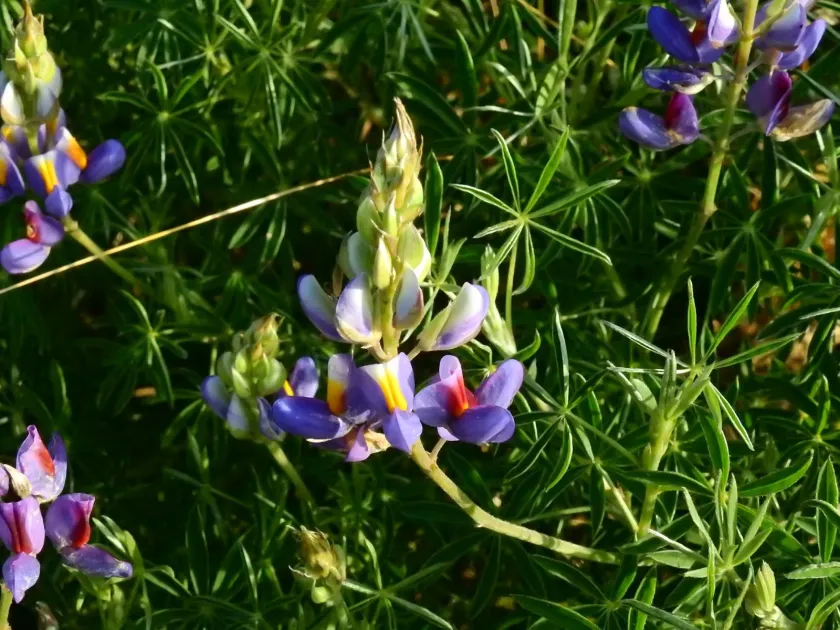
Description
Sowing dates
Andean lupin is a long-day plant that requires precise timing for sowing to match its long growing season with the local frost-free period. Planting should occur as soon as soil temperatures reach 5–8°C.
Seed placement should be managed at a depth of 3–5 cm, ensuring sufficient soil moisture for consistent germination. Shallow planting can risk drying out, while deep planting may delay emergence.
The recommended seeding density ranges from 400,000 to 600,000 viable seeds per hectare, depending on the desired plant spacing and the specific growing conditions of the site.
Inoculation with specific rhizobia strains is critical prior to planting. This ensures the establishment of nitrogen-fixing nodules, which are essential for the crop's nutritional health and soil improvement.
The field must be well-prepared to ensure a fine tilth, as Lupinus mutabilis is sensitive to soil compaction, which can impede the development of its deep taproot system.
Growing requirements
Lupinus mutabilis, commonly known as the Andean lupin, is an annual legume native to the high-altitude regions of the Andes. It is highly valued for its adaptation to cool climates.
The crop thrives in well-drained soils with a neutral to slightly acidic pH. It performs poorly in heavy, waterlogged, or clay-heavy soils where the risk of root rot pathogens is elevated.
This species possesses a deep, powerful taproot that allows it to access subsoil moisture, making it resilient to brief dry spells during the vegetative growth phase of the season.
Regarding light, it is a day-length sensitive crop. Sufficient sunlight is necessary to support the vigorous branching and subsequent flowering required for high grain yield.
The crop is sensitive to extreme heat during the flowering stage, which can lead to flower abortion and reduced pod set. Cool nights are beneficial for the plant's metabolic stability.
Yield
The grain yield of Andean lupin can reach 3 to 5 tons per hectare under optimal agronomic conditions. Success depends heavily on the uniformity of the stand and soil fertility levels.
Beyond seed production, the crop provides significant green manure value. Its nitrogen-fixing capabilities help improve soil structure and fertility for subsequent rotation crops.
The seeds are highly prized for their high protein content, which can reach 40–45%. This makes them an excellent nutritional alternative to soy for various animal feed applications.
Biomass production is quite substantial, making it a viable candidate for sustainable and organic farming systems looking to reduce reliance on synthetic fertilizers.
Variable maturity is a key factor in yield loss; therefore, careful variety selection and harvest management are essential to capture the full potential of the harvest.
Main diseases and pests
The primary threats to Lupinus mutabilis include fungal pathogens such as anthracnose, fusarium wilt, and grey mold, which are particularly prevalent in humid or rainy environments.
Pests like lupin aphids and various species of weevils can cause significant damage to foliage and developing pods, requiring vigilant monitoring during the early stages of growth.
Integrated Pest Management (IPM) strategies, including crop rotation and the use of resistant cultivars, are the most effective ways to mitigate the impact of disease and insect infestations.
Chemical control should be used judiciously, strictly following economic thresholds to minimize environmental impact and preserve beneficial insect populations in the field.
Ensuring healthy drainage and avoiding over-crowding in the field are important cultural practices that reduce the overall susceptibility of the plants to fungal infections.
Harvesting
Harvesting Andean lupin is challenging due to the asynchronous maturation of pods on different parts of the plant. Field drying is often uneven, requiring careful timing.
The use of chemical desiccants is a standard practice to accelerate and unify the drying process of the vegetative material, facilitating more efficient combine harvesting.
Moisture levels at harvest should be carefully monitored, with an ideal target of around 14–16% to prevent seed breakage and maintain viability for long-term storage.
Adjusting the combine harvester’s drum speed is crucial. Because lupin seeds are relatively large and fragile, lower speeds are necessary to reduce mechanical impact and splitting.
Post-harvest handling is critical; immediate cleaning and proper aeration or drying are required to prevent mold development and maintain the high-quality protein profile of the grain.