
Leucaena leucocephala
Leucaena leucocephala (Lam.) de Wit
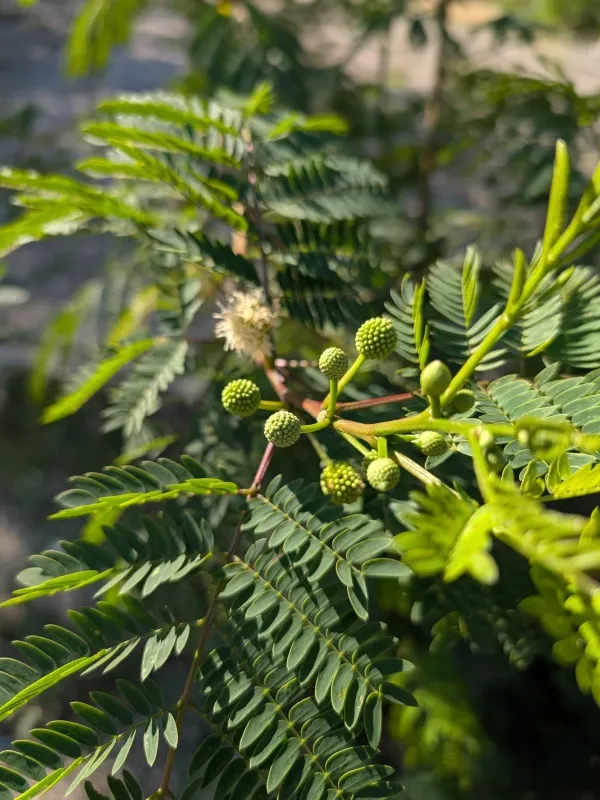
Description
Sowing dates
Sowing of Leucaena leucocephala should ideally take place at the beginning of the wet season to ensure sufficient moisture for seedling establishment. Since the seeds have a hard coat, scarification (mechanical or acid treatment) is essential to break dormancy and improve germination rates.
Seeds are typically sown at a depth of 2 to 3 centimeters, ensuring firm contact with the soil. The planting method can be adjusted based on the intended use: row planting for fodder production or spaced clusters for agroforestry and erosion control.
The soil temperature should be at least 20 degrees Celsius for successful germination. Inoculating the seeds with specific rhizobia bacteria is highly recommended to enhance the plant's natural ability to fix atmospheric nitrogen right from the early growth stages.
Seedlings can be pre-grown in nursery containers before being transplanted to the field. This method is particularly effective in areas where weed competition is high, providing the young plants with a competitive head start.
Planting density is determined by the production objectives, ranging from 10,000 to over 100,000 plants per hectare. Higher densities are prioritized for biomass production, while lower densities are used when aiming for timber or shade for other crops.
Growing requirements
Leucaena leucocephala is a robust legume member of the Fabaceae family, widely known for its rapid growth in tropical and subtropical regions. It adapts to various soil types, including calcareous and alkaline soils, provided that drainage is excellent.
The plant thrives in full sunlight and prefers a climate with an annual rainfall between 600 and 1500 mm. While it is known for its remarkable drought tolerance, consistent irrigation can significantly boost its vegetative biomass production during dry spells.
Leucaena is intolerant of waterlogged soil conditions, which can lead to root rot and systemic weakness. Furthermore, it is strictly restricted to frost-free zones, as freezing temperatures can severely damage or kill the plant.
One of the most valuable traits of this species is its nitrogen-fixing efficiency, which contributes to soil fertility. It is an excellent choice for regenerating degraded landscapes and improving soil structure over time.
The optimal pH range for Leucaena is between 6.0 and 8.0. In highly acidic soils with high aluminum concentration, the plant struggles to develop, often showing signs of stunted growth and chlorosis.
Yield
Yields of Leucaena biomass are exceptionally high, with managed plantations capable of producing 20 to 50 tons of green matter per hectare annually. The yield is heavily dependent on cutting frequency and soil nutrient availability.
Harvesting usually begins when the plants reach 1 to 1.5 meters in height. Frequent cutting encourages vigorous regrowth and branching, which maintains a steady supply of high-protein foliage for livestock consumption.
As a forage crop, it serves as an excellent source of protein, carotene, and minerals. It is frequently processed into hay, silage, or dehydrated leaf meal for inclusion in formulated animal feeds for ruminants.
Beyond forage, the woody biomass is utilized as firewood, timber for small-scale construction, and fiber for the pulp and paper industry. This dual-purpose utility enhances the economic viability of Leucaena plantations.
A well-maintained stand can remain productive for up to 20 years. Consistent management practices, including periodic weeding and nutrient balancing, are crucial for sustaining such long-term yields.
Main diseases and pests
The Leucaena psyllid (Heteropsylla cubana) is the primary insect pest, capable of causing significant defoliation and severe growth inhibition. Integrated pest management using psyllid-resistant cultivars is the most effective solution.
Fungal pathogens causing leaf spot and root decay can become problematic, especially during periods of excessive humidity or poor plantation aeration. Proper row spacing helps to facilitate airflow and mitigate these risks.
Competition from weeds is a major threat during the seedling stage. Implementing mechanical cultivation or mulching is necessary until the Leucaena plants are large enough to shade out competing vegetation.
Seed-feeding beetles, particularly bruchid species, can infest mature seeds. Proper post-harvest storage techniques, such as air-tight containers or chemical treatments, are needed to preserve seed viability.
Viral mosaic diseases may occur in some regions, leading to foliage deformation. Rogueing and destroying affected plants is necessary to prevent the spread of the virus throughout the plantation.
Harvesting
Mechanical harvesting is common in large-scale plantations, utilizing disc mowers or forage harvesters. The cutting height should be managed to balance biomass removal with the plant's capacity for rapid vegetative recovery.
For hay production, the material should be wilted in the field to 15-20 percent moisture. Careful handling is required to minimize leaf loss, as the protein-dense leaves are the most valuable part of the plant.
Seed harvesting occurs when the pods reach full maturity and turn brown. Due to the tendency of pods to shatter, timely harvesting is critical to prevent significant seed loss on the ground.
After collection, seeds must be cleaned and dried to a stable moisture content to ensure longevity in storage. They should be kept in a cool, dry place to maintain maximum germination potential.
When ensiling Leucaena, the addition of specific inoculants or mixing with other grasses can improve fermentation stability, ensuring that the high nutritional content is preserved for later livestock feeding.