
Japanese clover
Lespedeza striata (Thunb.) Hook. & Arn.
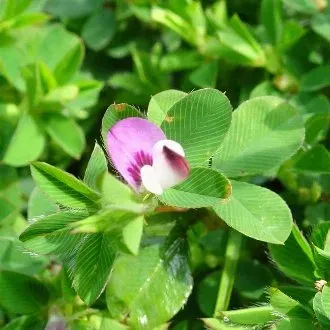
Description
Sowing dates
Japanese clover is a warm-season annual plant, which necessitates sowing only when the soil has thoroughly warmed up and the risk of frost has completely passed.
The optimal planting window typically falls in mid-spring, ensuring that soil temperatures remain consistently above 15 degrees Celsius for rapid seed germination.
Seeds of this species feature a hard seed coat, making mechanical or chemical scarification a vital step to significantly increase the overall germination rate.
Seeding rates should be carefully calibrated based on the specific method of sowing, whether drilling or broadcasting, to ensure even distribution across the field.
Post-sowing soil compaction is strongly recommended to ensure adequate soil-to-seed contact, which helps maintain soil moisture levels during the crucial germination phase.
Growing requirements
This legume species is renowned for its remarkable ability to thrive in poor, acidic, and eroded soil conditions where other conventional crops fail to establish.
Japanese clover has an absolute requirement for full sunlight, as shade drastically reduces the plant's growth rate and overall biomass production capacity.
While the plant exhibits excellent drought tolerance, it requires adequate soil moisture during the active vegetative growth phase to reach its maximum yield potential.
It adapts well to various soil textures, including sandy and clayey soils, provided there is a minimum degree of drainage to prevent standing water issues.
Proper drainage is essential because the root system is highly susceptible to rot under waterlogged conditions, which can lead to thinning stands and crop failure.
Yield
The biomass yield of Japanese clover is heavily influenced by soil fertility and the implementation of sound agronomic practices, such as phosphorus and potassium fertilization.
Under optimal environmental conditions, the plant develops a dense canopy that provides a reliable source of high-quality forage for various types of livestock.
Seed production is strictly dependent on the length of the growing season, as the plant requires a long, warm period to fully mature its generative reproductive organs.
Many growers utilize Japanese clover as part of diverse pasture mixtures to maximize forage productivity and enhance soil structural integrity in sloped areas.
Strategic and periodic mowing practices can effectively stimulate lateral branch development, which leads to a significant increase in total dry matter accumulation per season.
Main diseases and pests
Fungal diseases, particularly anthracnose, represent the primary threat to Japanese clover, especially when high humidity levels and dense canopy conditions are present.
Various insect pests, such as beetles and caterpillars, can cause localized damage to the foliage, necessitating regular field monitoring during the early stages of growth.
Weed management during the initial weeks of development is critical, as Japanese clover seedlings grow relatively slowly and can be easily outcompeted by aggressive weeds.
To mitigate the buildup of soil-borne pathogens, implementing a robust crop rotation plan that includes non-leguminous species is highly recommended for long-term health.
Effective management strategies include the use of certified seed lots and prophylactic measures to ensure a stable and productive crop throughout the entire growing season.
Harvesting
Harvesting for green forage should occur during the peak flowering stage to maximize the concentration of proteins and essential nutrients within the plant tissues.
When producing hay, careful drying protocols must be followed to minimize leaf shattering, as the dry leaves are fragile and contain the highest density of nutrients.
Seed harvesting is conducted once the pods show a dark, mature color, which usually occurs in late autumn, requiring a balance to avoid excessive seed shattering in the field.
The use of advanced harvesting machinery, such as conditioners, helps accelerate the drying process, significantly enhancing the shelf-life and quality of the final product.
Monitoring moisture content before and during storage is vital to preventing spoilage, ensuring that the harvested material remains safe and palatable for animal feeding.